
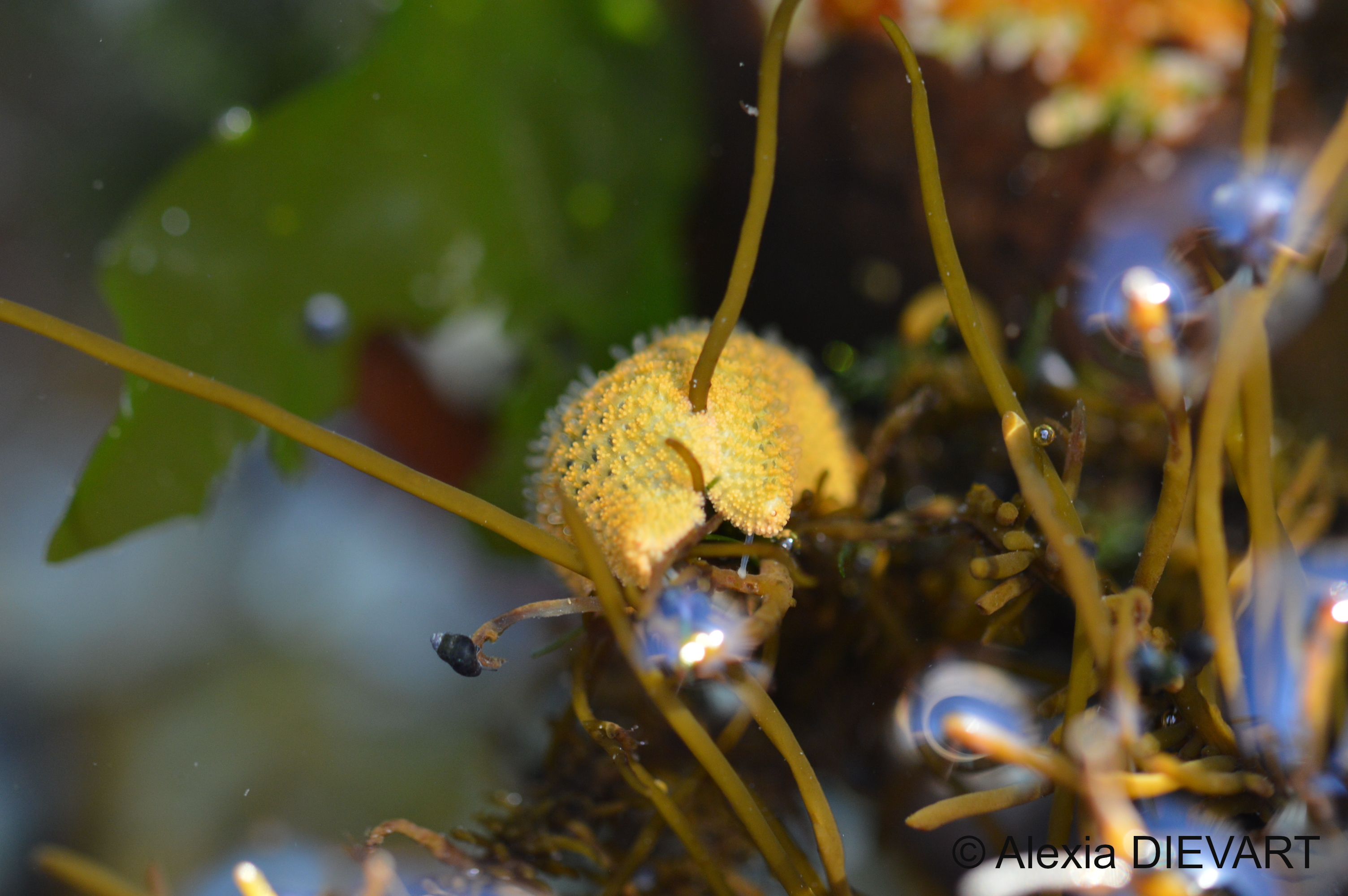
Previously known as Patiriella exigua and Asterina exigua.
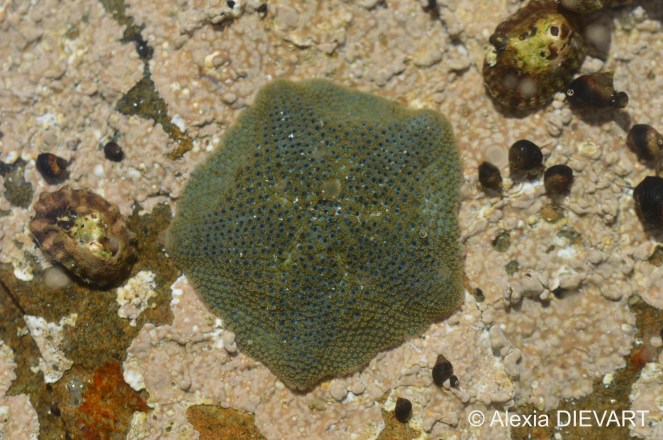
Tiny, flattened, pentagonal starfish, with poorly developed arms. Dorsal surface made up of tile-like plates, each with a cluster of tiny knob-like spines. Gonophores on lower (oral) surface.
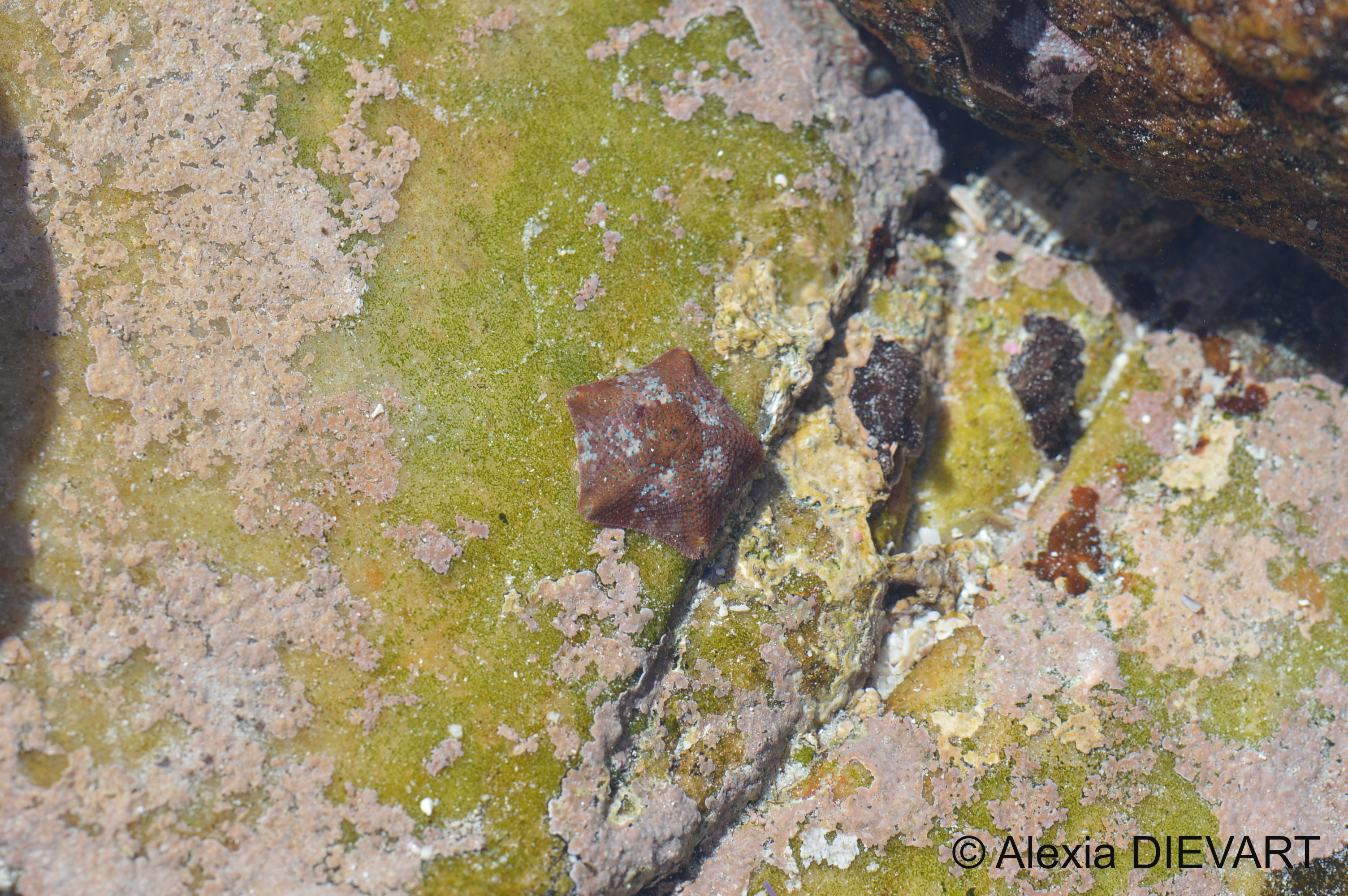
Uniformly khaki-green of the West Coast, but variegated patterns of orange, brown, green and white on the South-East coast.About 20 mm in size.
Occurs in the intertidal zone, abundant but well camouflaged, along the entire southern coastline of Africa, from Namibia to Moçambique, in southeastern Australia and on several oceanic islands (Clark and Downey, 1992). Feeds by extruding the stomach through the mouth and plastering it onto the rock to digest microscopic algae. Eggs are laid under rocks and hatch directly into tiny starfish, without an intervening planktonic larval stage.
Two Oceans: A Guide to the Marine Life of Southern Africa (1994, 2016); A guide to marine life on South African shores (Day, 1969)
Discover in Video
Discover in Image
Fifty Shades of Dwarf Cushion Star
Parvulastra exigua displays a high degree of color variation, with two major color morphs distribution along the South African coastline. On the west coast, the dwarf cushion stars are of a uniform khaki green color while along the East and South coasts, individuals are more brightly colored and variegated, with a narrow zone of color morph sympatry around Cape Point (Dunbar, 2006).

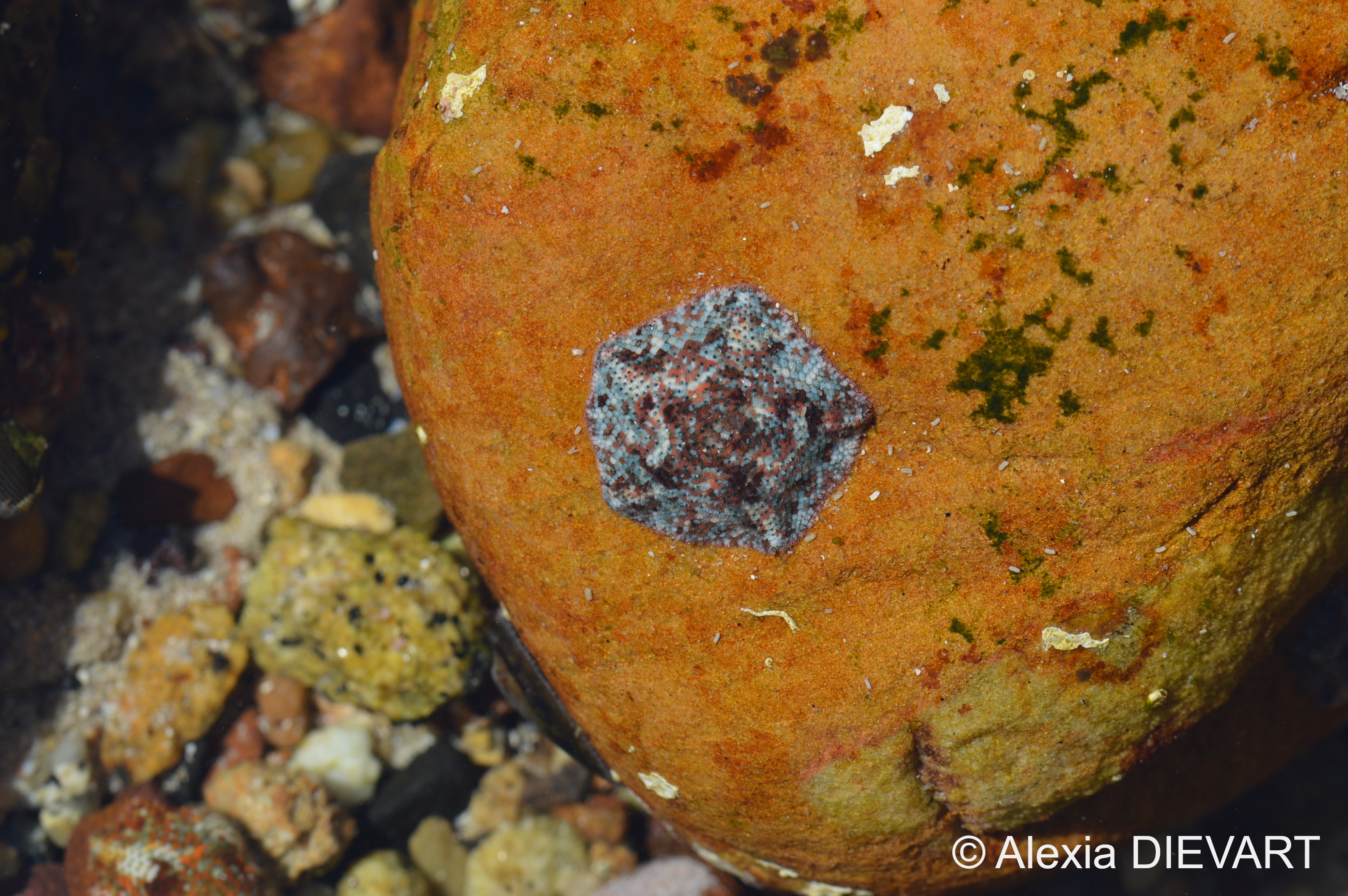
Fishhoek, Western Cape (2020) – iNaturalist
Color variation in Parvulastra exigua demonstrates some degree of ecological divergence (Dunbar, 2006). On the West coast, the green color morph is predominantly found in the mid-intertidal zone, under boulders, bare rock habitats and tidal pools with little to no algae canopy and coralline algae. In the overlapping zone, the intermediate color morph is also found in the mid-intertidal zone, inhabiting bare rock and tidal pool habitats with little coralline algae, but also avoided those with algal tufts and an algal canopy. On the East and South coasts, the mottled morph is mostly found in the high tidal zone within protected, bare rock, algae-encrusted and under boulders with few algal tufts.
However, the proposed distribution of color morphs in P. exigua is merely an indication rather than a rule set in stone.
Click Right > Open Image in New Tab to view the pictures in full screen

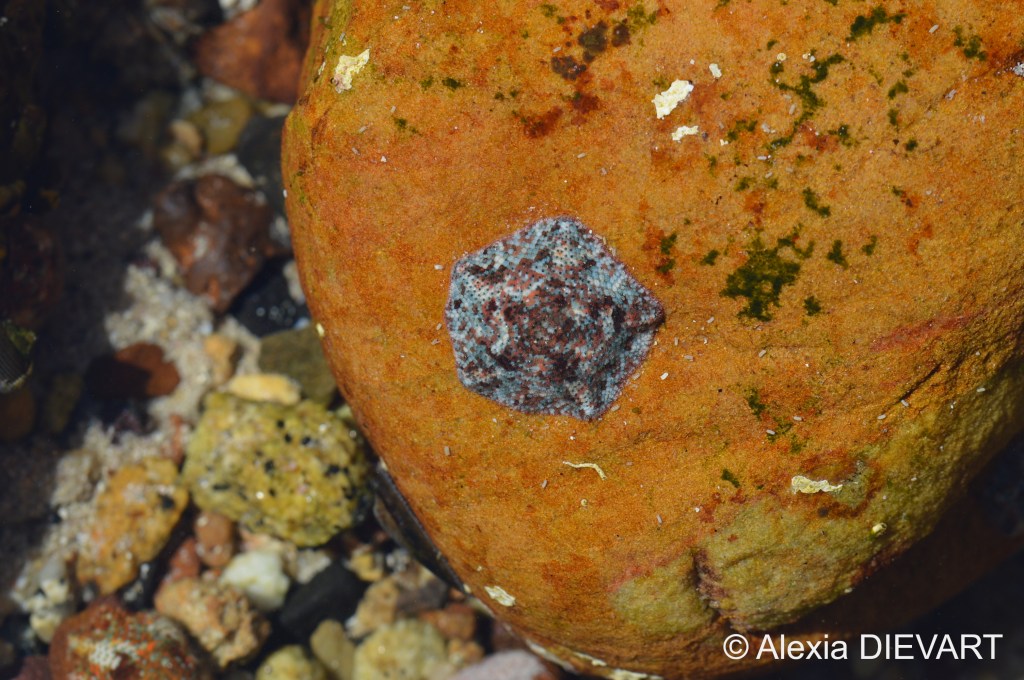
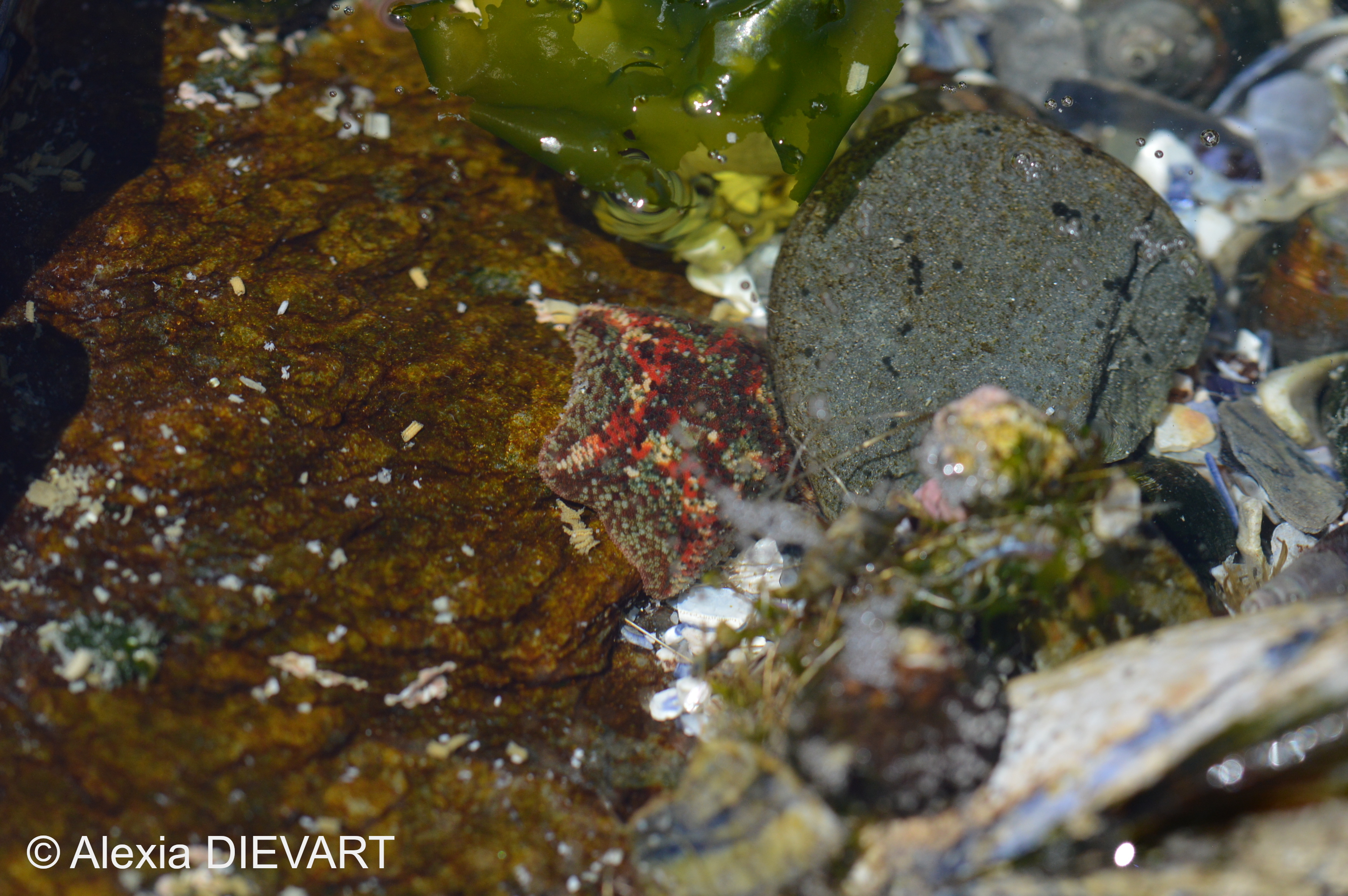
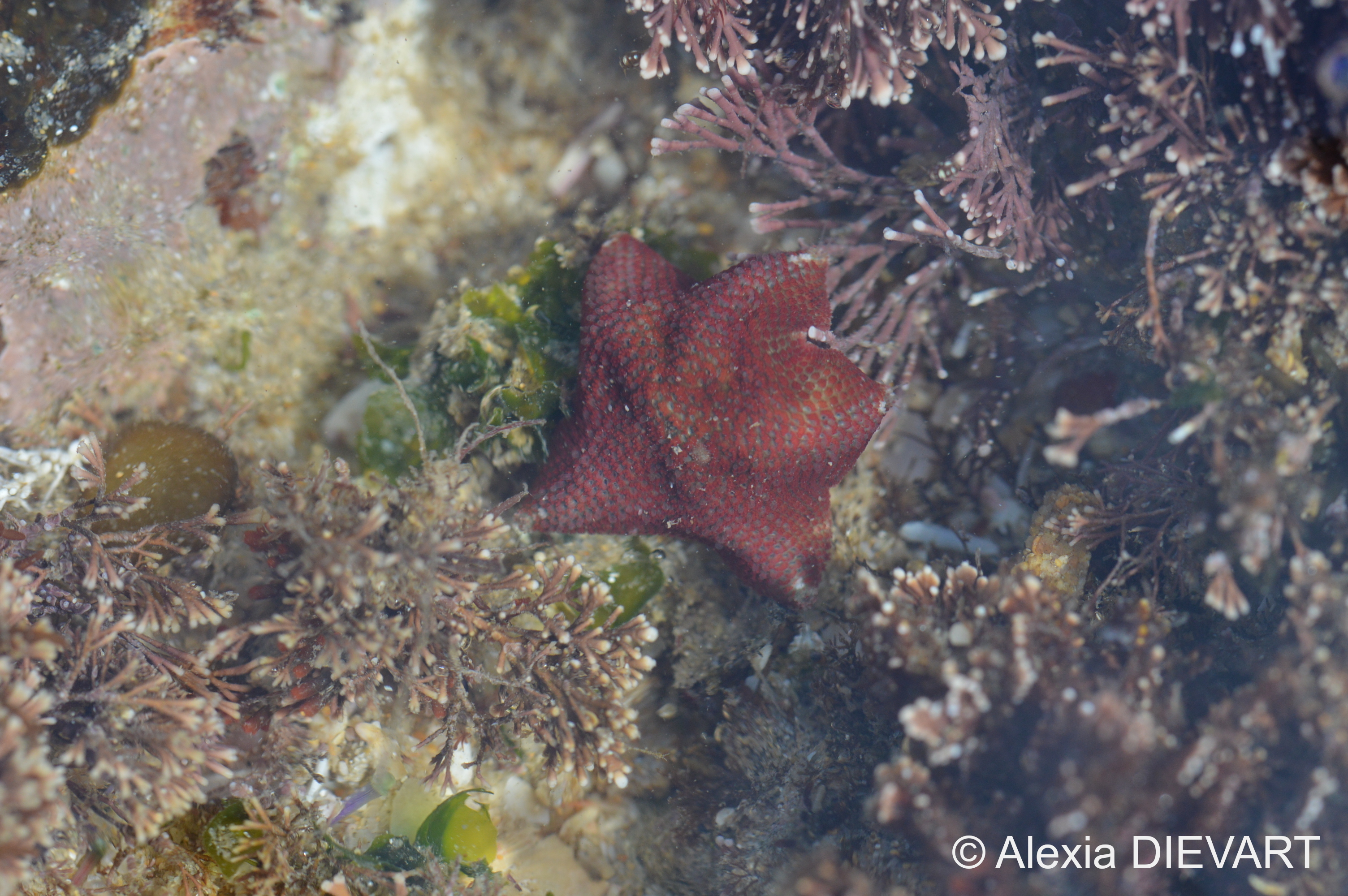
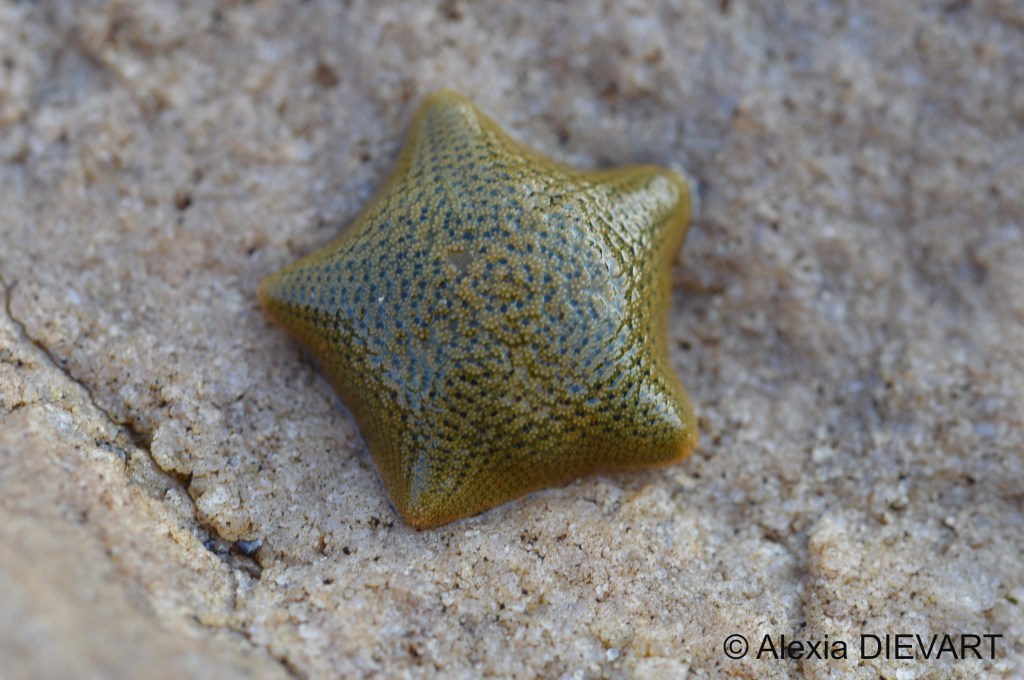
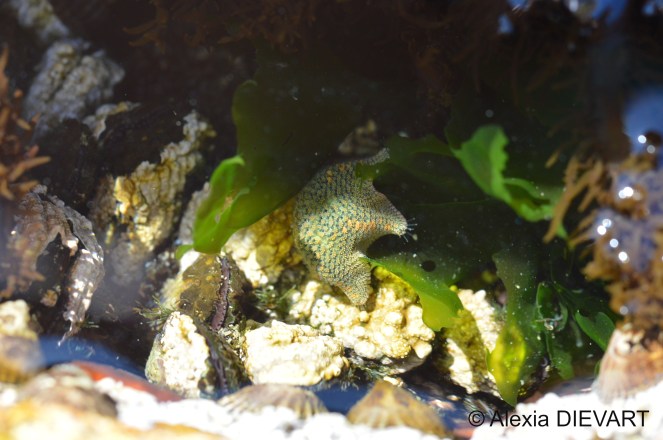
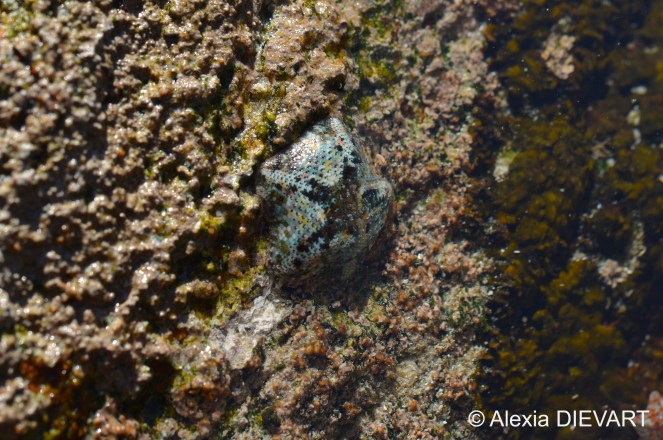
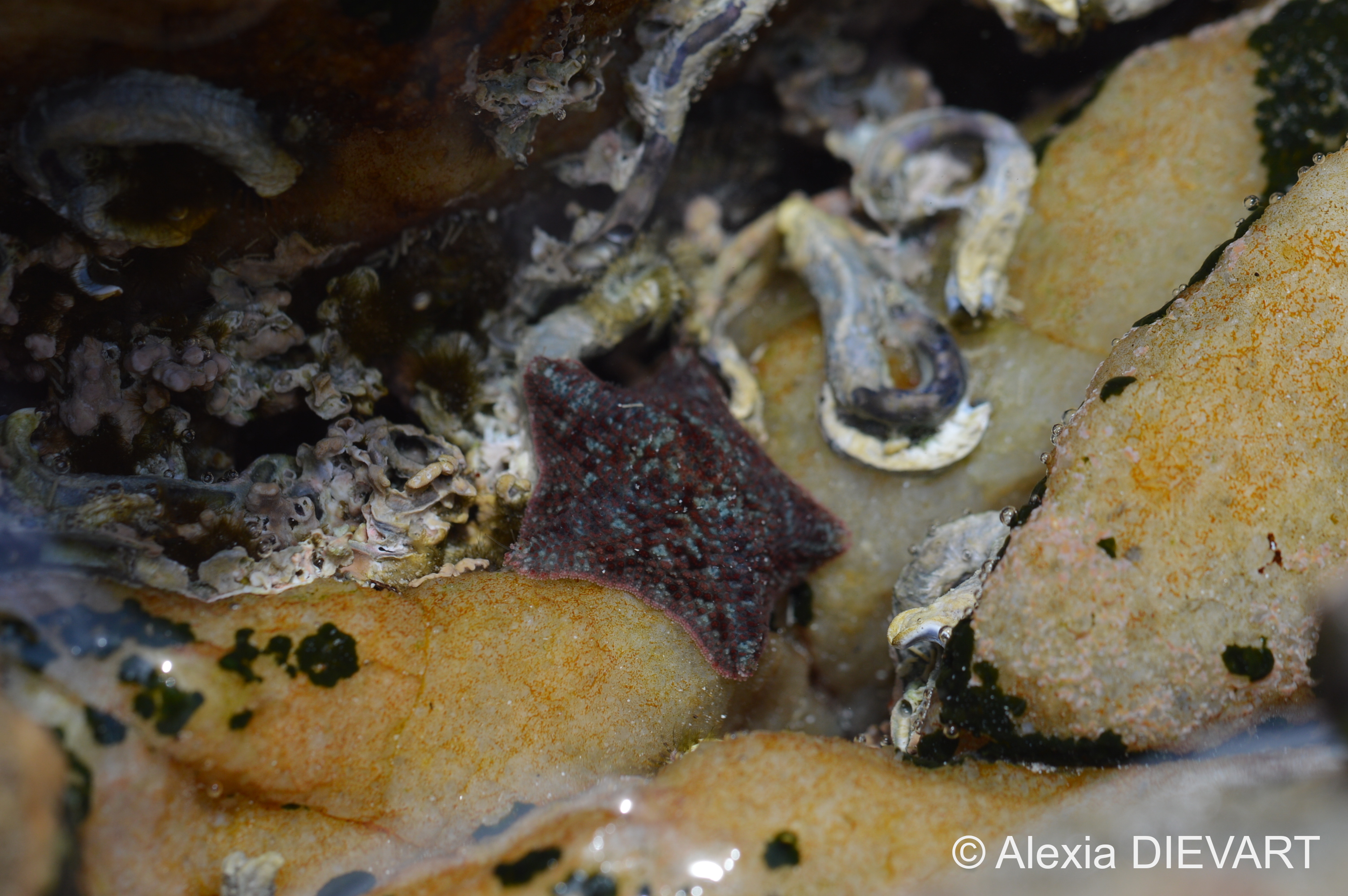
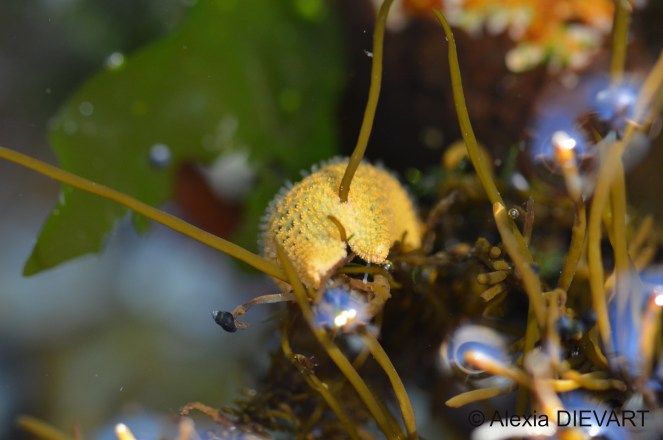

Misidentification
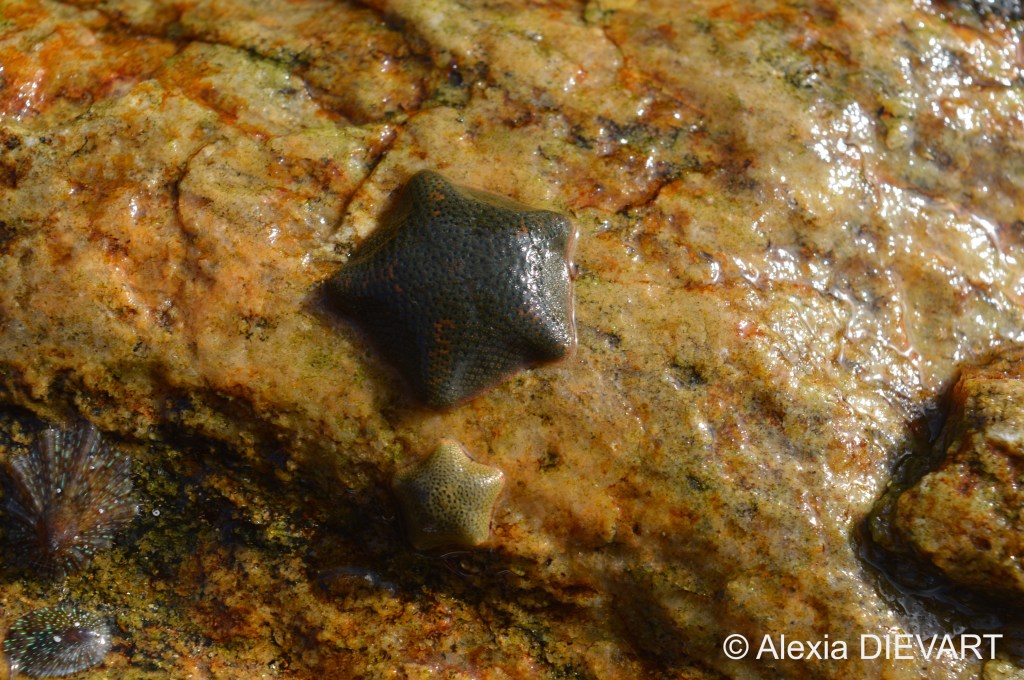
In South Africa, the dwarf cushion star (Parvulastra exigua) occurs in sympatry with the endemic subtidal cushion star (Parvulastra dyscrita, formerly known as Patiriella dyscrita). Despite their morphological and ecological similarities, these two endemic starfish are confirmed as two separate species based on molecular and morphological evidence (Dunbar, 2006; Payne et al., 2015).
Parvulastra dyscrita is similar in shape and color, but has a larger adult size (up to 40 mm in size) and an evenly granular surface texture rather than clusters of spines. In addition, both sea stars differ in their life cycle and their reproductive mode. P. exigua lays its sticky egg masses via oral gonopores – an opening through which gametes are expelled into the water to be fertilized – on the underside of boulders (Lawson–Kerr and Anderson 1978), where they develop into distinct lecithotrophic benthic larvae (Byrne and Anderson, 1994). On the contrary, P. dyscrita releases eggs into the water column via aboral (dorsal) gonopores, where they hatch into normal planktonic larvae.
The subtidal cushion star occurs in lower densities and predominantly subtidally along the south and east coast between False Bay and East London, as its name indicates.
Freaky observations
During my countless expeditions on the South African rocky shores, I sometimes came across odd-looking dwarf cushion stars. That is, when I can find these well-camouflaged buggers in the rockpools !
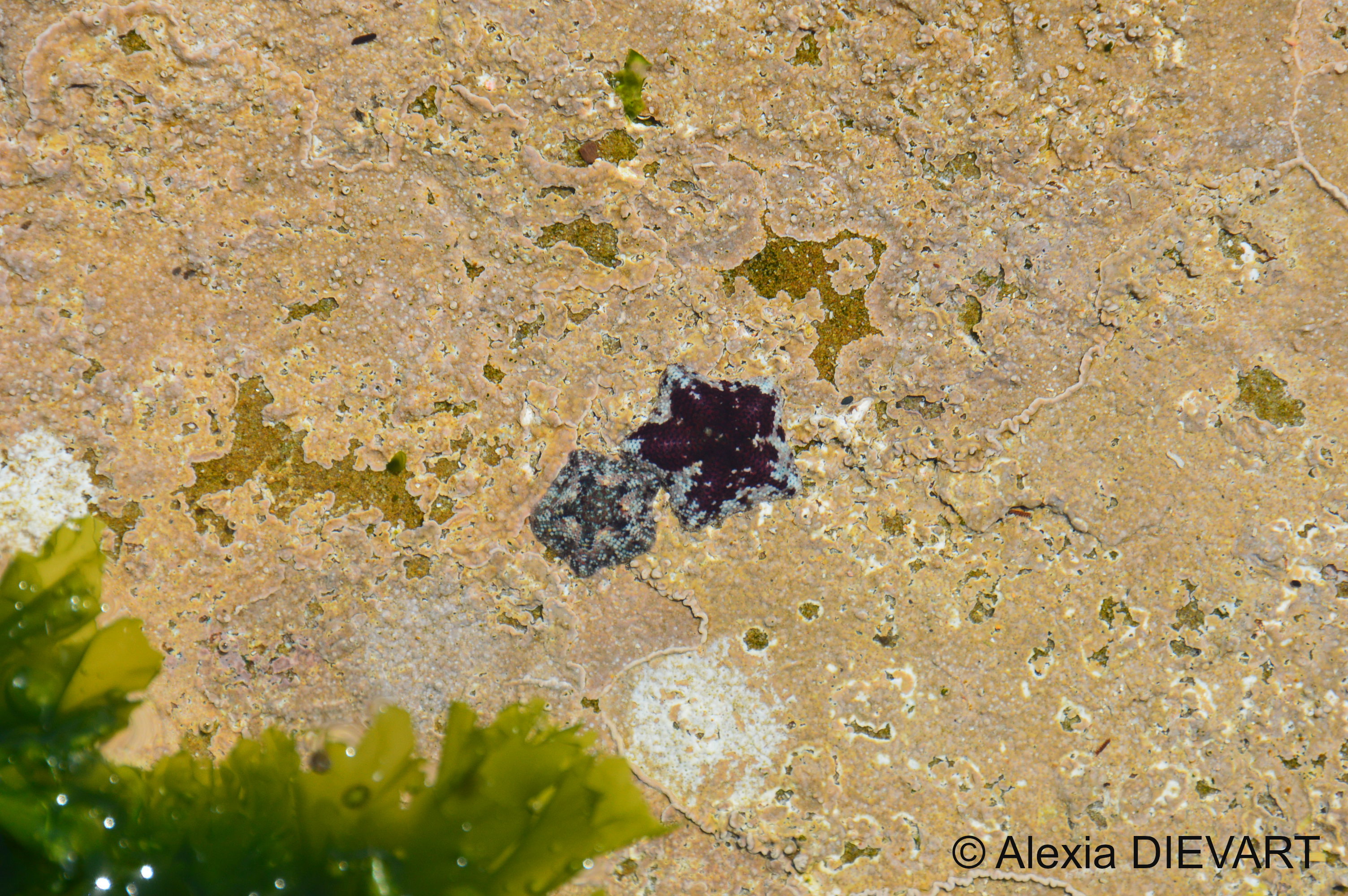
On the right is a perfectly square dwarf cushion star, in a beautiful burgundy and blue pattern, conveniently photographed next to a normal specimen in Fishhoek, Western Cape. What happened to this square starfish ? Did it lose an arm in an epic battle, which did not grow back ? Or did it happen during the developmental stages ?
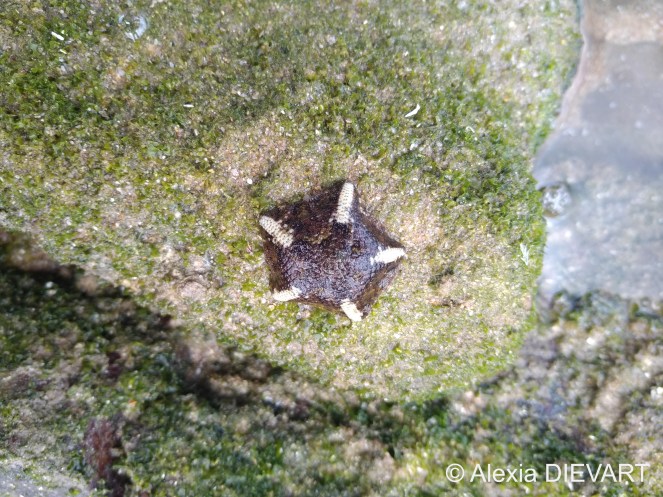
This specimen is aesthetically pleasing, with the bold white lines decorating its arms on a darker body surface, and was observed in Port Alfred, Eastern Cape.

 F*CK FISH