
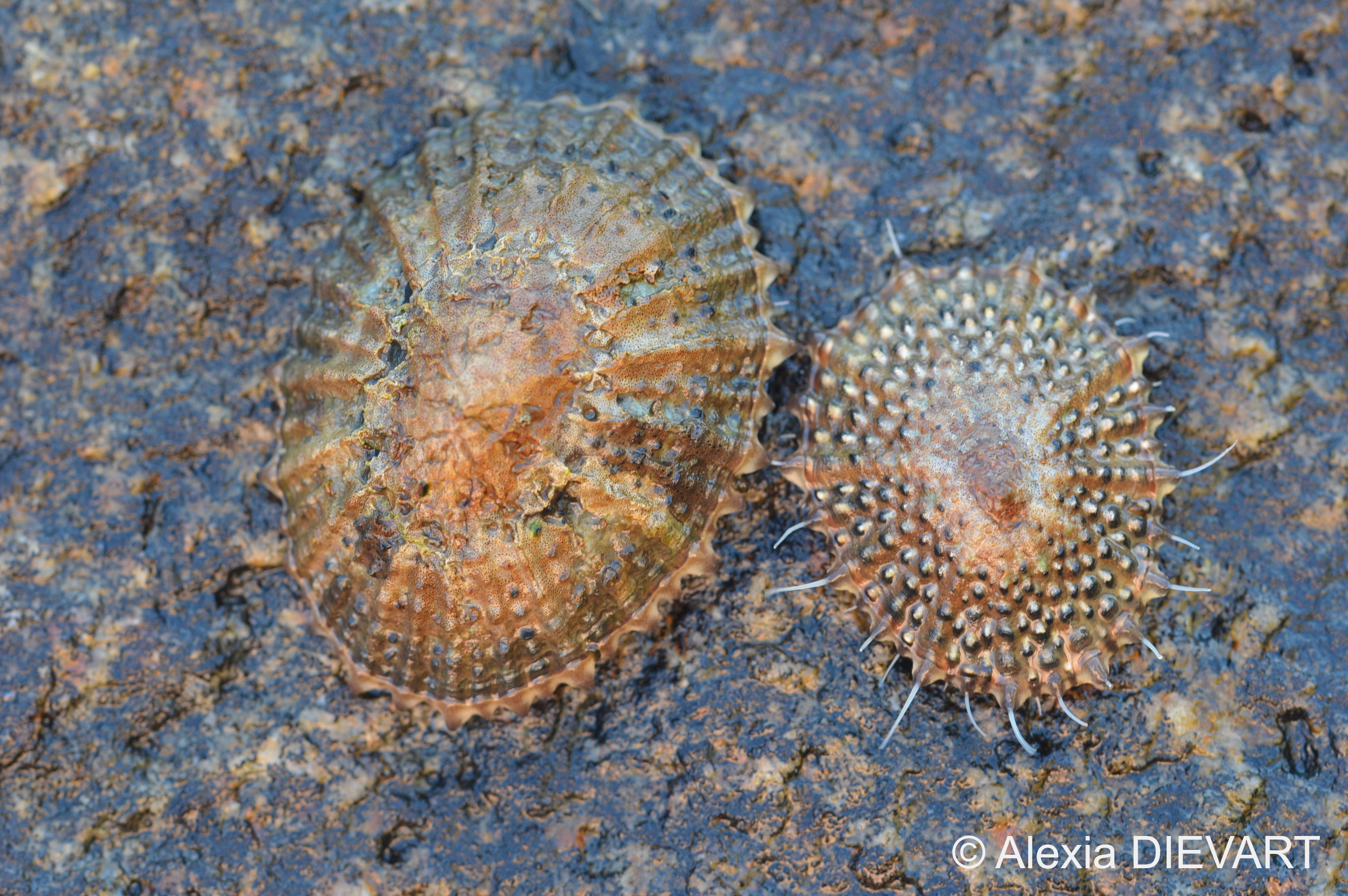
Previously known as Patella granularis.
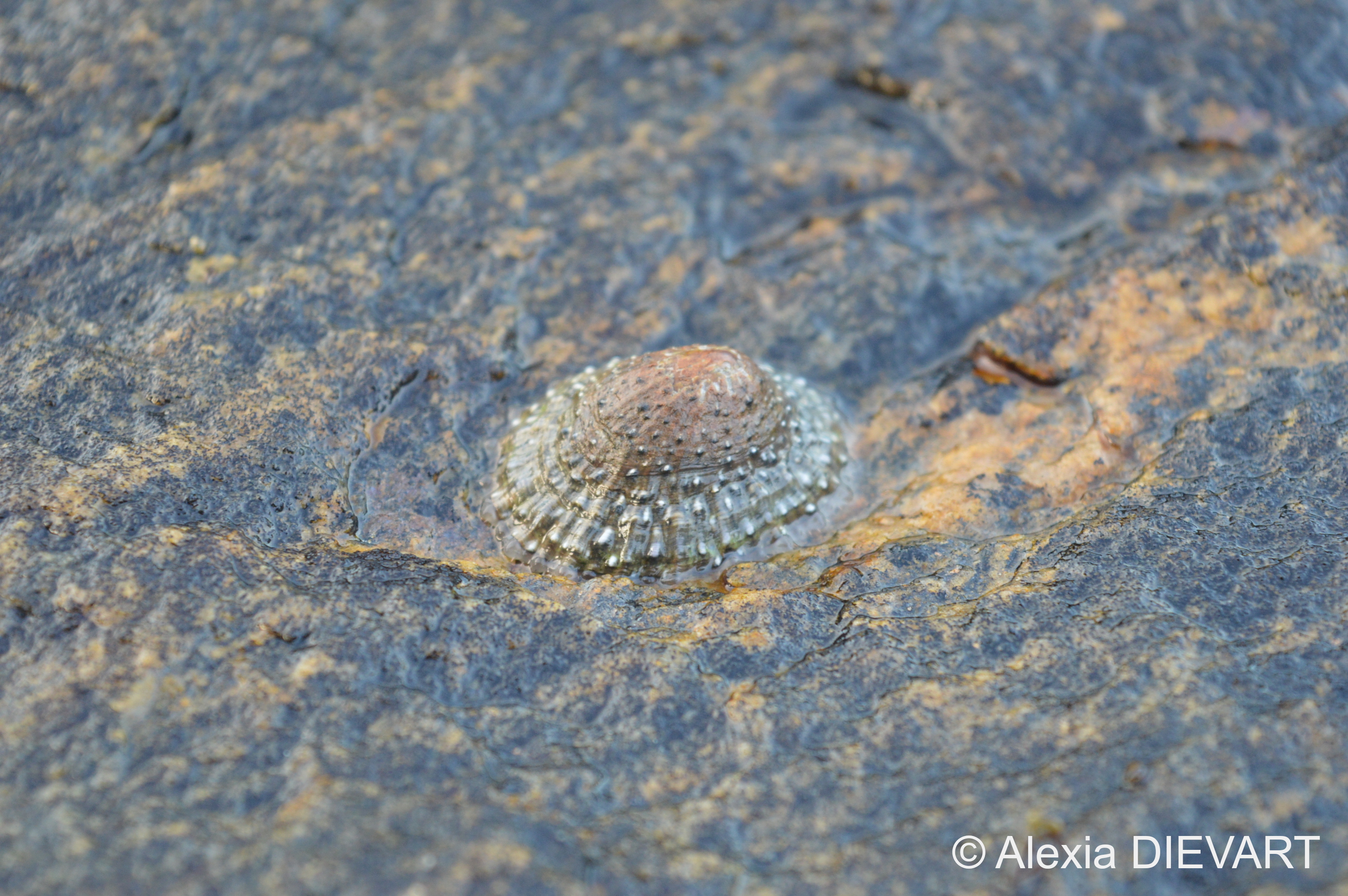
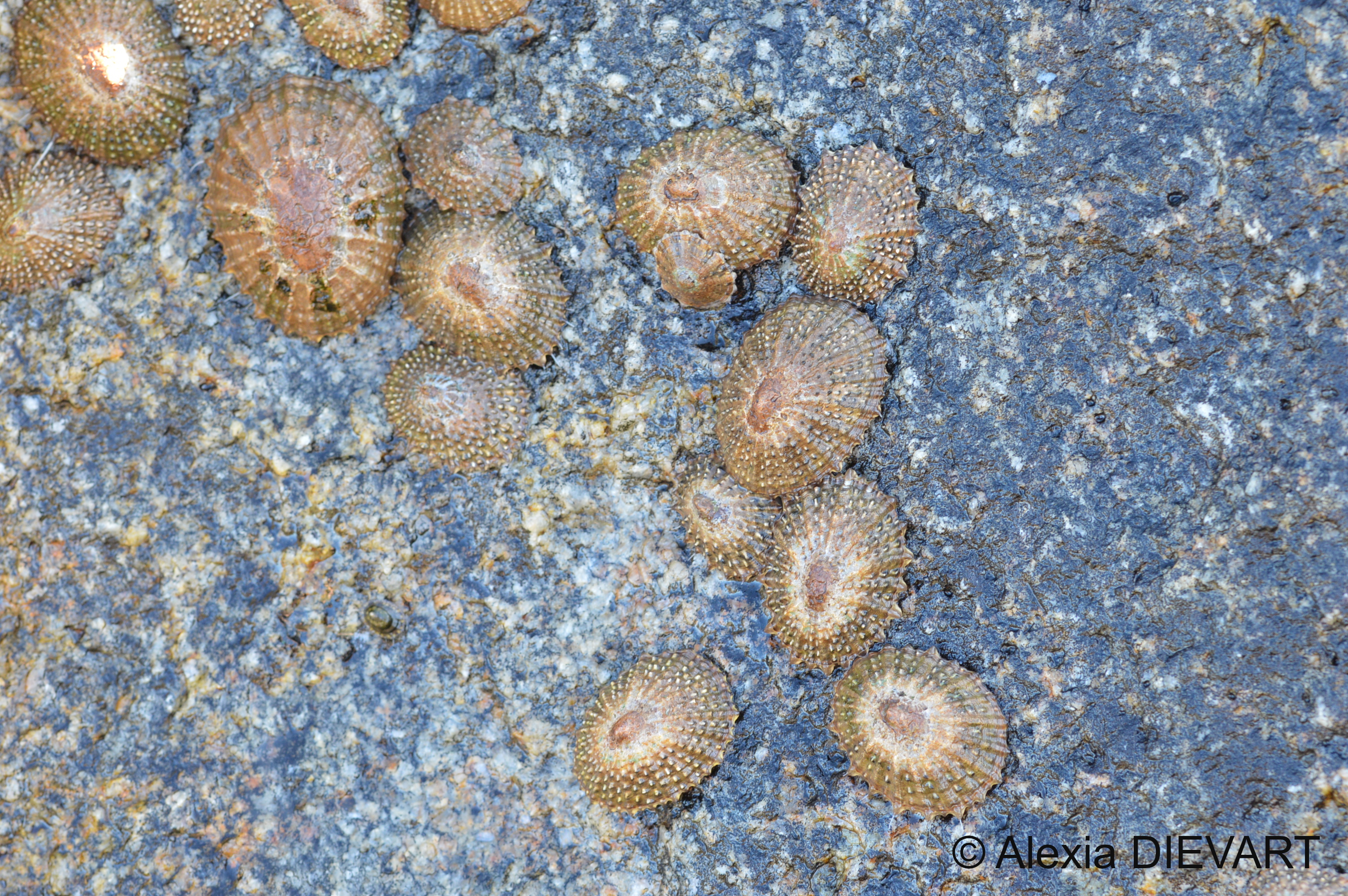
Roughly oval, with approximately 50 fine ribs textured with white granules. Often eroded, smoothing the ribs and revealing a brown cap.
Interior blue-white with a central brown patch and a dark border that is more obvious on West Coast, than on South or East Coasts specimens.Up to 60 mm in size on the productive West Coast.
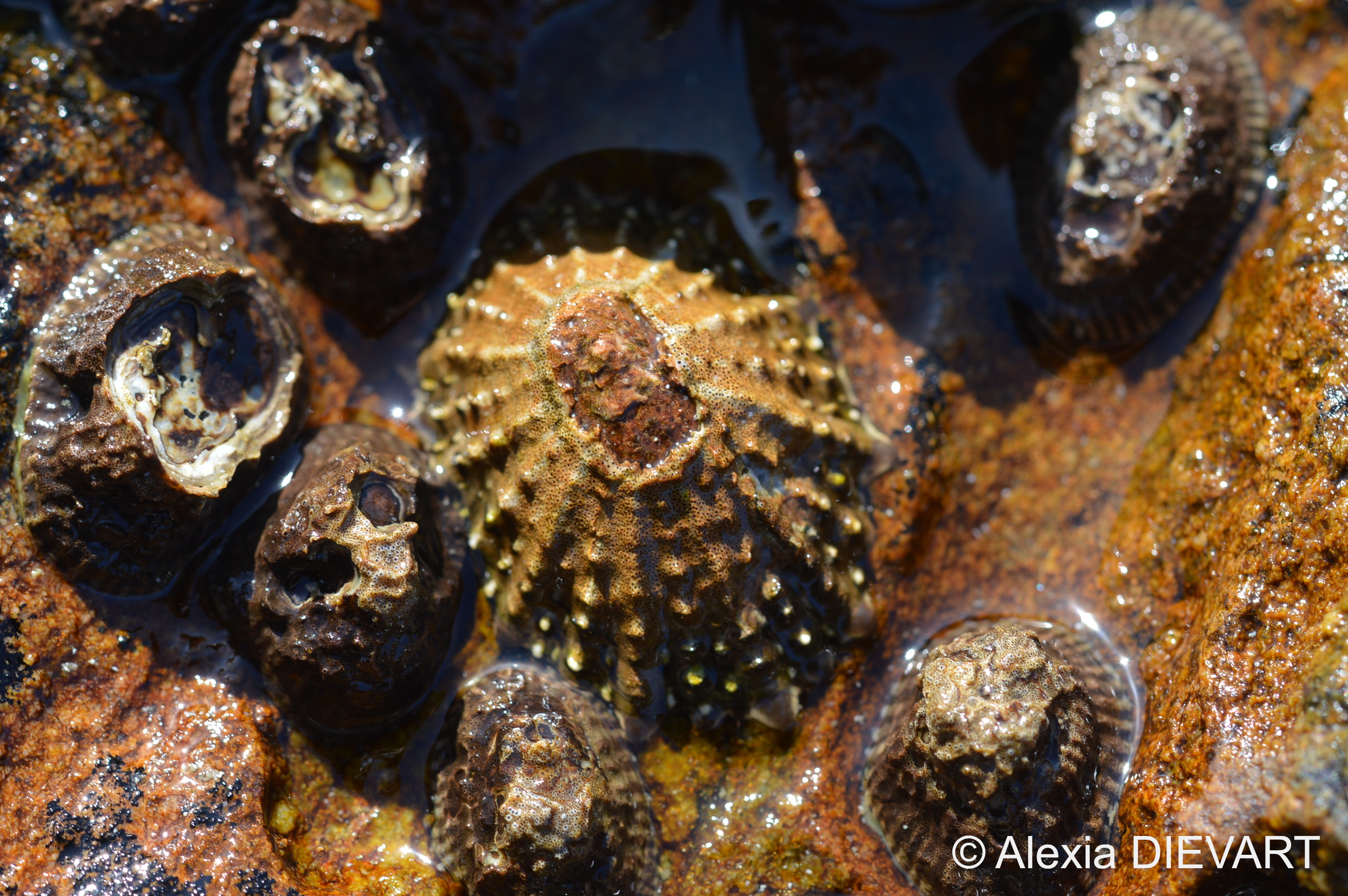
Abundant and occurring higher on the shore than other limpets (in the upper balanoid zone), where it regulates algae, maintaining bare rock. Feeds on encrusting lichens and moves within a range of a square meter. At low tide, returns to a ‘home-scar’ which the shell fits perfectly, to prevent water loss.
Two Oceans: A Guide to the Marine Life of Southern Africa (1994, 2016); A guide to marine life on South African shores (Day, 1969)
The shell is made of calcium carbonate, but its composition changes with temperature: aragonite predominates on warm seas and calcite in cold waters. Archaeologists have used the ratio of the two components in ancient shells to deduce prehistoric sea temperatures.
Discover in Video
Discover in Image
Feeling the water
Prosobranch limpets have two sets of tentacles : the pair of cephalic tentacles and a whole bunch of pallial tentacles that stem from the mantle. Pallial tentacles are thought to be able to ‘sense’ the coming tide and trigger the foraging activity – this was the case when I took these pictures and videos of granular limpets !
The tip of each pallial tentacle is covered by a dense crown of long cilia, whereas the shaft of the tentacles bears small tufts of short cilia (Hackney et al. 1983, Hodgson et al. 1987). These cilia are microscopic, about 5 to 10 μm of diameter, and non-motile. The nerve processes run from the base of each cilia to a nerve bundle at the centre of the tentacle, suggesting that pallial tentacles have a sensory function. Moreover, plate-like structures have been found in the centre of each pallial tentacle using electron microscopy and may play a role in scattering or reflecting light, and thus form a part of the dermal light sensing ability of these limpets.



 F*CK FISH
3 thoughts on “Granular limpet (Scutellastra granularis)”