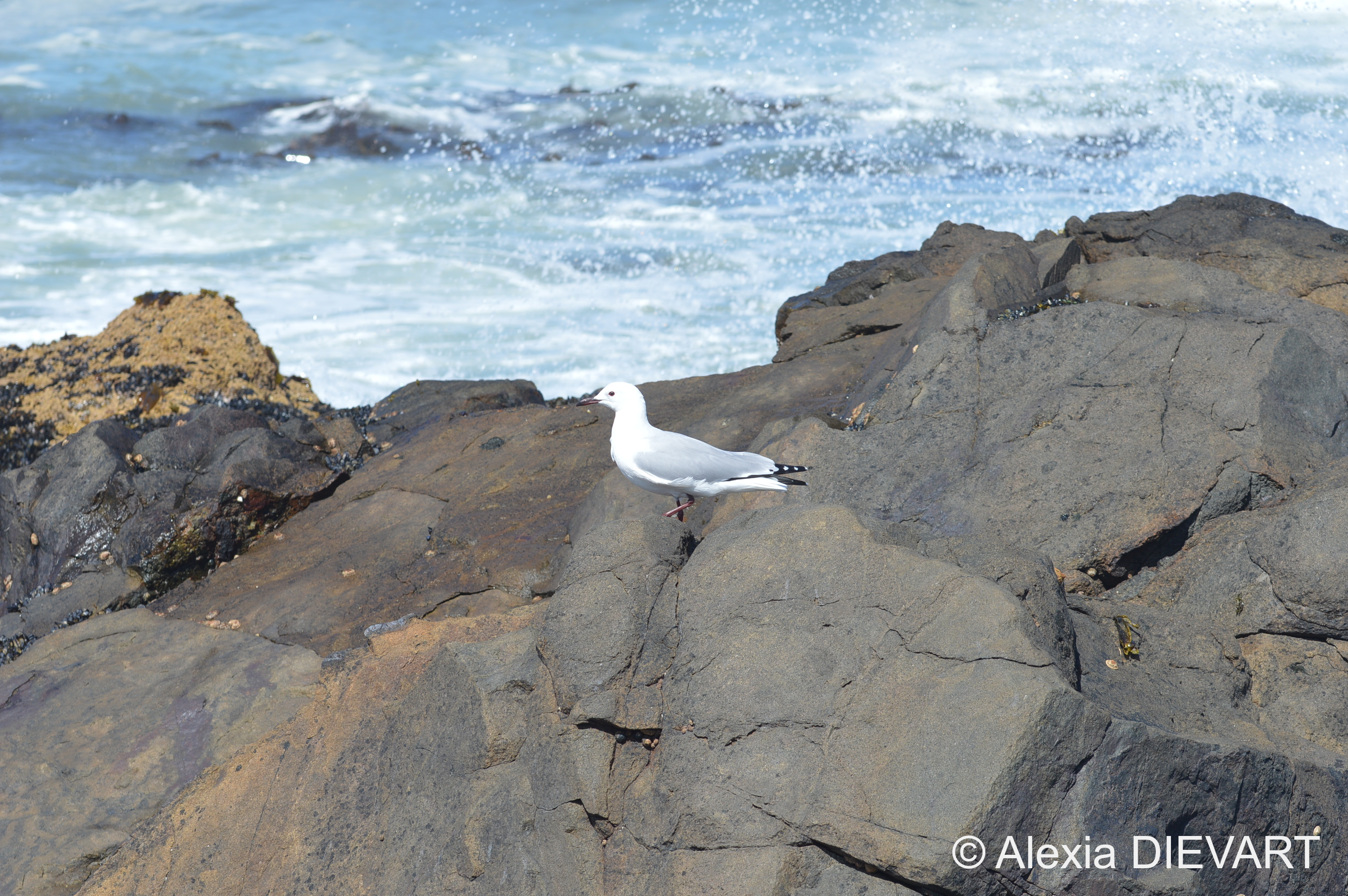
Also known as the king gull.
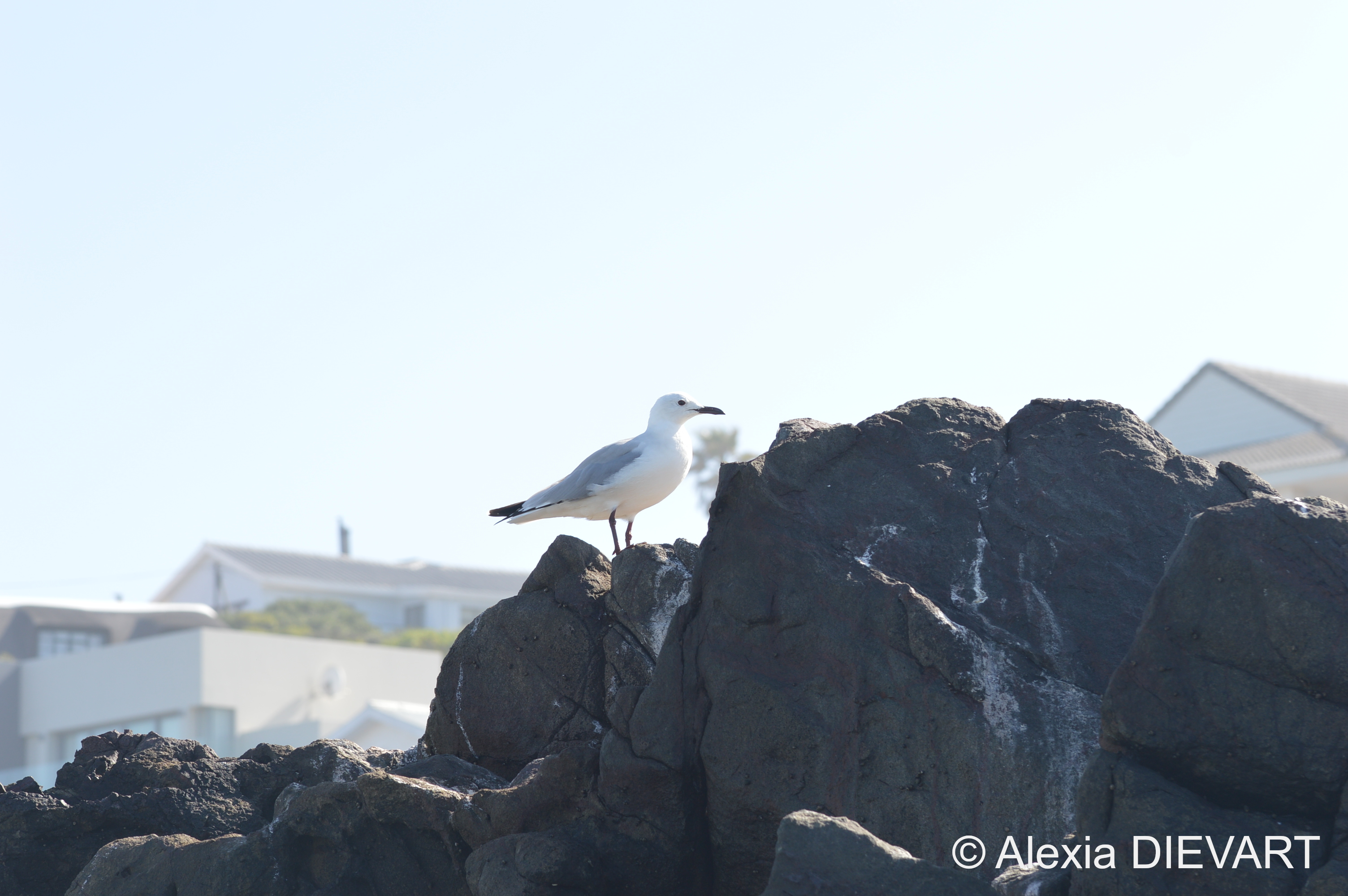
Short, thin and dark bill, with deep red legs. Eyes usually dark at all ages, but some birds have whitish eyes. Told from vagrant gulls in flight by grey underwing and mostly black outer primaries.
Breeding adults have slight, greyish shadow line demarcating pale lavender hood. Sexes similar.
Non-breeding adults have plain white heads.
Immature has blackish-red bill and dull legs; sometimes shows small, dark patches on ear coverts.
Juvenile had wing coverts mottled brown, and brown spots in tail tip.38 – 40 cm. 220 – 340 g. Wingspan 90 – 95 cm.
Endemic to Benguela Coast. Common resident. 13 000 pairs breeding on offshore islands, coastal wetlands and on large buildings. Becoming more common along the South Coast, now breeding as far as Port Elizabeth (Eastern Cape).
Birds of Southern Africa (2020).
An opportunistic scavenger and predator, it does well in urban areas and has spread up to 50 km inland around Cape Town. Often active at night. Large numbers gather to forage at flooded fields.
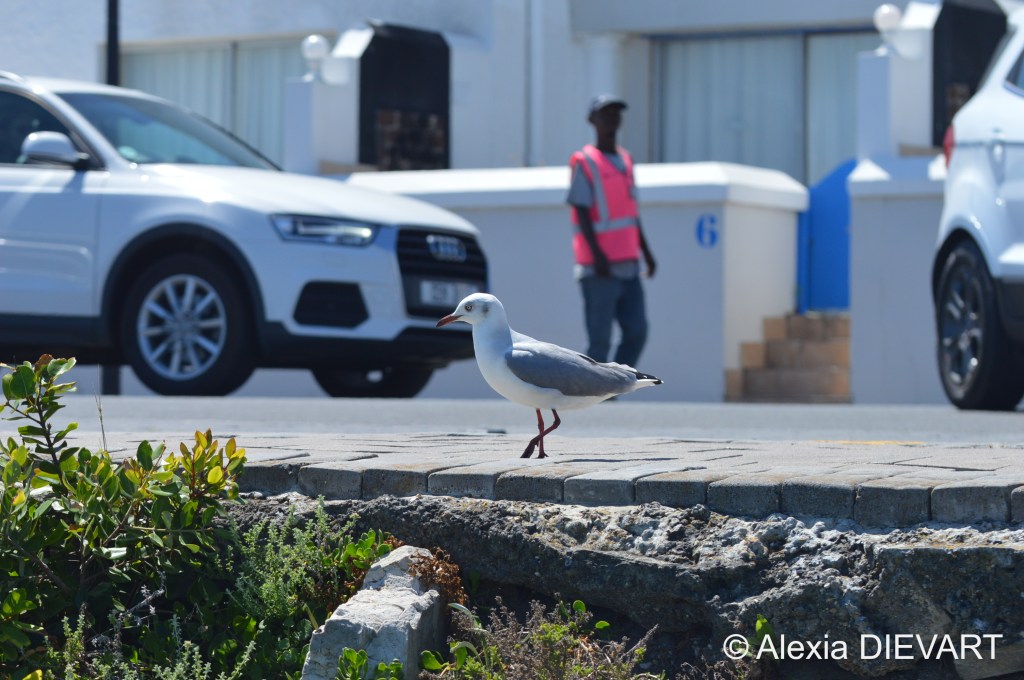
Grey-headed gulls (Chroicocephalus cirrocephalus) are similar, but slightly bigger. Eyes silver-yellow with narrow, red outer ring.
Breeding adults had diagnostic pale grey head, and bright red bill and legs. Non-breeding adults (shown here) has largely white head with grey smudges above eye and on cheeks, while bill and legs are duller.


 F*CK FISH
One thought on “Hartlaub’s Gull (Chroicocephalus hartlaubii)”