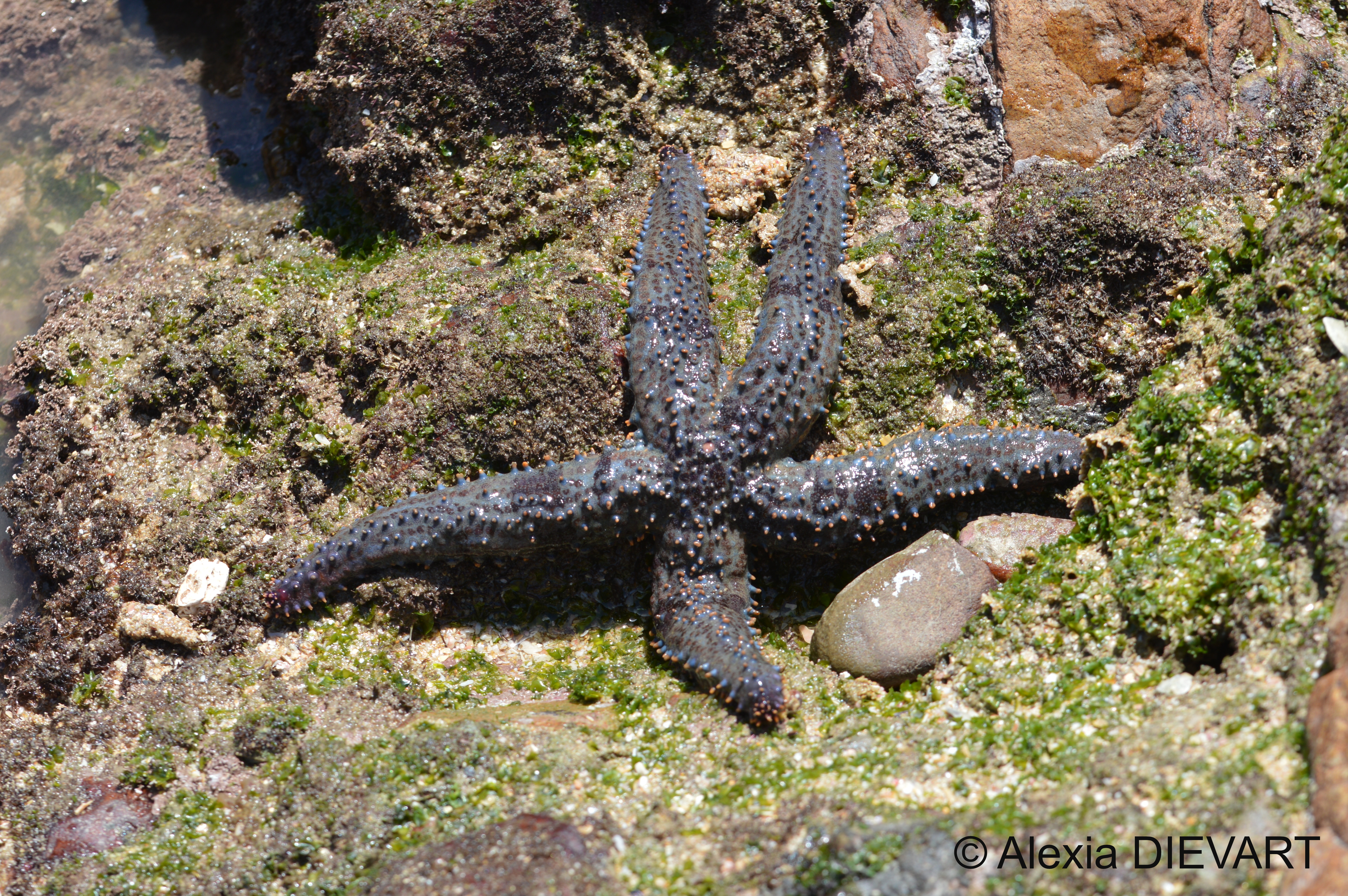
Body salmon-pink, orange, deep blue or blue-grey. Aboral (dorsal) surface irregular, covered in conspicuous spines, each surrounded by a halo of minute pincer-like organs (called pedicellaria) that are used to keep the body surface clean. Tube-feet in 4 series. Small red eyespot at the tip of each arm.
Between 200 and 250 mm across.
Occurs from East London to the Cape Peninsula and Table Bay, and perhaps even further north. A voracious predator, particularly of mussels, but also taking winkles, limpets, barnacles and even redbait. Hunches over the victim and extrudes its stomach through the mouth to digest the prey externally. Sometimes forms large feeding aggregations, especially on rocky shores in the Cape.
Two Oceans: A Guide to the Marine Life of Southern Africa (1994, 2016); A guide to marine life on South African shores (Day, 1969)
Discover In Video
Morphology
Fifty Shades of Spiny Starfish
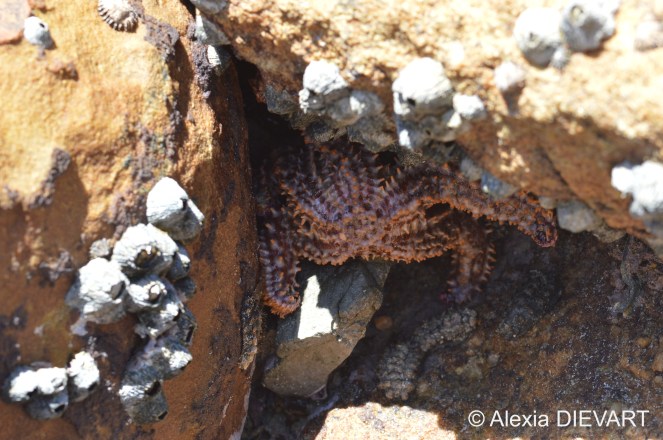
Marthasterias africana displays a high level of color variation on the South African rocky shores, with about three ‘dominant’ color on each individual : the color of the body surface, the color of the pedicellaria, and the color of the spines.
Click Right > Open Image in New Tab to view the pictures in full screen

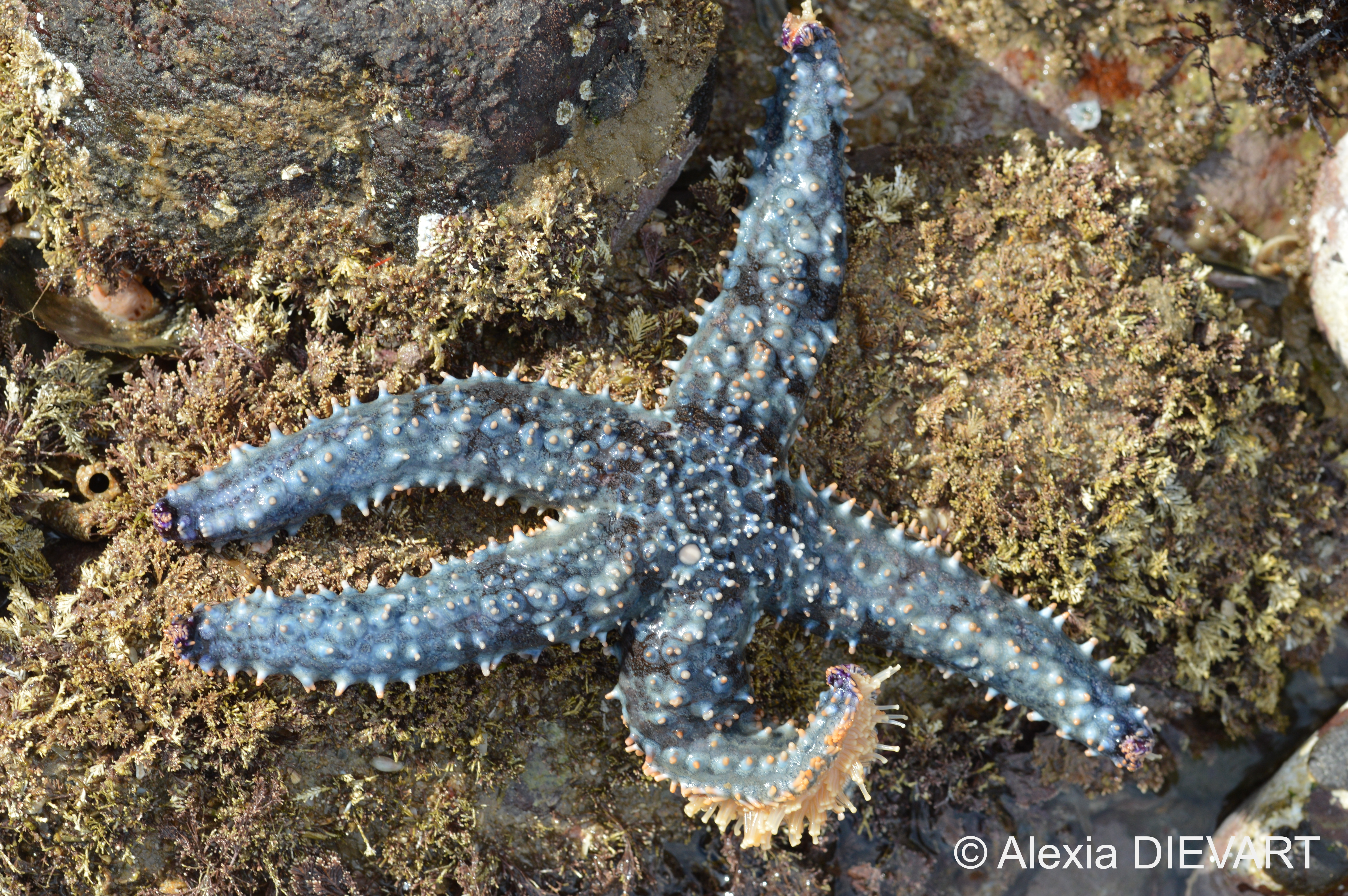

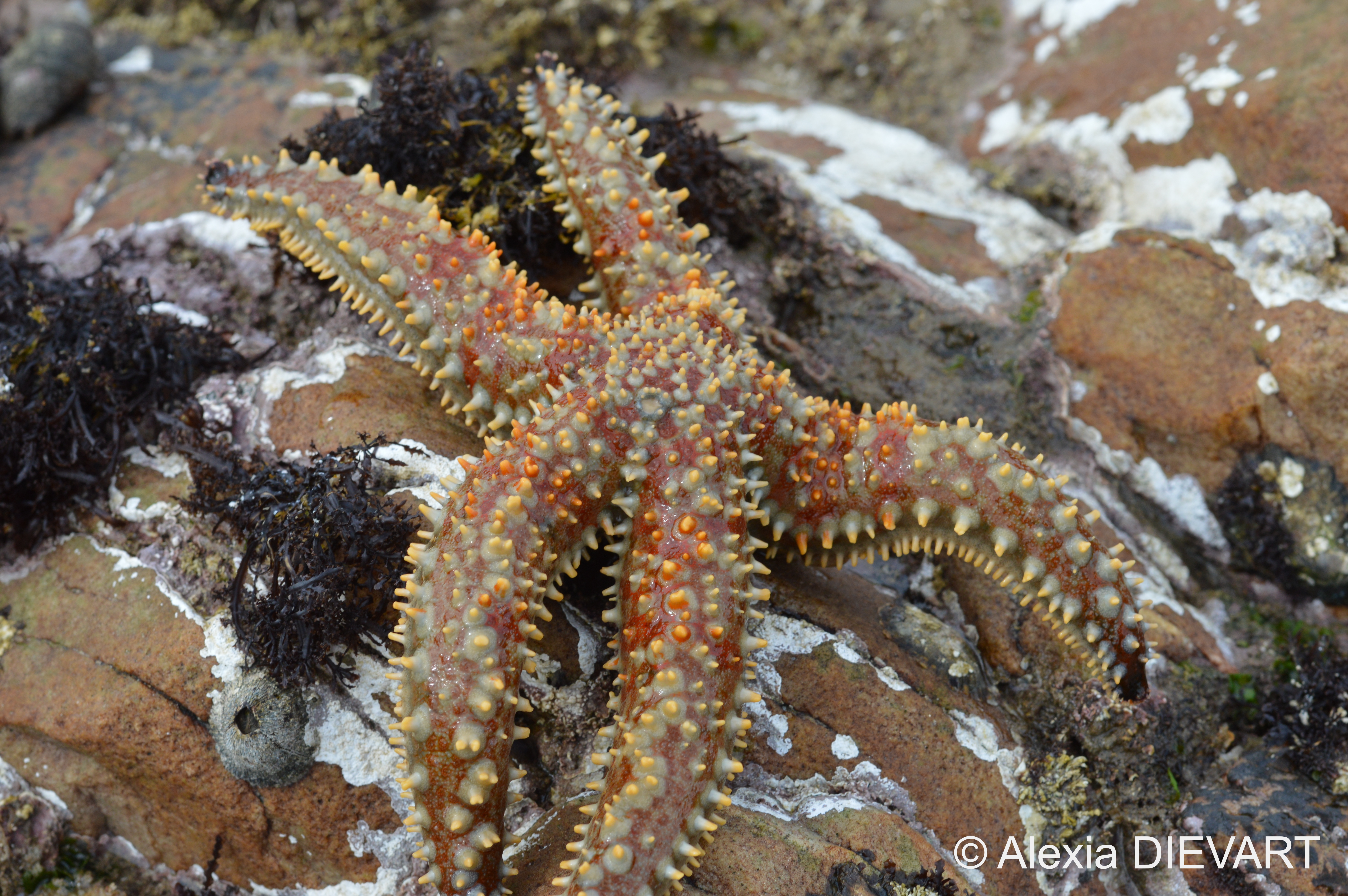
Open The Valve !
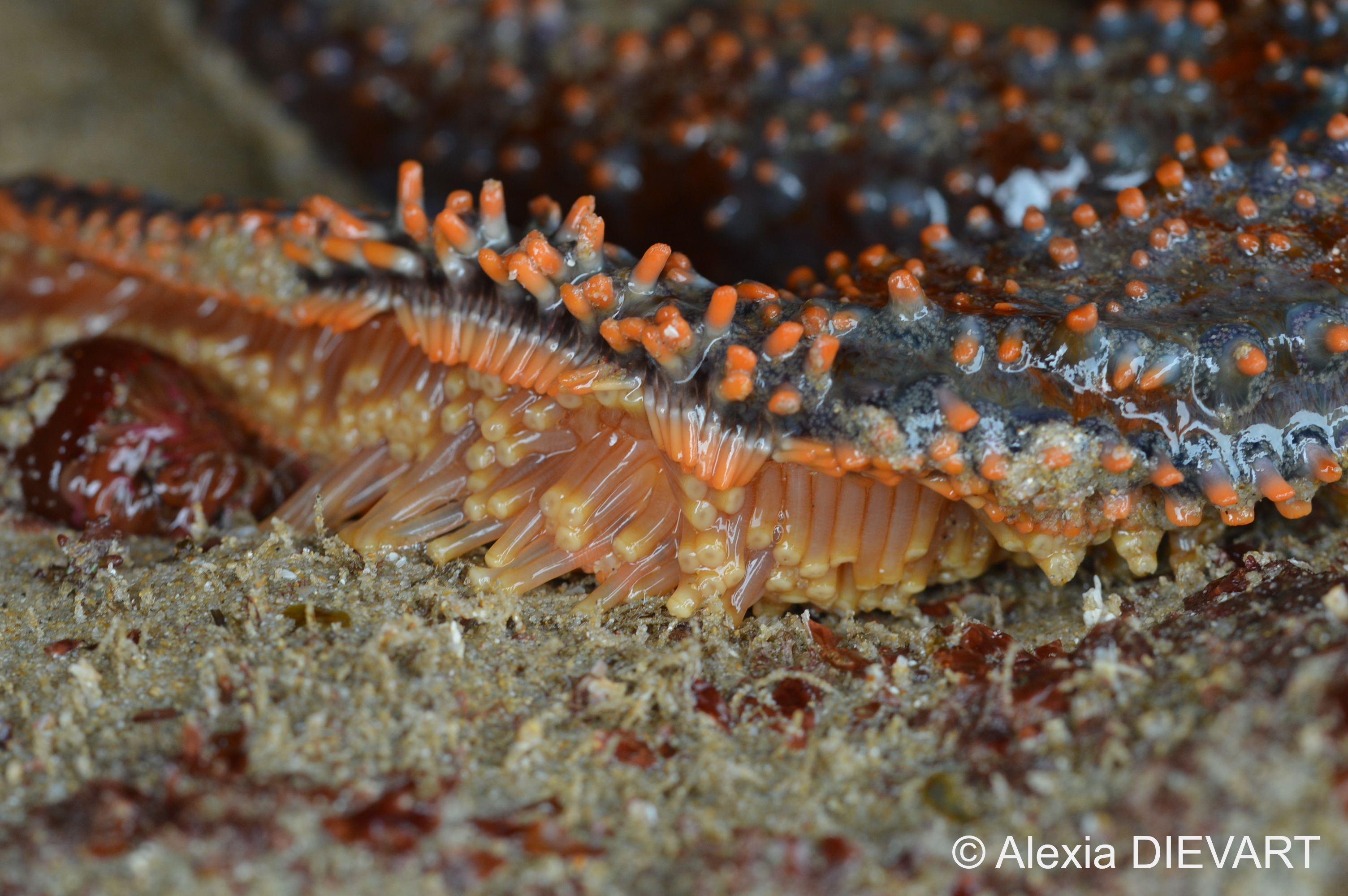
There is something interesting to notice on close-up pictures of starfish: the madreporite plate ! It is the little offset patch or circle on the aboral surface of the starfish. The madreporite plate is a porous calcium carbonate plate, covered with pores and grooves. But what does it do ?
Sea stars and other echinoderms have a unique circulatory system: seawater is ‘pushed’ through a series of tubes of vesicles within the animal, allowing it to keep their overall shape, move around on their tube feet and digest with its stomach. The madreporite plate corresponds to the intake valve of the starfish circulatory system (Ferguson, 1990) and its complex form with gutters and pore canals provides multiples levels of coordinated defense against the entry of undesirable materials (Ferguson & Walker, 1991).

Port Alfred, Eastern Cape (2022) – iNaturalist

Port Alfred, Eastern Cape (2023) – iNaturalist
Take a closer look
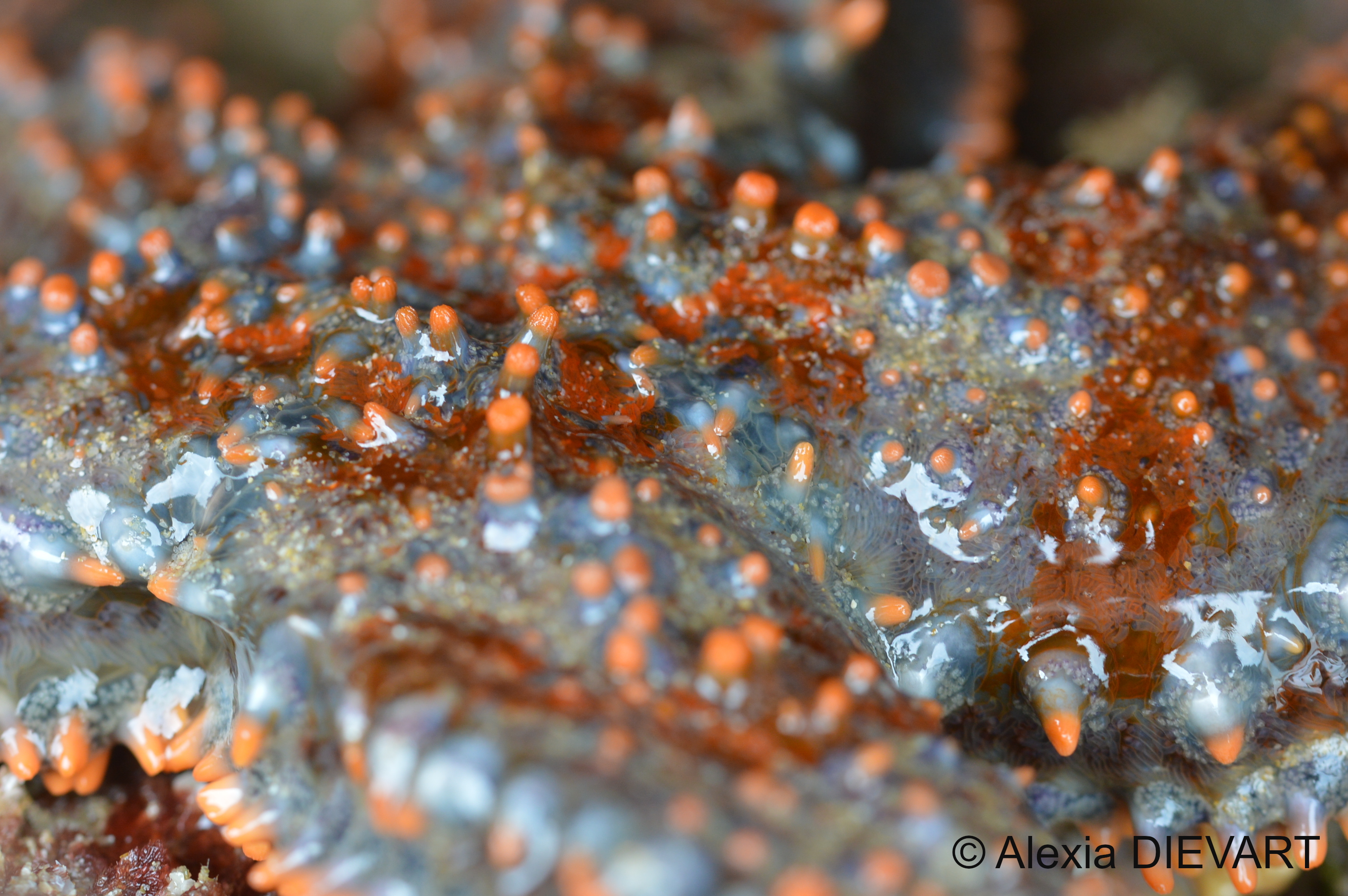
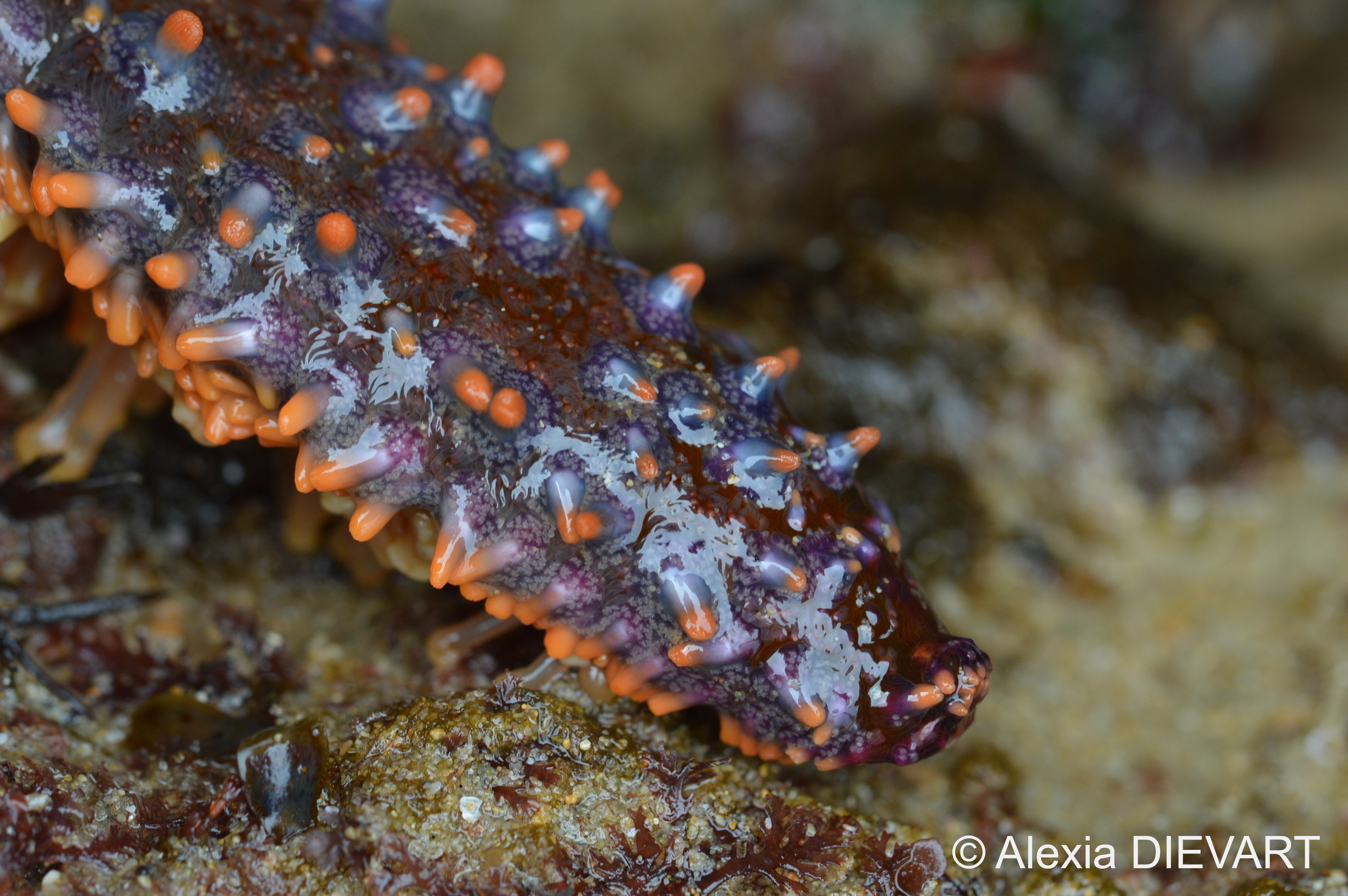
Taxonomy
Marthasterias africana was previously considered as a form of the true Marthasterias glacialis, its northern hemisphere counterpart distributed throughout the littoral areas of the North-East Atlantic. Specimens collected at the Cape of Good Hope in South Africa were described as a ‘spinier’ version (africana), and a ‘smoother’ version (rarispina), in comparison with the original European spiny starfish.
However, the genetic analysis of Marthasterias individuals from around the Cape Peninsula revealed that the forms africana and rarispina are genetically indistinguisable, despite the diversity in color, spine arrangement and size (Wright, 2013).
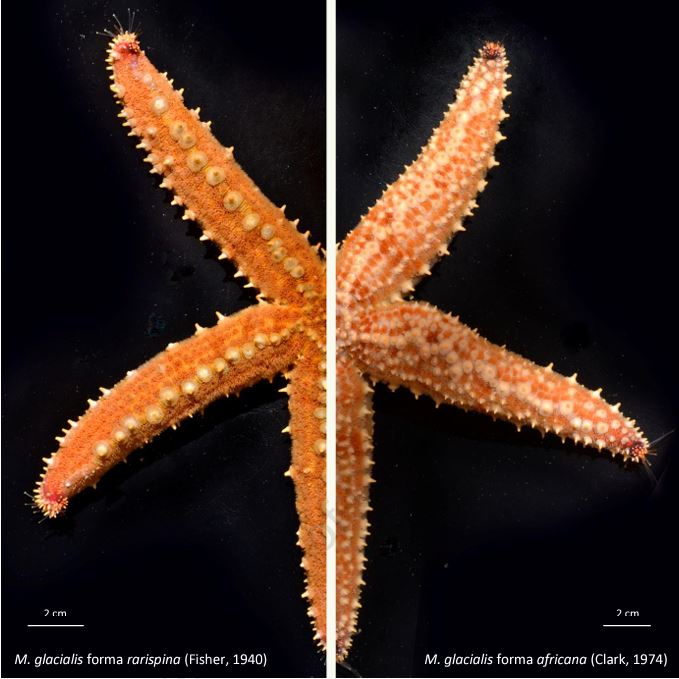
While the color pattern of Marthasterias glacialis varies from grey to green, to yellow-red, with usually white spines, sometimes with purple tips, M. africana is predominantly orange, but may vary from red, brown, blue or even white, with brigh orange to red and brown spines (Wright, 2013).
Furthermore, the distribution of the spine armament differs between the two species: M. glacialis has numerous, slightly spaced, blunt spines arranged in three or more regular rows down the length of each arm, whereas M. africana can either have an extraordinarily bare surface with only two spine rows per arm, or be covered in many irregularly spaced spines (Wright et al. 2016).
Behaviours
Feeding Behaviour
Marthasterias sp. is a common, generalist predator on the rocky shores, where it is considered an opportunistic and voracious feeder. By definition, a generalist predator may ‘switch’ between several prey species, depending on which prey is currently the most abundant. It can even mistake a rock for a prey !
On the Atlantic coast, small spiny starfish specimens (<5 cm radius) consume algae, epifaunal turfs and small snails and limpets, while larger individuals consume bivalves and carrion (Frid, 2009).
In South Africa, the spiny starfish feeds particularly on mussels, such as the black mussel (Choromytilus meridionalis), but also on several limpets, such as the duck’s foot limpet (Scutellastra longicosta) (Branch, 1978).

Old Woman’s River, Eastern Cape (2018) – iNaturalist
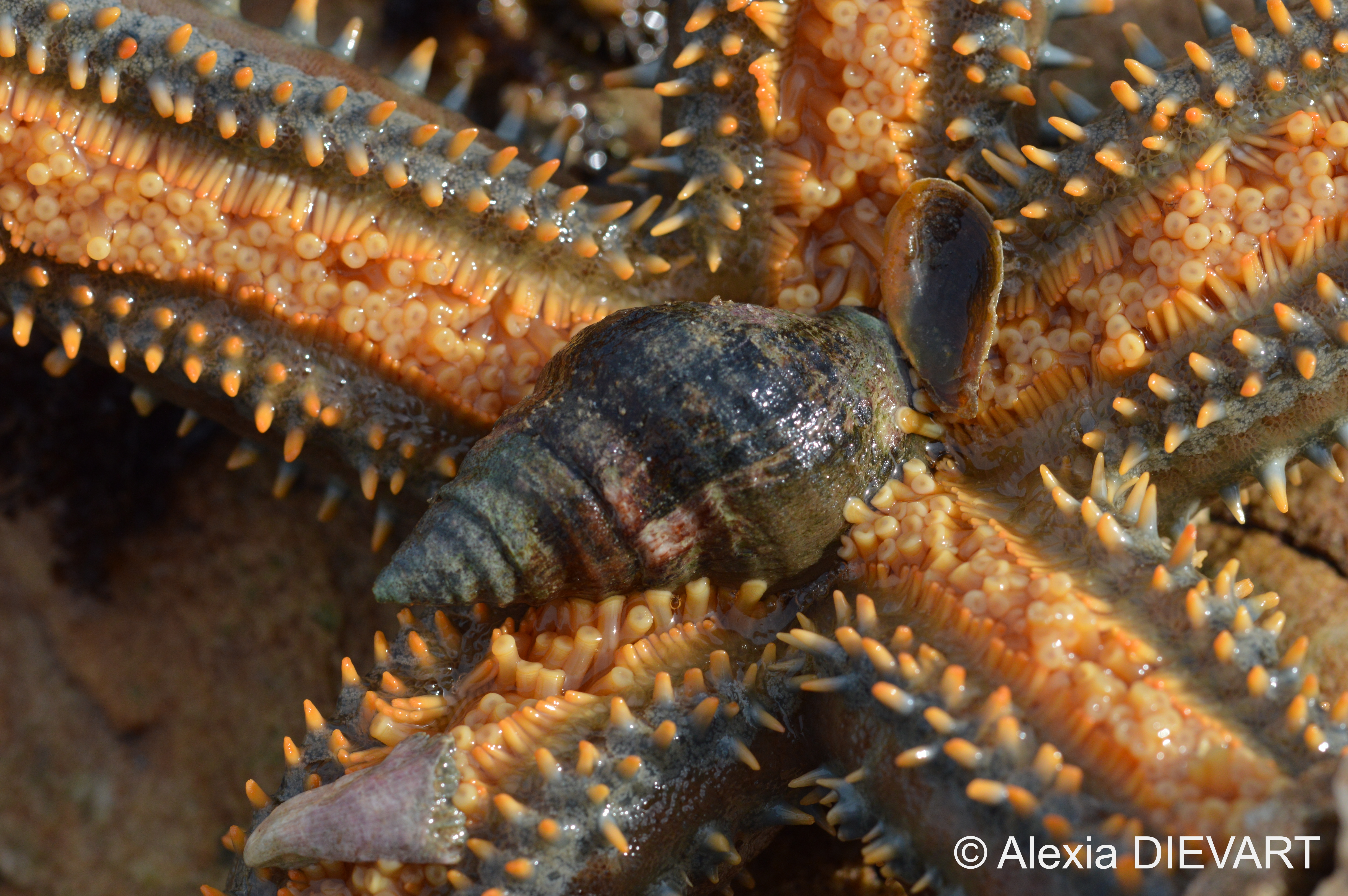
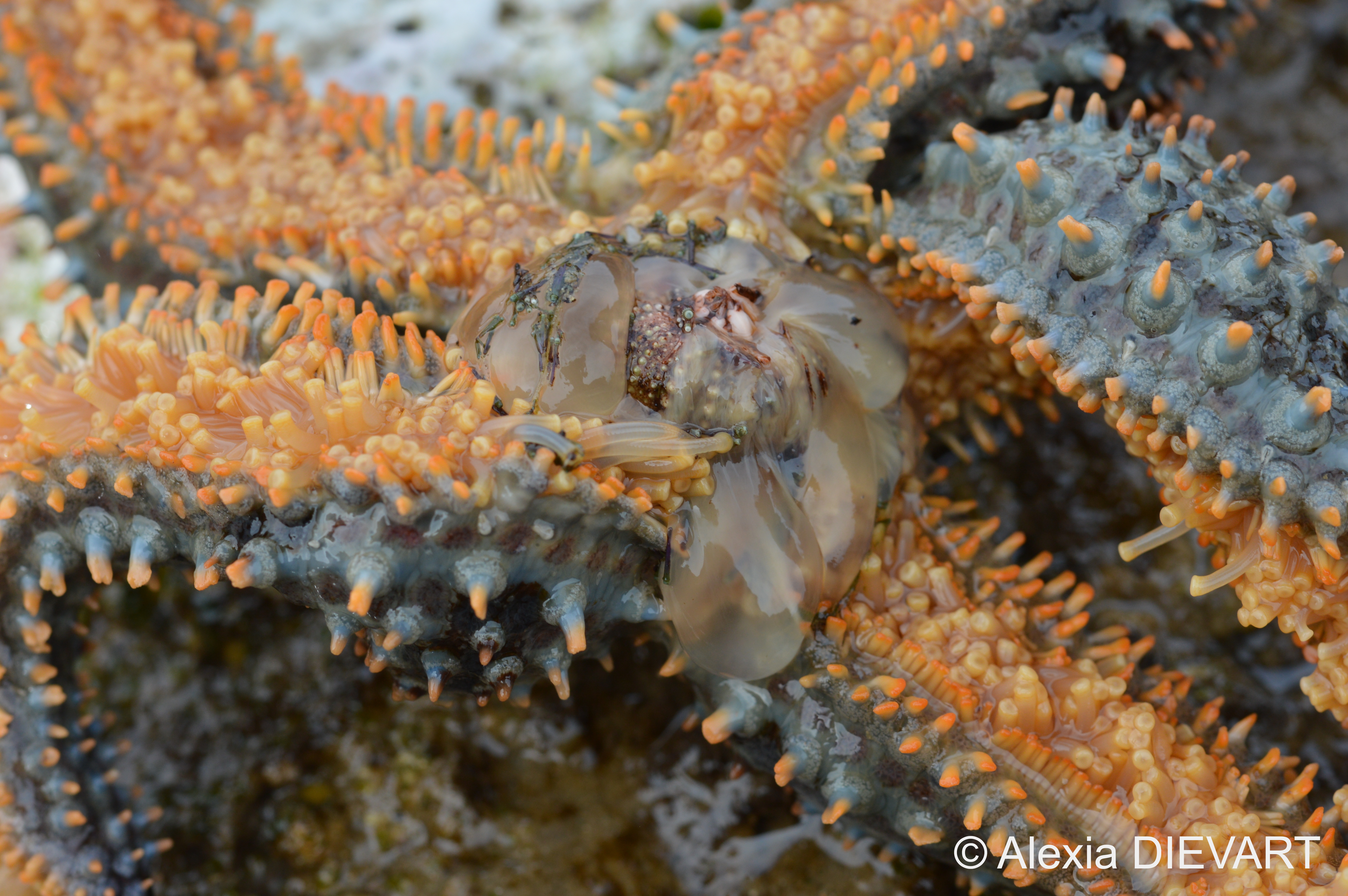
Port Alfred, Eastern Cape (2023).

 F*CK FISH