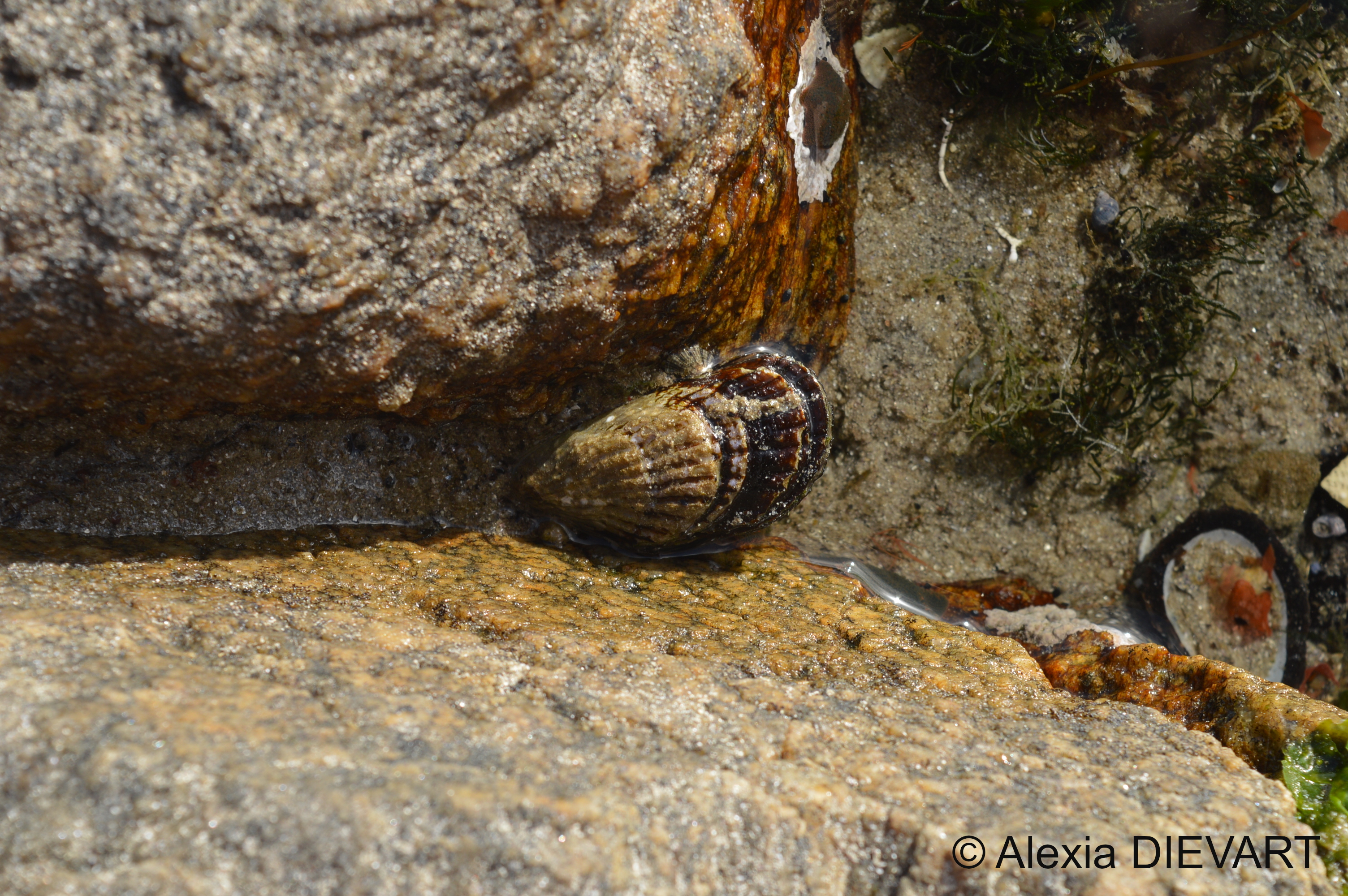
Easily recognised by the strong wavy ridges running the length of the shell. Shell brown in juvenile, but becomes blue-black in larger individuals. Eroded areas are white.
Up to 90 mm.
Forms extensive beds low in the intertidal and on rocky reefs to about 40 m in depth, particularly in the colder waters of the West Coast of South Africa. Slow-growing, it takes at least ten years to reach its maximum size. An important source of food for the rock lobster Jasus lalandii. It has been displaced by the blue mussel, Mytilus galloprovincialis, an invasive bivalve from the Mediterranean.
Two Oceans: A Guide to the Marine Life of Southern Africa (1994, 2016)

 F*CK FISH