
Shell smooth, typically black or blue, shading to brown on the lower surface, but rarely light brown. Broad in cross-section and usually widest at base. Distinguished from Choromytilus meridionalis by pits in the resilial ridge.
Up to 140 mm.
Thought to be a recent introduction from Europe, around the 1970s, but now the dominant intertidal mussel throughout the West Coast, often forming a dense band in the low intertidal. Rare below water. The flesh of females is orange and of male is off-white. A fast-growing mussel raised commercially.
Two Oceans: A Guide to the Marine Life of Southern Africa (1994, 2016)
Discover in Image
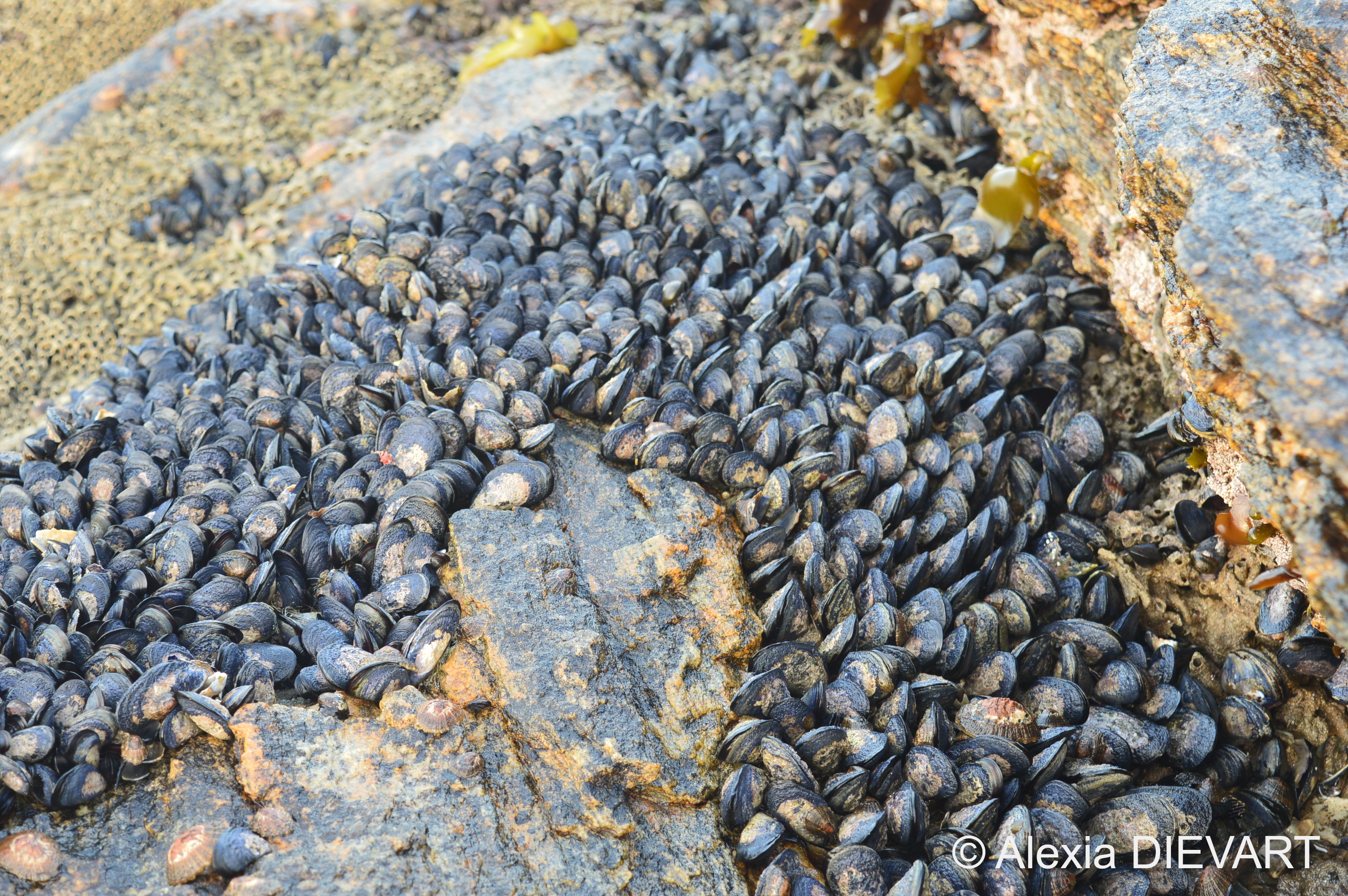
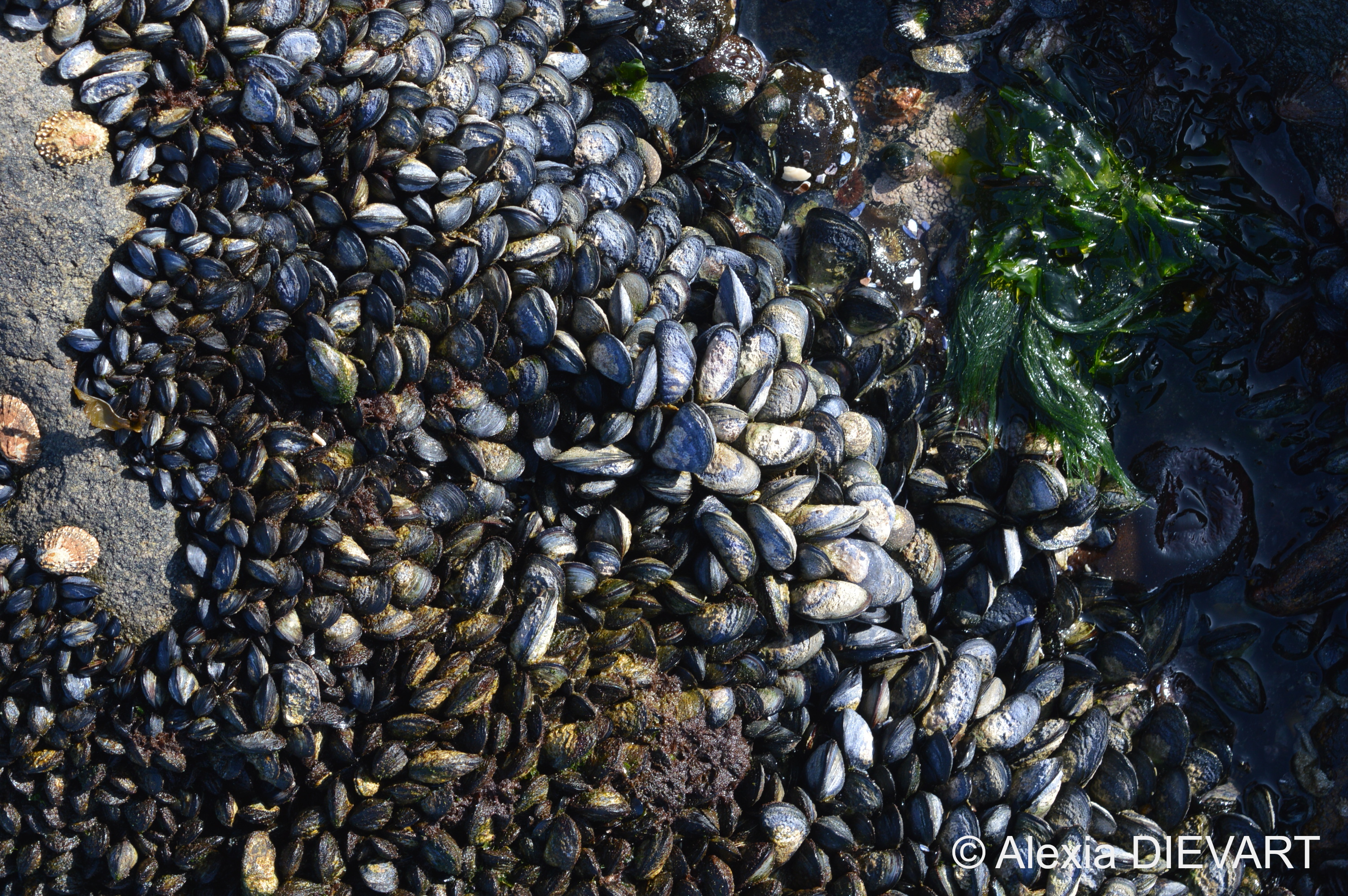
Surviving sand and waves
On rocky shores, sand inundation – also called ‘sand scour’ – and wave action are two of the primary causes of disturbance of animal and plant communities. Compared to the native Perna perna, the invasive Mytilus galloprovincialis has been demonstrated to be less resistant to wave action but more resistant to sand stress.


 F*CK FISH