
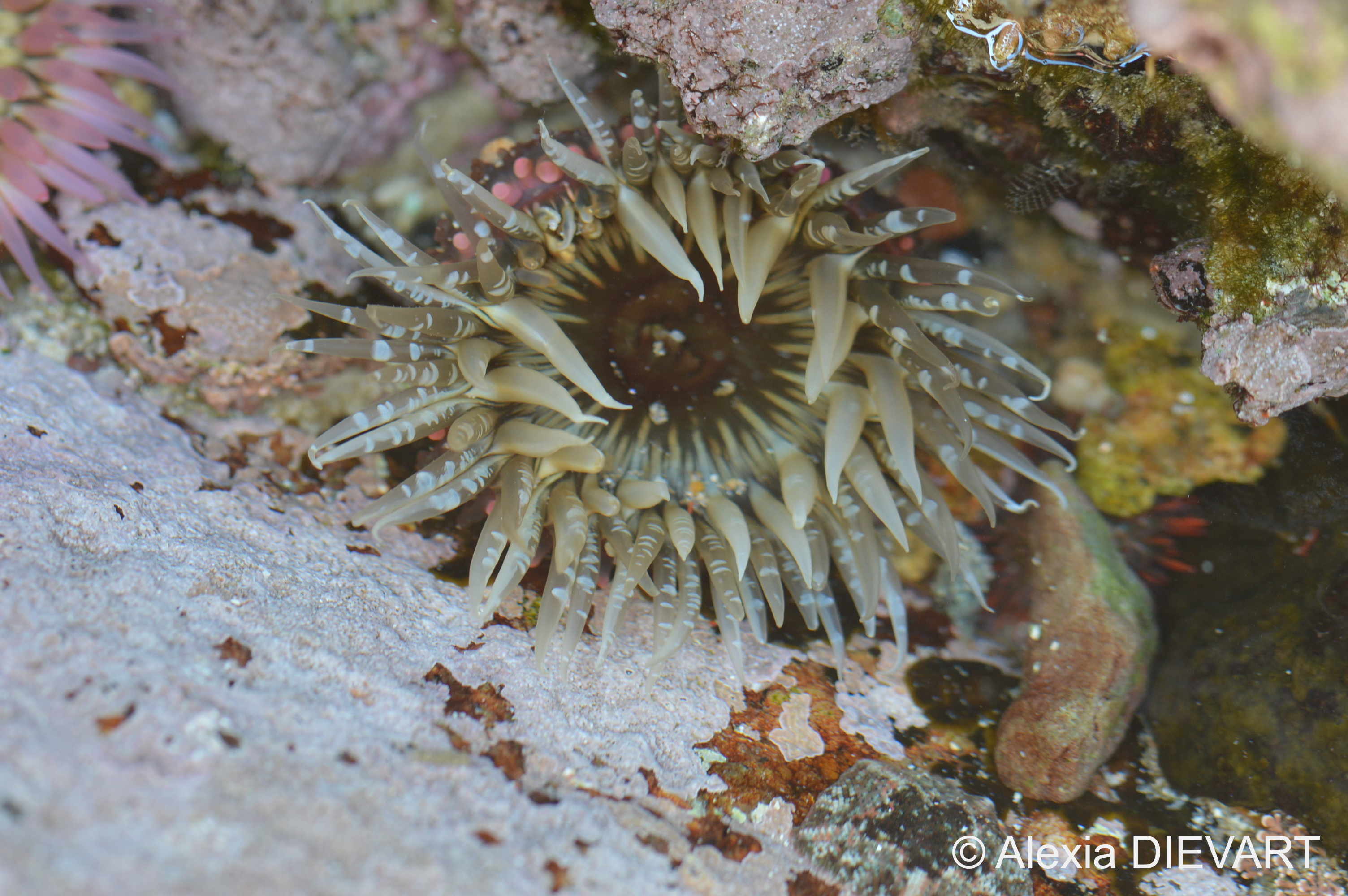
Also called long-tentacled anemone.
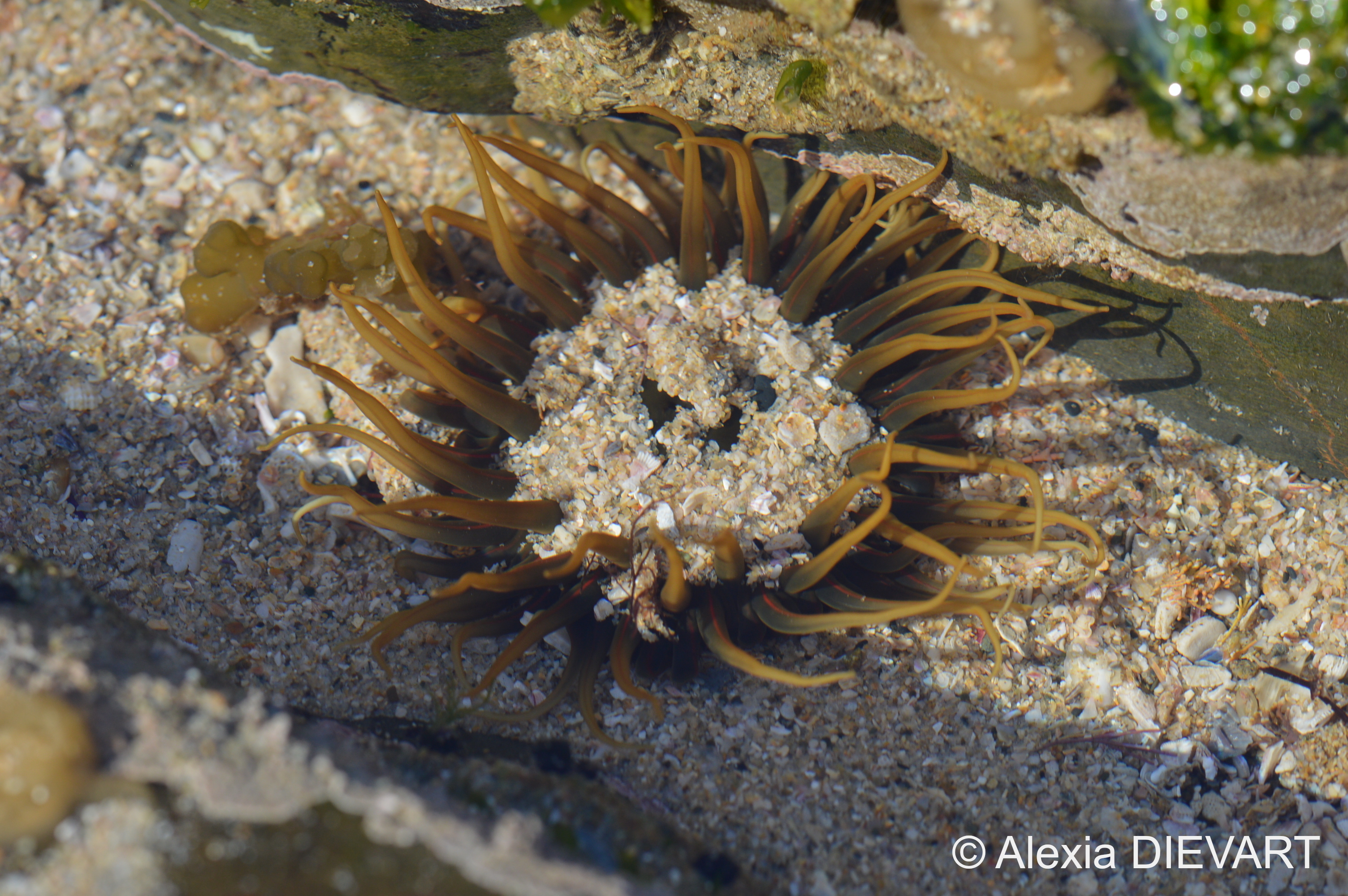
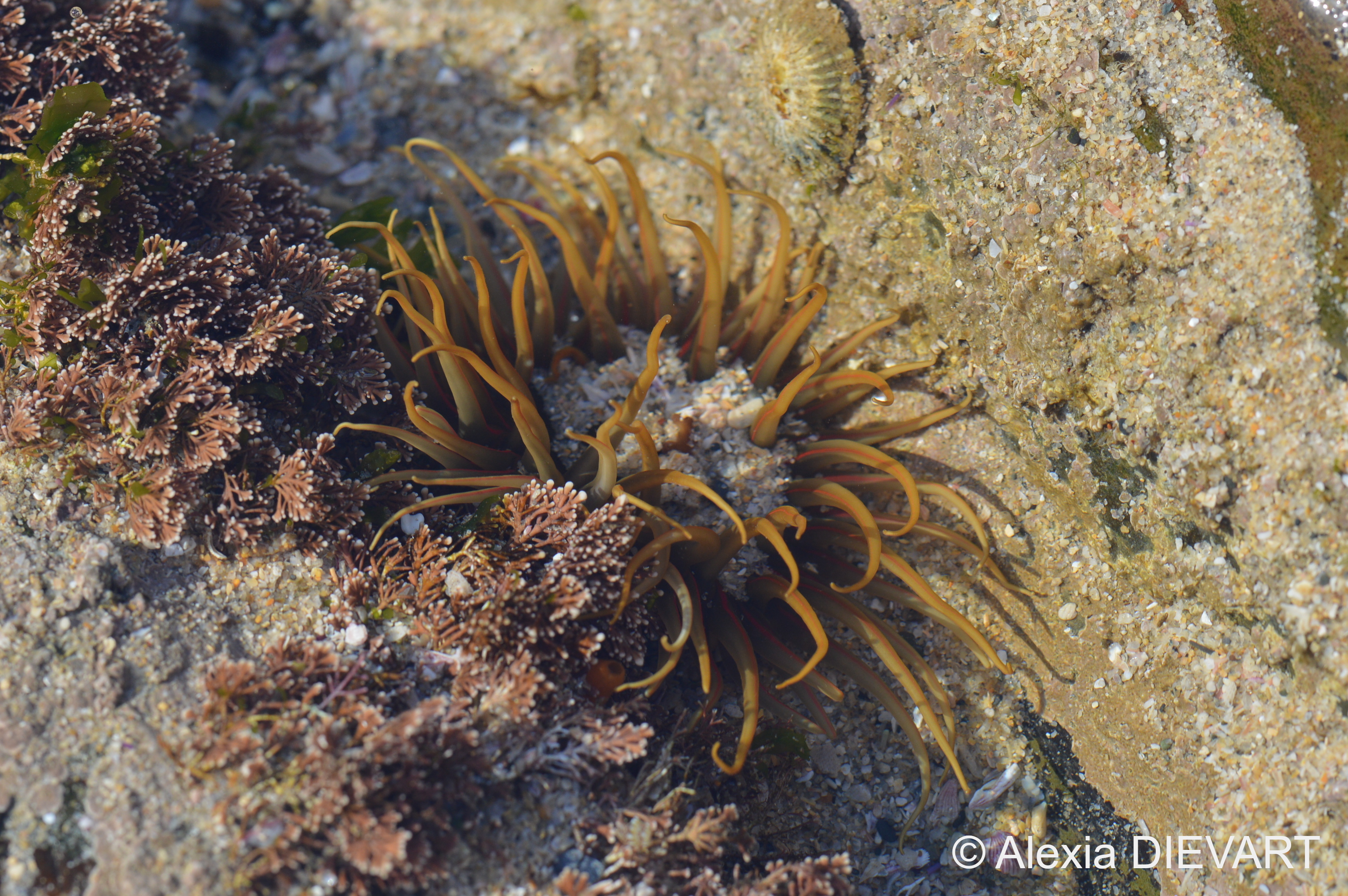
Column with large sticky pads, to which shells and gravel adhere. Dark stripes usually radiate from mouth to the 96 long pink-to-brownish tentacles. Spherules present.
Up to 150 mm in diameter, but commonly around 70 mm in diameter.
Lives partially buried in sand in rock crevices and sandy pools from mid-shore downwards, along the entire South African coastline. Macrophagous, it feeds preferentially on gastropods.
Two Oceans: A Guide to the Marine Life of Southern Africa (1994)
Discover in Video
Discover in Image
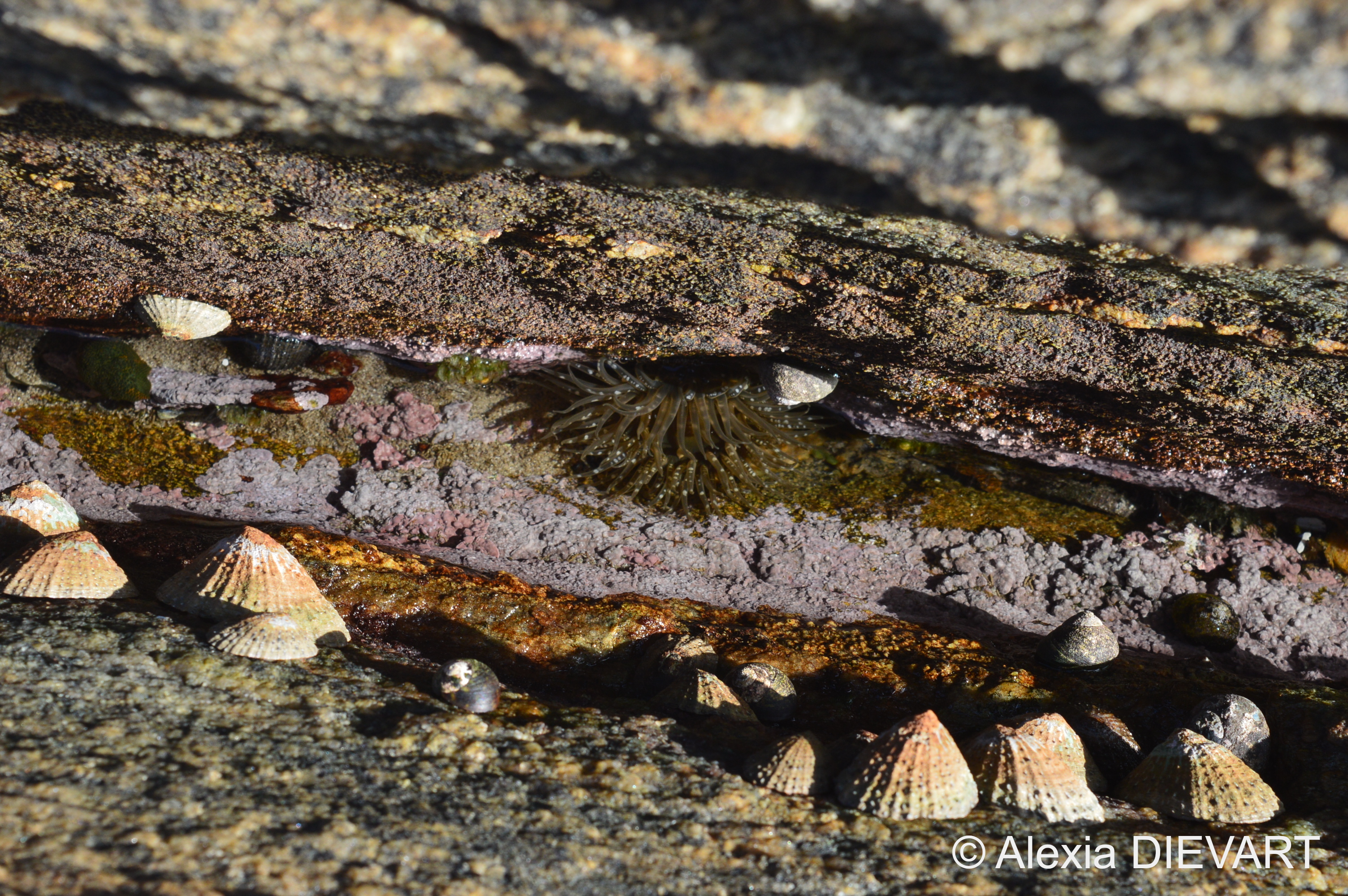
Color polymorphism
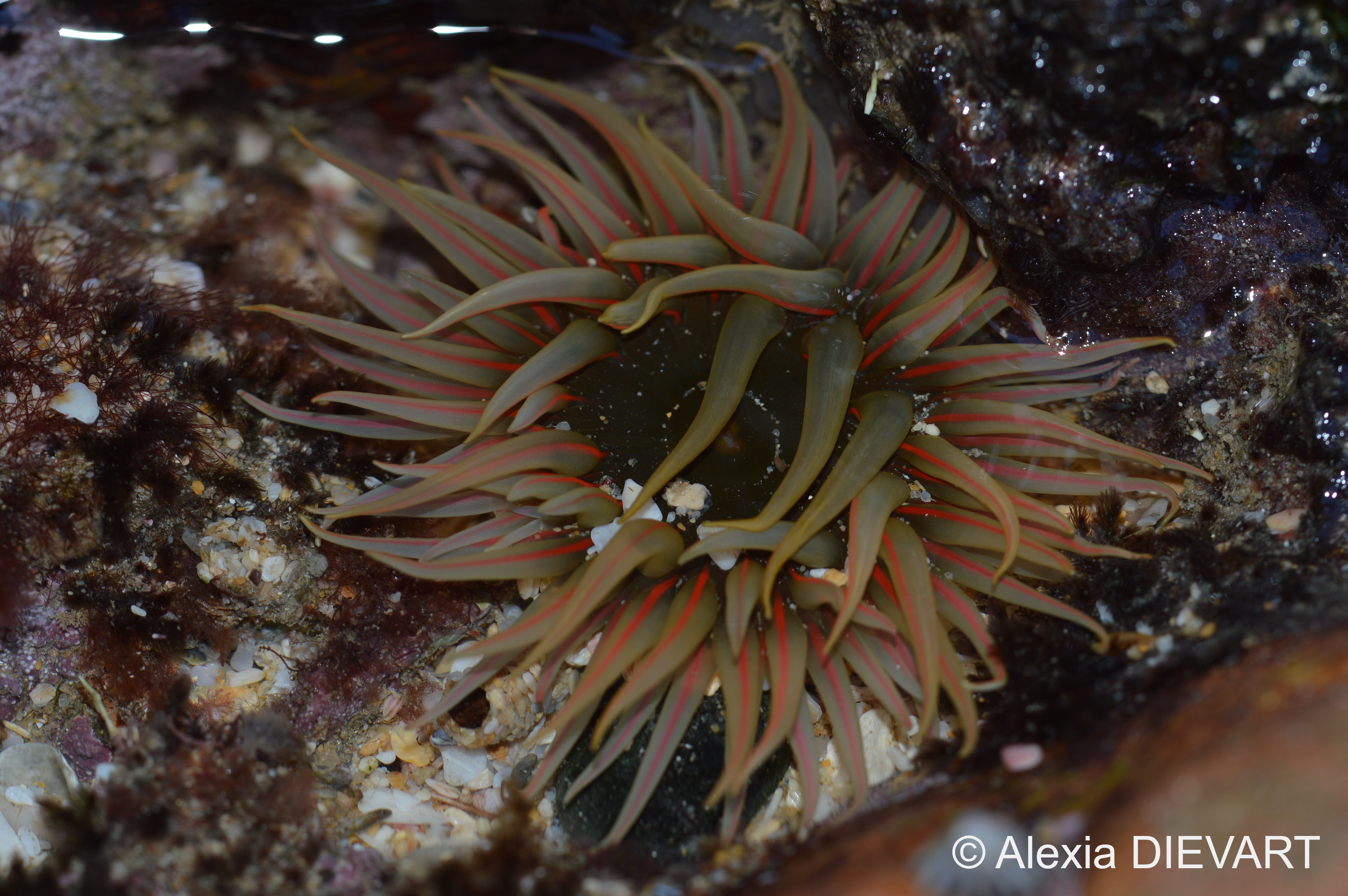
Crevice anemones come in very different colors, which could mislead their identification. The following specimens have a faint red line at the center of each of their brownish tentacles, in comparison with the specimens presented above, that have lightly-colored tentacles (i.e., cream, transparent with white horizontal lines) with a pink line in the middle.
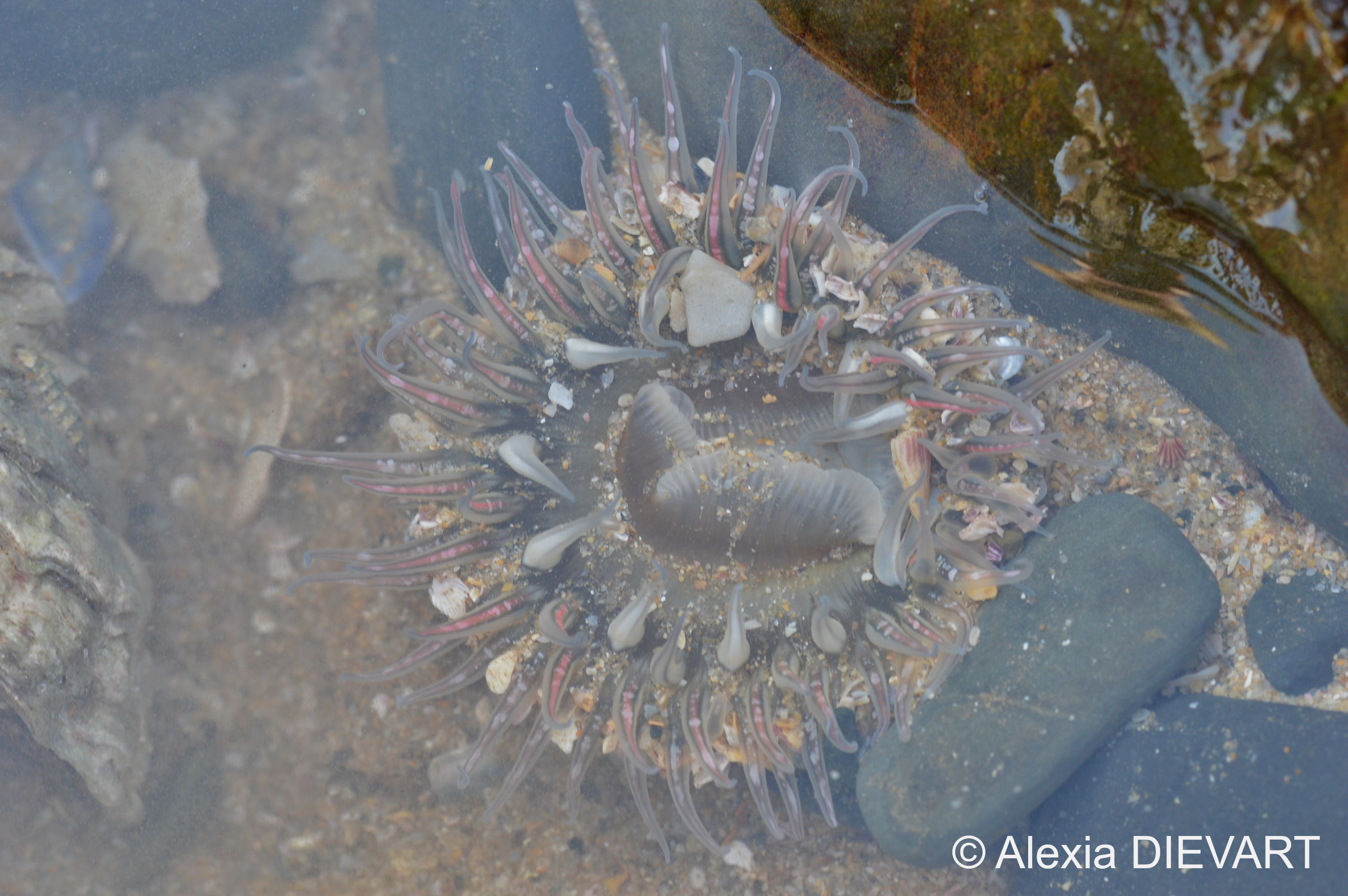
Feeding behaviour
Although sea anemones consume a wide range of prey, only one or two prey items invariably dominate their diet (Kruger & Griffiths, 1996). For the long-tentacled anemone, its diet consists mainly of sea snails (i.e., Burnupena), followed by barnacles (i.e., Tetraclita serrata and Octomeris angulosa) and bivalves to a lesser extent. Anthopleura michaelseni is thus considered a macrophagous sea anemone – meaning it feeds on relatively large organisms.
This specific diet composition is easily explained by the morphology and the habitat occupied by A. michaelseni. Indeed, being large increases the chances of capturing large prey, such as barnacle and bivalves. Moreover, A. michaelseni anemones are often found partially buried in sandy crevices with only the tentacles exposed – as you can observe in the photographs presented above and below.
Sea snails, such as Burnupena spp., scavenge in crevices and may thus blunder directly into their tentacles.
Interestingly, macroalgae were often observed in the gut contents of several South African sea anemones and were consumed particularly frequently by A. michaelseni, although it is not know if they derive any nutritional benefit from plant material.
REFERENCES
Kruger LM, Griffiths CL (1996). Sources of nutrition in intertidal sea anemones from the south-western Cape, South Africa. South African Journal of Zoology 31:110–119. https://doi.org/10.1080/02541858.1996.11448402

 F*CK FISH