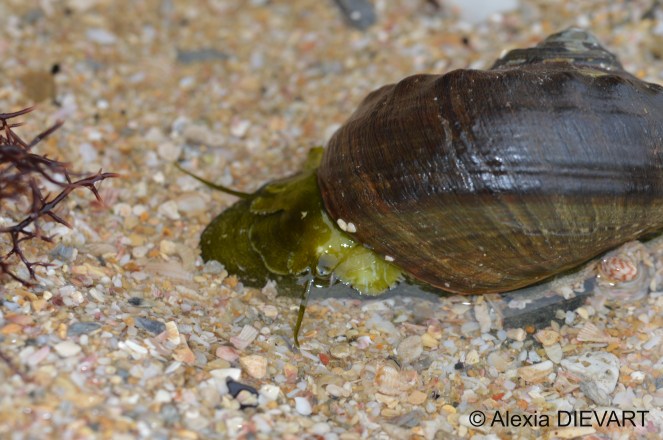
Old Woman’s River, Eastern Cape (2021) – iNaturalist
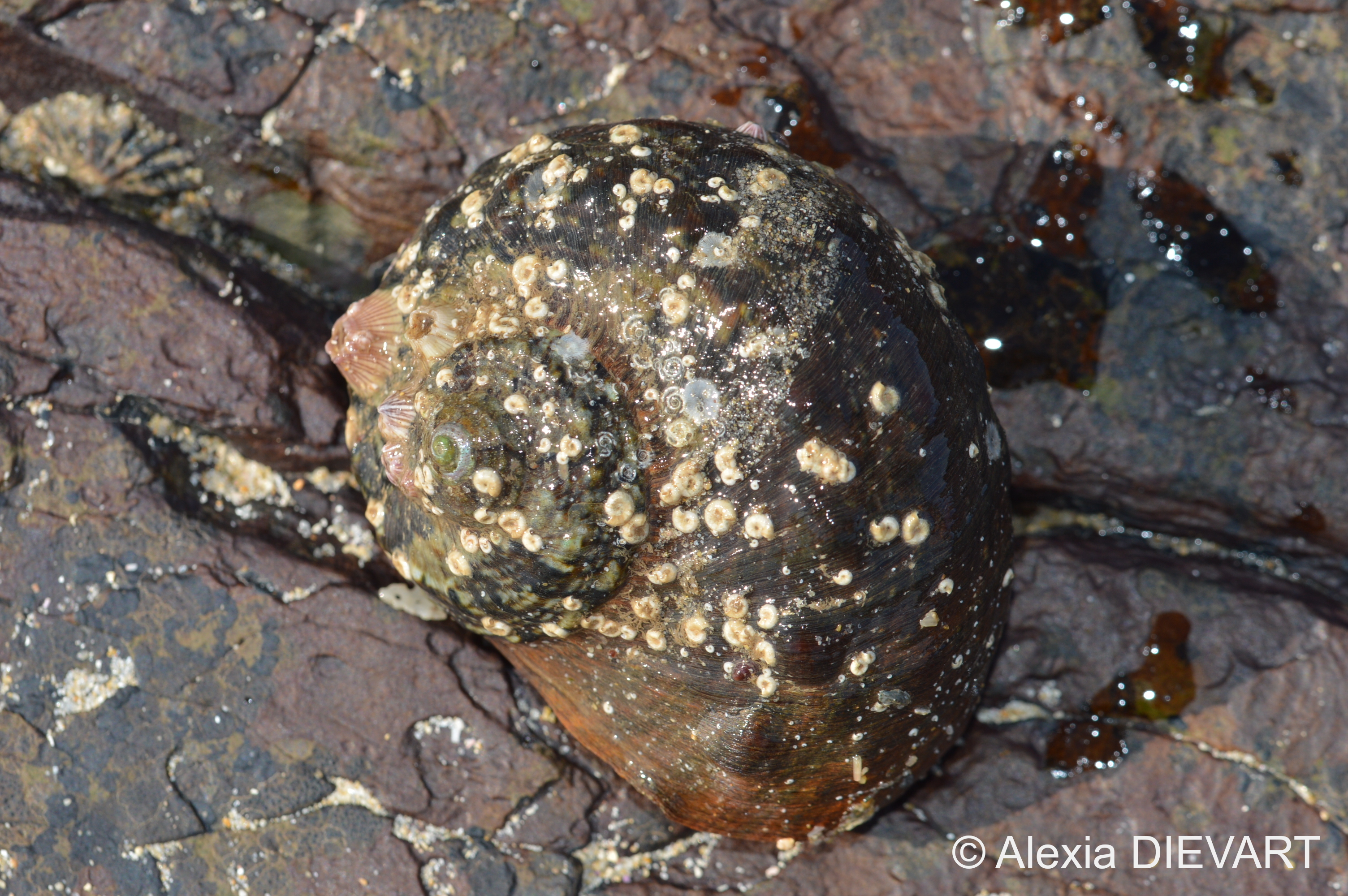
Also called the giant periwinkle, or the South African turban shell.
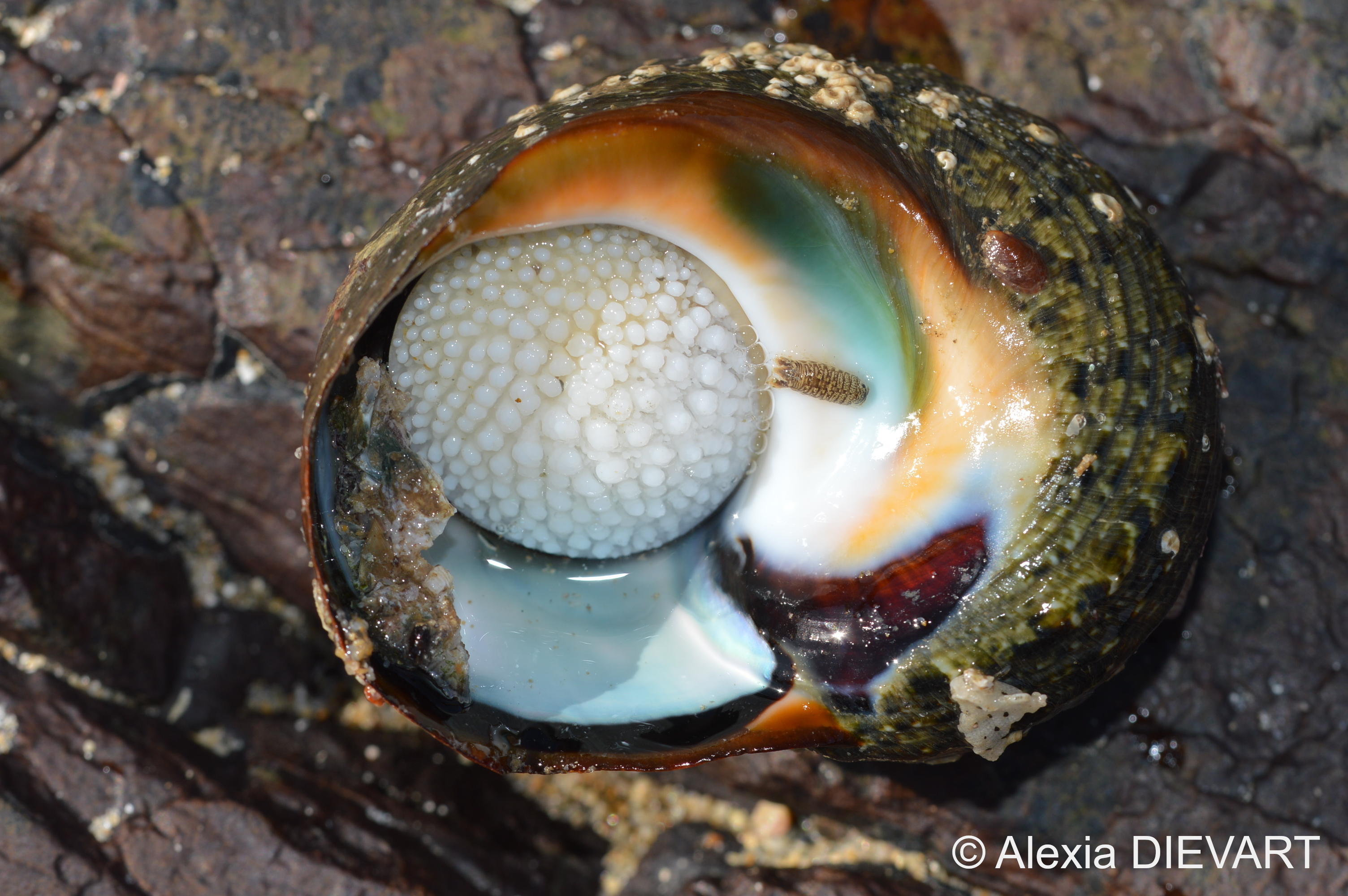
Large and round, height less than width. About three rows of low nodules spiral around each whorl – though they may erode and disappear in later life. Aperture smoothly round. Outer lip dark brown or black. Inner lip white to bright orange. Operculum round, thick and calcified. Outer surface of the operculum with densely-packed coarse nodules.
Up to 100 mm.
Lives in pools and down to a depth of about 8 m. Although still common, it is becoming increasingly difficult to find large live specimens in the intertidal zone, except in marine reserves, despite regulations limiting its collection to 5 per day per person, with a minimum size limit of 63.5 mm. Relatively slow-growing, it reaches this size at an age of about 3 – 4 years.
Two Oceans: A Guide to the Marine Life of Southern Africa (2007, 2016)
Old Woman’s River, Eastern Cape (2021) – iNaturalist
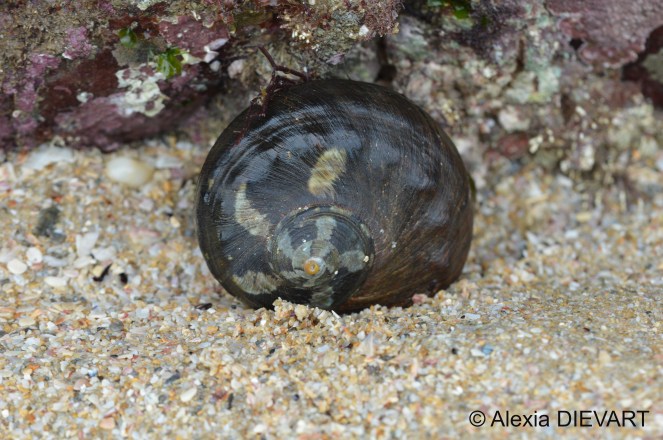
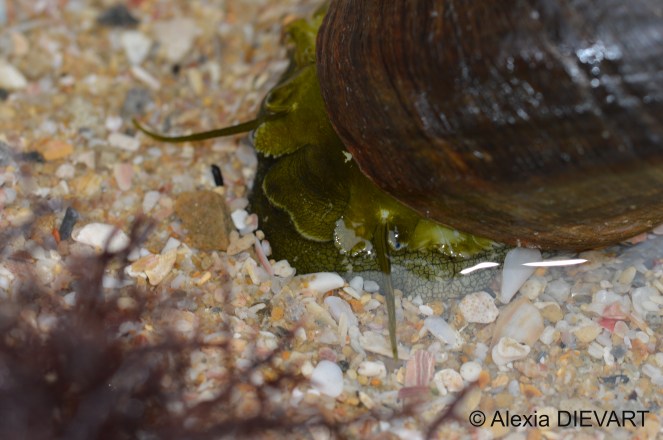
Juvenile Turbo sarmaticus can be confounded with other turban shells, such as the smooth turban shell (Turbo cidaris cidaris). Indeed, juvenile T. sarmaticus can have an attractive, smooth, glossy shell, purple-brown to red-brown, with paler radial flares, just as Turbo cidaris cidaris. But, juvenile T. sarmaticus can be easily recognized by the presence of nodules around each whorl of the shell, that slowly become eroded with time.
Port Alfred, Eastern Cape (2024) – iNaturalist

 F*CK FISH