
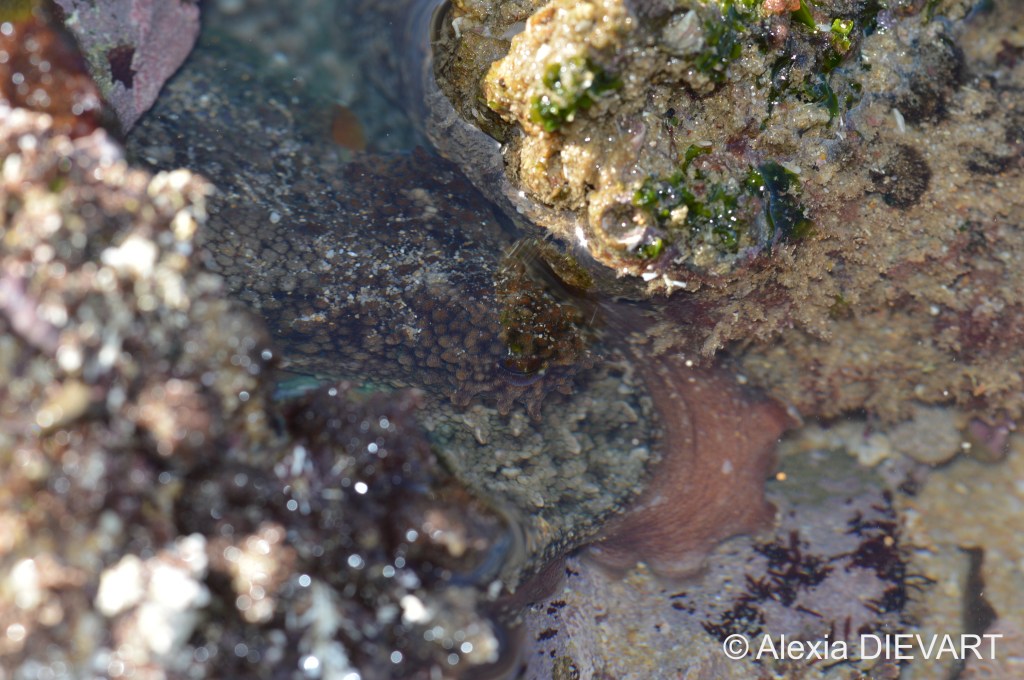
All Octopus species have eight arms, each with two rows of suckers, and lack an external shell. The species are distinguished by the tip of the male’s right third arm (the hectocotylus arm), which is suckerless and transmits sperm to the female.
In O. vulgaris, the structure is tiny (less than 2 % of the arm length) and spoon-shaped.About 60 mm.
The most common shallow-water octopus, extending down to 200 m deep. Exploited as a source of bait. Preys on crabs, rock lobsters, and shellfish. Hides in cavities, which it defends territorially against other octopuses. The entrance to its hole is often littered with the discarded shells of its prey. The female lays clusters of eggs which she defends and aerates by blowing water over them. There is no larval stage: miniature octopuses emerge directly from the effs. They grow rapidly, become sexually mature within a few months, and reach a maximum mass of about 6 kg within a year. Few live longer.
Two Oceans: A Guide to the Marine Life of Southern Africa (1994, 2016)
Discover in Image


 F*CK FISH