Earlier this year, I sent my video application to participate to the Collaborative Futures Academy 2024, aimed at researchers and science communicators who want to develop their engagement practice. This year, the focus was on the role of emotions in public engagement with research.
The Academy is developed and hosted by the Berlin School of Public Engagement, the University of Cambridge Public Engagement Team, Wellcome Connecting Science, The Kavli Centre for Ethics, Science and the Public and Stellenbosch University.
And here is the prompt that got me to apply :
Hope, fear, anxiety, frustration, curiosity, connection, trust … engagement work with publics and communities is never just about sharing information. Acknowledging and attending to emotion – among practitioners and participants – is a crucial part of the process. But it’s also one of the hardest things to accept, to manage and to document, especially where research training rarely prepares us for these experiences.
What is on the program ?
Over three days, 45 participants from 16 countries are bringing together stories, energies, skills and questions to explore the intricate relationship between emotions – the emotions of the practitioner and the emotions of the public – and engagement with research.
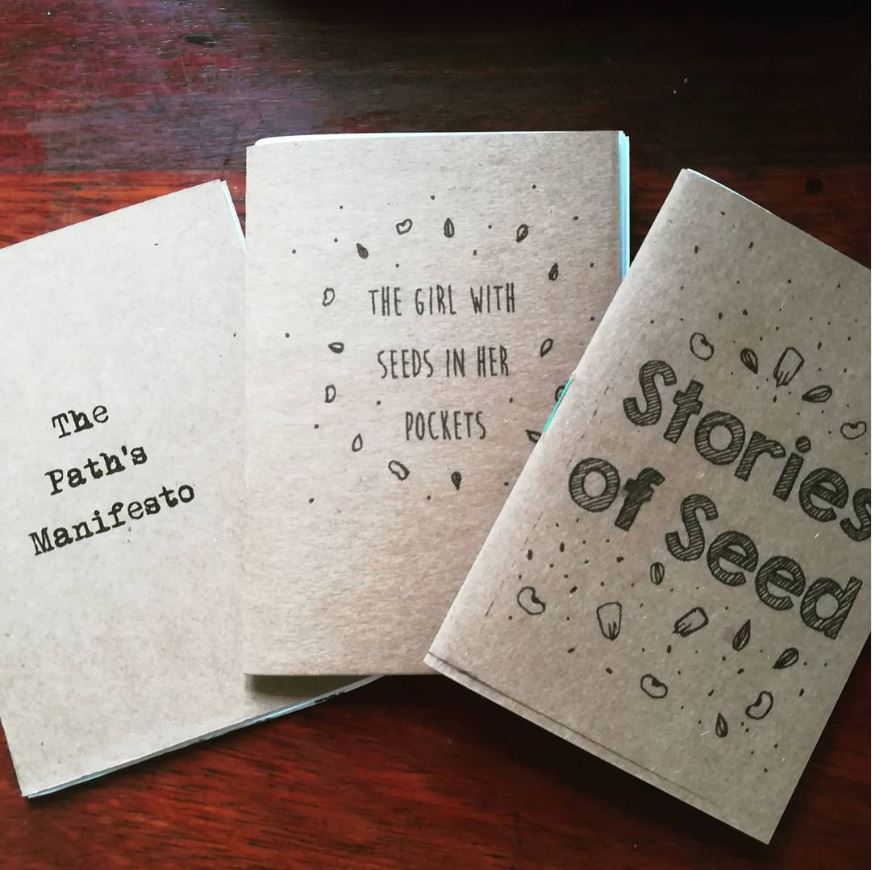
In addition, each participant attended the workshop of his choice ! I chose the Tiny Books hosted by the illustrator Claire Roussell.
This methodology emerged from the work of Dylan McGarry, and the Transgressive Learning Network, with the aim to democratize complex knowledge in a short, intuitive format.
Instagram : @stories_of_seed
Throughout the workshop, Claire from CareCreative – a Cape Town born artist – is using ‘creative harvest’ games to create images which reflect the thought process, to create a resource book illustrating the emotions experienced by the participants. And the circle is complete !
In the end, what am I taking home from the Collaborative Futures Academy ?
Watch this article unfold in a series of short videos !
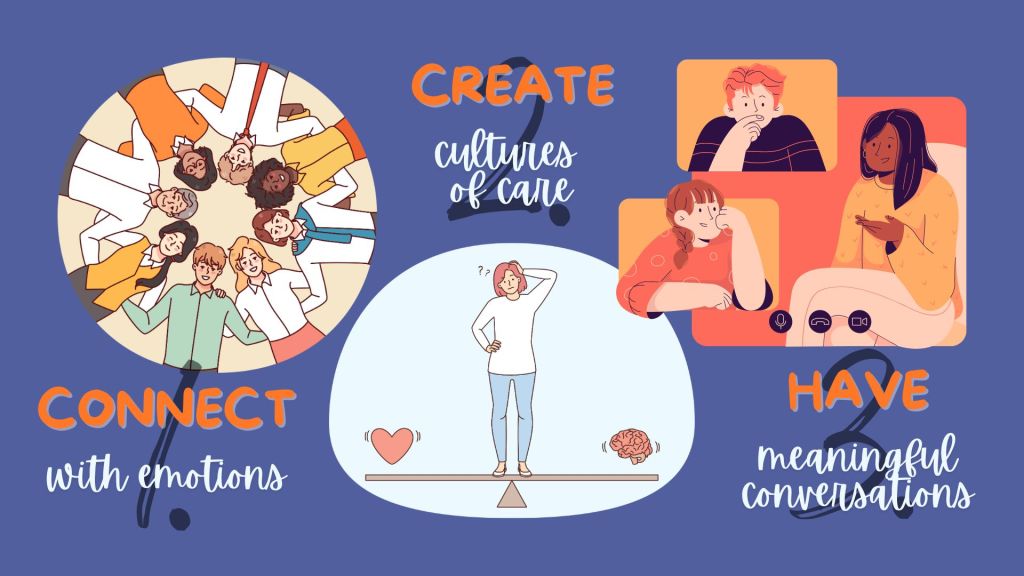
1st Day : Connecting to Emotions
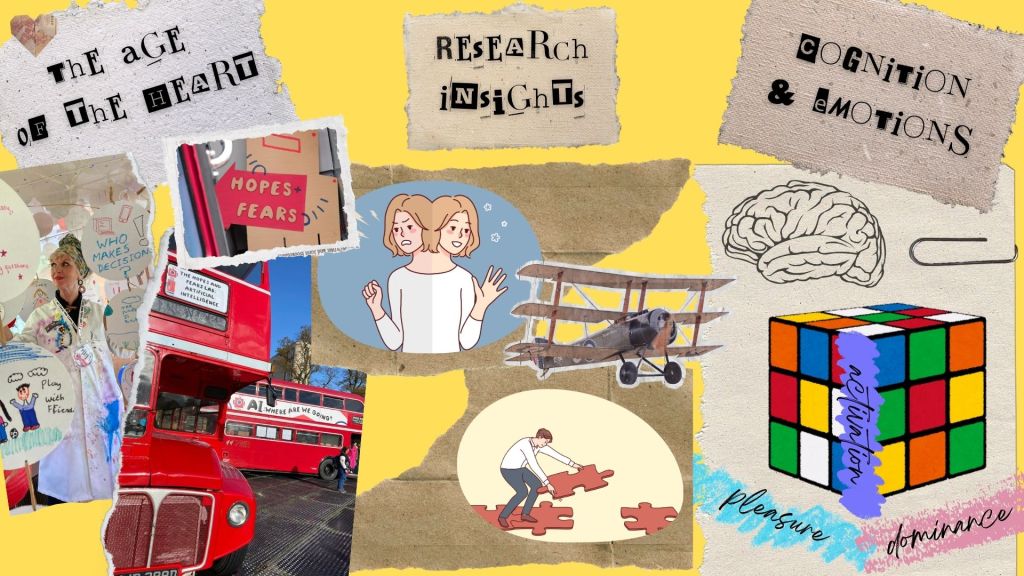
The Age of The Heart
Public engagement work is heart work as much as head work. So what better to start the workshop than listening to personal stories in engagement ?! Three CFA graduates shared their moments of pride, frustration, connection, hope, and everything in between, that have shaped their careers in public engagement.
That’s how I heard about the Hopes and Fears Lab.
Through this conversation experiment, scientists and the public are brought together in a creative, ‘out of the box’ space, to talk about how research, and science in general, makes them feel.
With a bit of luck, sitting down together might help move assumptions about science and discuss about the future.
Research Insights
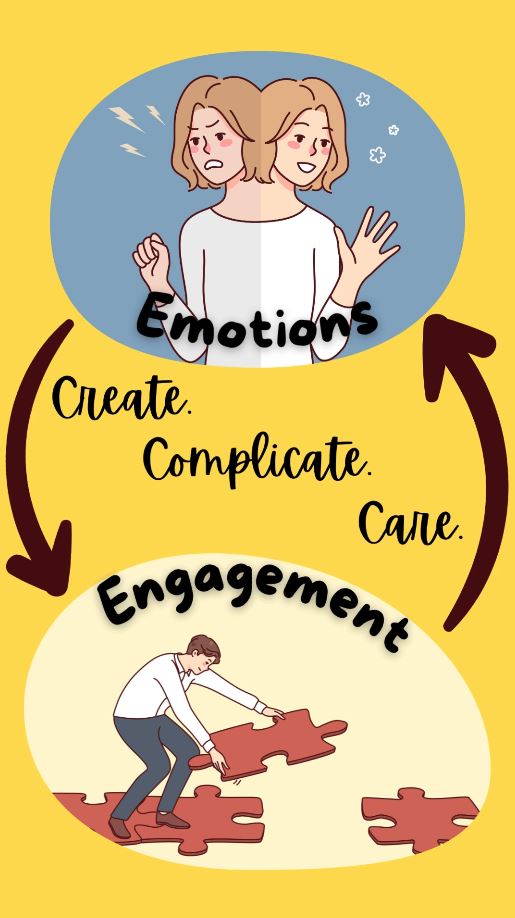
Why are emotions so important in engagement ? Research in science communication brings insights to better understand the patterns and experiences stemming from engagement practice. That is how the ‘3C Theory’ comes into play !
Emotions can create, complicate and care for engagement. And vice-versa.
Arguments, credibility and emotions come together in order to spread a message and create engagement around it.
Facts do not change minds, as people respond based on how they feel, and not what they learnt, which highlights the values of stories to foster engagement in a positive light.
Facts are the core. Emotions are the key.

Cognition & Emotions
How can we explore and talk about emotions, without getting all emotional ? By focusing on the cognitive process involved when we experience emotions !

Amongst psychological models, the PAD Emotional State Model uses three dimensions to describe and measure emotional states.

(dis)Pleasure. How pleasant or unpleasant do you feel about something ? Anger and fear are categorized as unpleasant emotions, while joy scores as a pleasant emotion.
(de)Activation. How energized or soporific do you feel ? It is not about the intensity of the emotion, as grief and depression can be low activation feelings. Between anger and rage, for example, rage has a higher activation threshold. Boredom, on the other end, also has low activation threshold.
Dominance. How much control do you feel you have on your emotions ? Although both fear and anger are unpleasant emotions, anger is a dominant or controlling emotion, while fear is a submission or controlled emotion.
2nd Day : Creating Cultures of Care
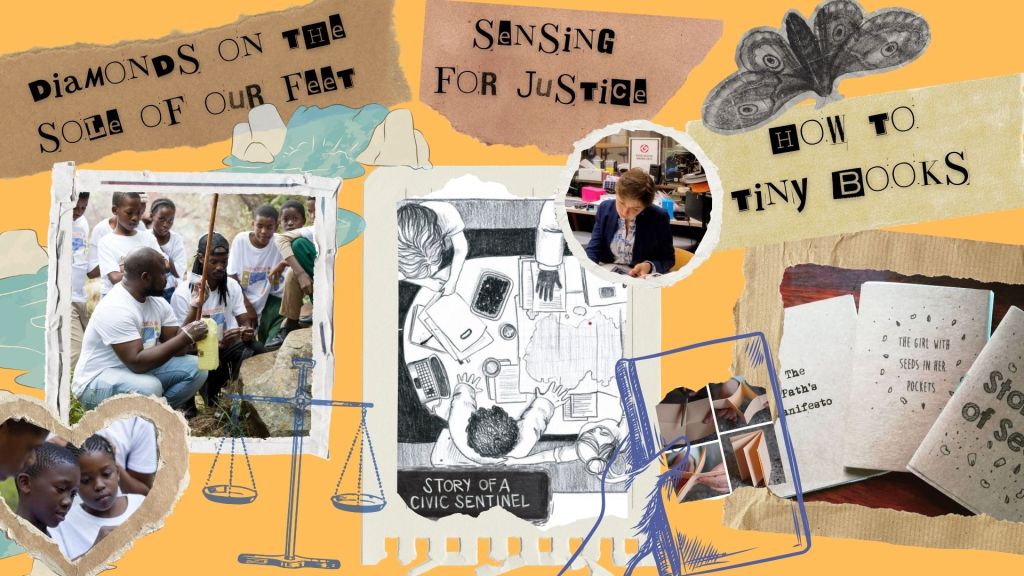
Case Studies & Conversations
In the morning, practitioners from different engagement projects shared their approaches to facilitate meaningful connections and managing the emotional dimension of exchanges and dialogues, especially when it came to emotionally-charged topics.

This interdisciplinary research and impact project explores historical and contemporary beliefs, cultures and practices of death and grief.
Talking about our fears won’t make them happen. On the contrary, it has the potential to bring a feeling of support through difficult times.
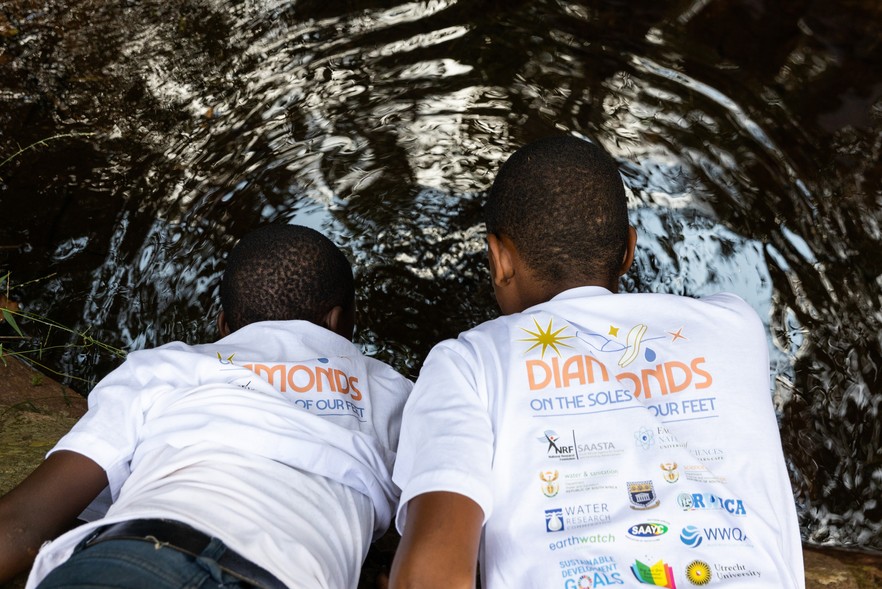
Diamonds on the Soles of Our Feet
This citizen science project aims to work hand in hand with communities living in remote rural areas to gather data on groundwater. Creative and playful methods help connect learners with nature, while drawing on their knowledge and expertise.
By increasing data fluency within local communities, every actor participating in the acquisition of knowledge is uplifted in their respective role. Exchanges between scientists and local volunteers can thus be conducted on a more equal basis.


This project explores the potential of grassroots-driven environmental monitoring, coined citizen sensing, as a source of evidence in environmental justice litigation, and as a tool for environmental mediation outside of judicial settings.
Environmental lawyers deal with a lot of emotions – the emotions of the local communities, as well as their own emotions when faced with hope and adversity. Civic monitoring is thus an act of care.
Tiny Books
In the afternoon, it was time for the so anticipated workshop ! The session was held by the illustrator Claire Roussell, a weaver of stories of plants and seeds that collects and connects ancient and new knowledge to image a future of mutual thriving.
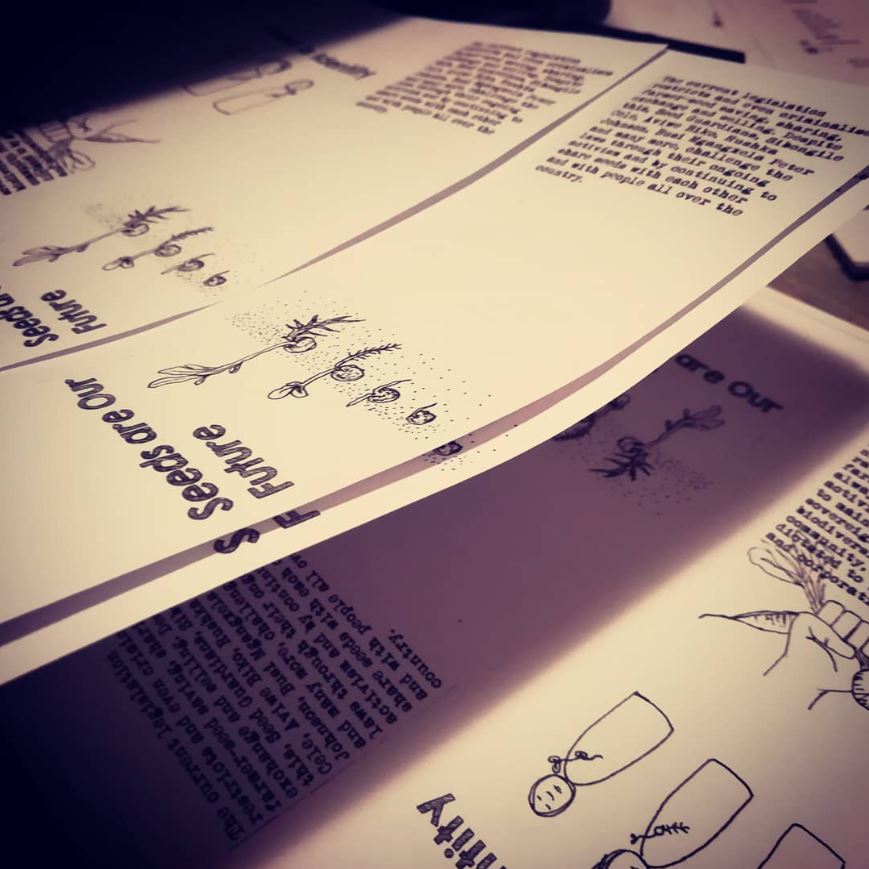


The Tiny Book methodology emerged from the work of Dylan McGarry, and the Transgressive Learning Network, with the aim to democratize complex knowledge in a short, intuitive format.
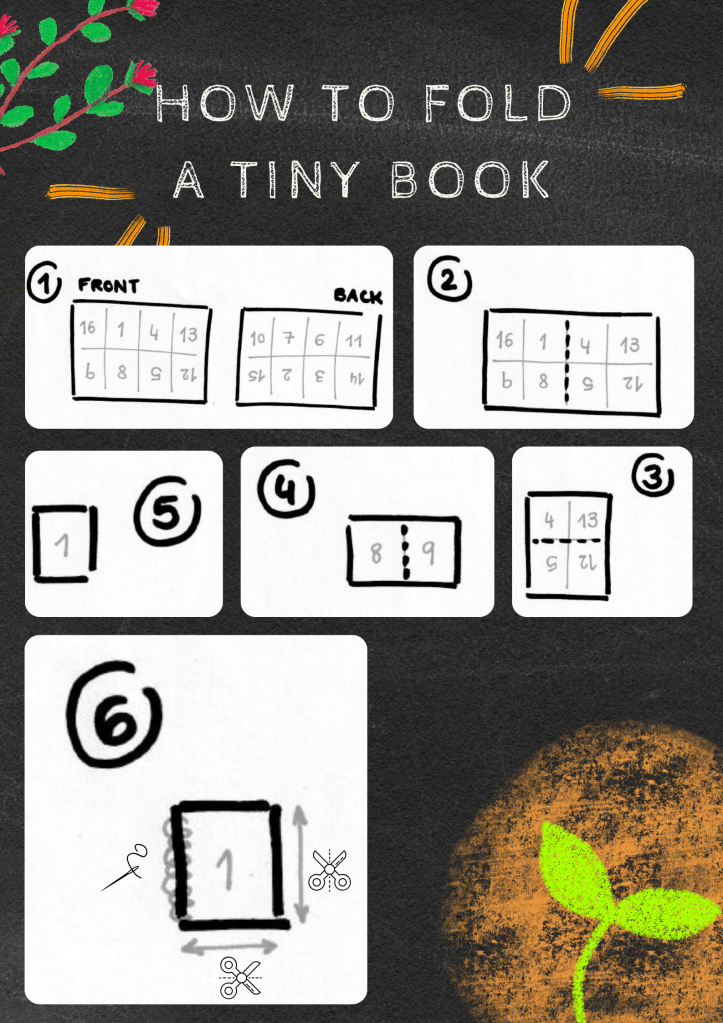
In essence, a tiny book is an A4 piece of paper, somehow folded to created a 16-pages book, including the cover. You won’t believe how simple it is !
(1) Grab an A4 piece of paper and draw the template on the recto (front) and verso (back). Make sure that 16 is the reserve of 15, and 12 is the reverse of 11.
(2) Fold your paper in the middle into an A5.
(3) Fold your paper in the middle into an A6.
(4) Fold your paper in the middle into an A7.
(5) Bam ! You have your tiny book !
(6) Trim the bottom and right edges with a pair of scissors. Bind the book together with thread or staples on the left edge.
Now that our tiny book is ready, it is time to think about what knowledge do we want to share, with whom, and what emotions we want to provoke. This step is critical, as there is so much than can be said in 16 pages !
What about my Tiny Book ?
I instantly feel in love with Tiny Books ! ❤ What better tool to share my PhD research ? And any other research, as its potential is unlimited.
- What knowledge do I want to share ?
In my Tiny Book, I want to share the results of my PhD research. I studied the influence of shell-boring microscopic parasites – that dig their way into mussel shells – on the invertebrates associated with mussel beds along the South African rocky shores.
- Who do I want to share this knowledge with ?
I want to share this knowledge with the wider public. Adults and children alike should be able to understand what are shell-boring parasites, what they do to mussels and to their associated invertebrates and why it matters.
- What emotions do I want to provoke in the person reading my Tiny Book ?
I want the reader to feel like a mystery is unraveling in front of them. Reading should be fun, exciting, maybe unsettling sometimes, just like a thriller or a detective story. The title should be dramatic, like the episodes of Martin Mystery : ‘They Dig Into Shells’, ‘The Return of the Shell Diggers’, or even ‘The Cursed Shore Miners’ !
3rd Day : Having Meaningful Conversations
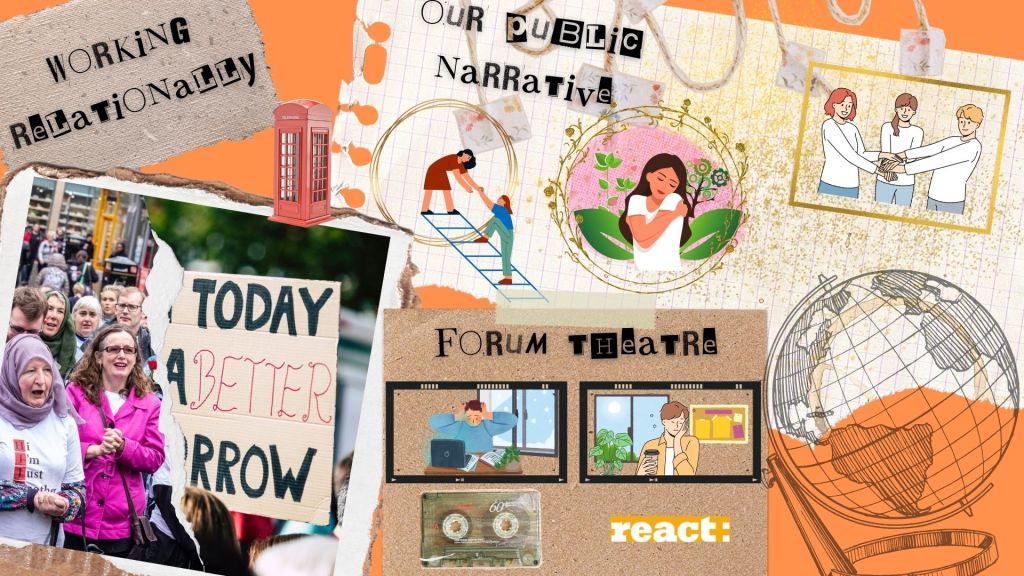
Trust and Emotions in Engagement
How do we build trust so that people can express their true emotions about research ? More than sharing or discussing knowledge, the expert needs to communicate their integrity and authenticity. Through exploratory conversations, opportunities can be identified and relationships build.
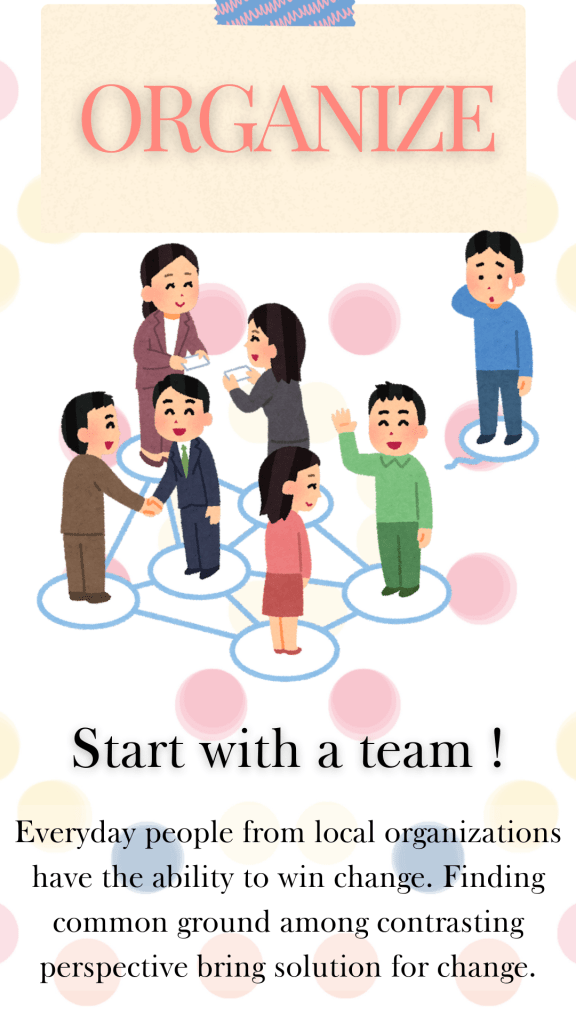
In the morning’s practical session, we explored communicated and learnt tools from the field of community organizing, such as relational working. Tim Hall, the ‘organizer’ from Citizens UK – a civic alliance which aims to develop leaders, strengthen institutions, and win positive change – elaborated on how do we make a change. It’s all about weaving trust !
Developing our public narrative
Our public narrative allows us to communicate our own values to others, to see if these align with the other person’s and whether we might consider working together in the future. This is the story of now, me, and us !

Forum Theatre REACT:
In the afternoon, the drama company REACT: helped us live an experience new to me : online drama reaction ! The company draws on techniques and principles from drama to help people and organizations learn in the best way possible – by doing.
What did it look like ? The participants of the workshop were split in smaller groups in different break-out rooms. In each room, two actors played a scene that often struck straight in the heart of the engagement practitioners.
I witnessed an interaction between an employee and his boss that did not go as planned. While the employee was confusedly presenting the public engagement event for which he needed to unlock funding, the boss was bored out of his mind and did not seem to see the added value of the project for the team. After the scene, the participants reacted strongly, decrypting the emotions and the actions of each actor in their role, and finding solutions to improve the interaction !
In Conclusion
What did I learn by attending the Collaborative Futures Academy 2024 ? In essence, people are emotional as much as they are rational. In public engagement, the practitioner will ultimately come into touch with the public’s emotions and his own. Thus, emotions need to be acknowledged, dealt with, and built upon in order to win change for a better future.

 F*CK FISH