
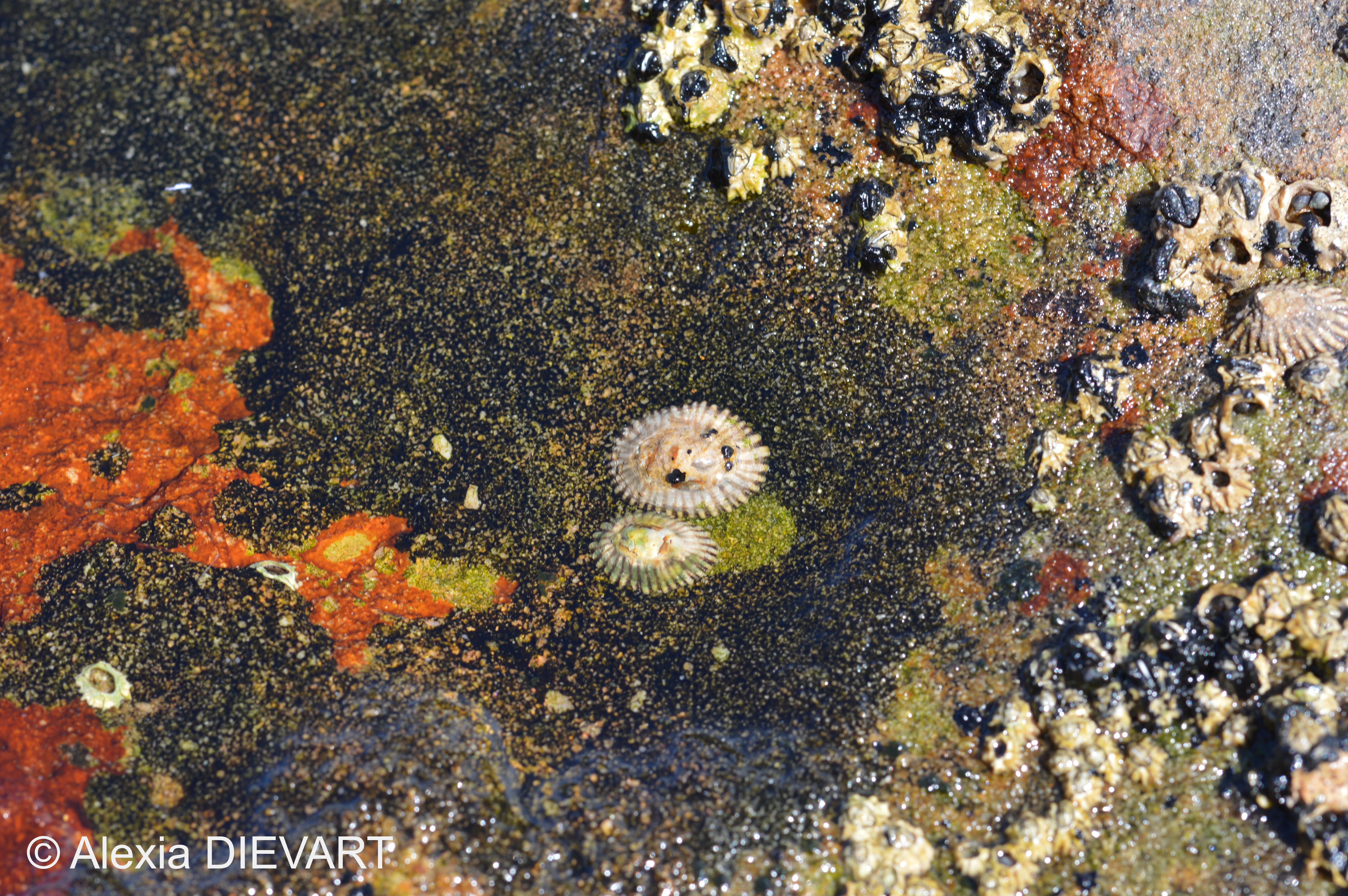
Apex of the shell almost central. Outline oval but slightly swollen on the right to accommodate a siphon that extends outwards from the lung cavity. About 40-50 low, flat ribs that are roughly equal in size and scarcely project, so that the margin is smooth or, at most, gently scalloped.
Interior of the shell shiny brown, sometimes with white blotches and with narrow dark-brown rays that arise near the center and run to the margin.
About 25 mm.
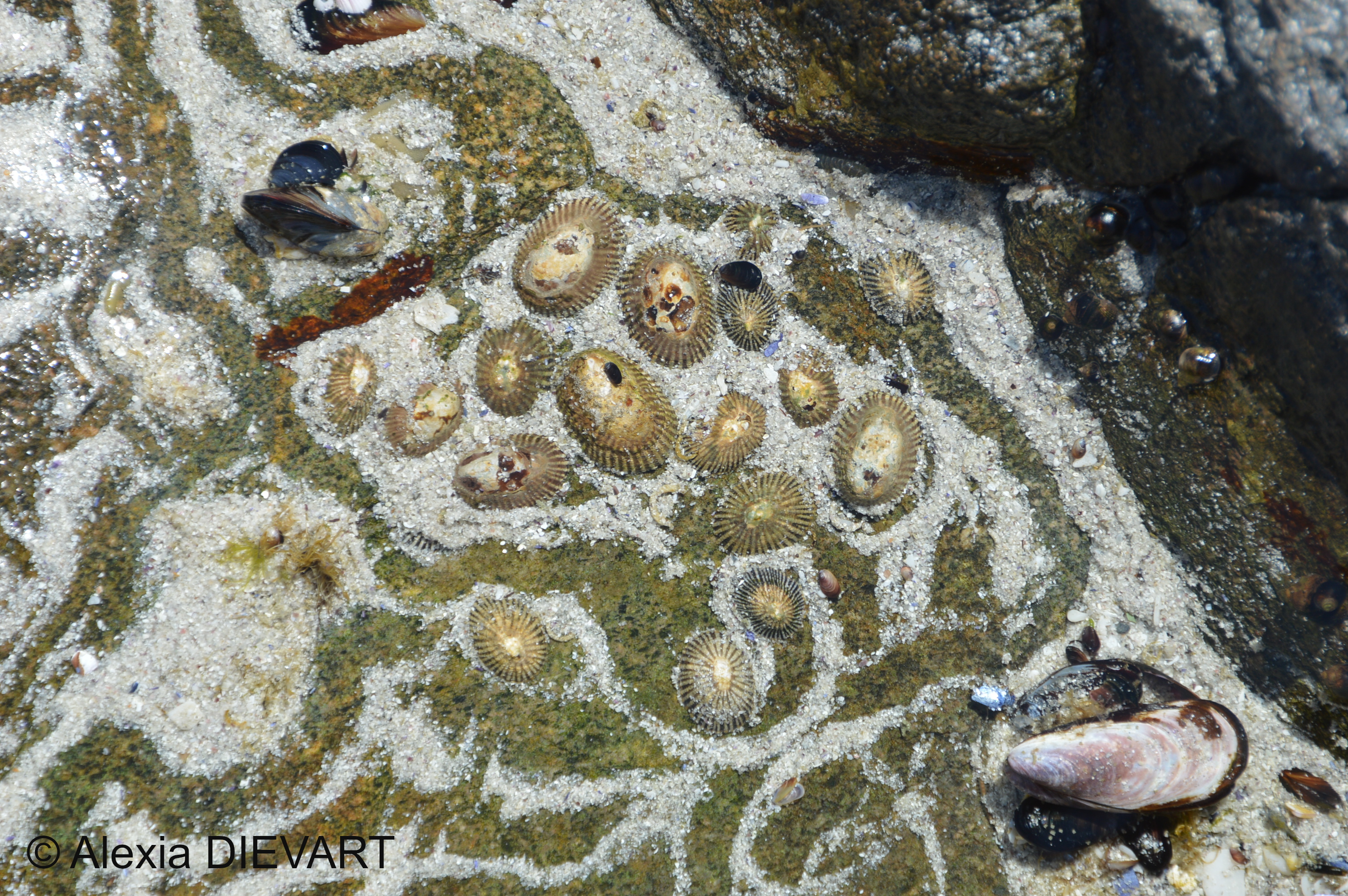
Lives in pools and on exposed rock surfaces in the mid-shore. Like other Siphonaria species, it is tolerant of sand cover. In areas where rocks are intermittently covered with sand, it replaces the less tolerant Scutellastra granularis as the commonest mid-shore limpet.
Two Oceans: A Guide to the Marine Life of Southern Africa (1994, 2016).
Each Siphonaria limpet has a fixed home scar to which it returns after feeding. Feeds during low tide to avoid being washed away by waves. Its tissues are laden with a toxic milky mucus that repels predators.
Eggs are laid in gelatinous rings that festoon rock pools.
Discover in Image
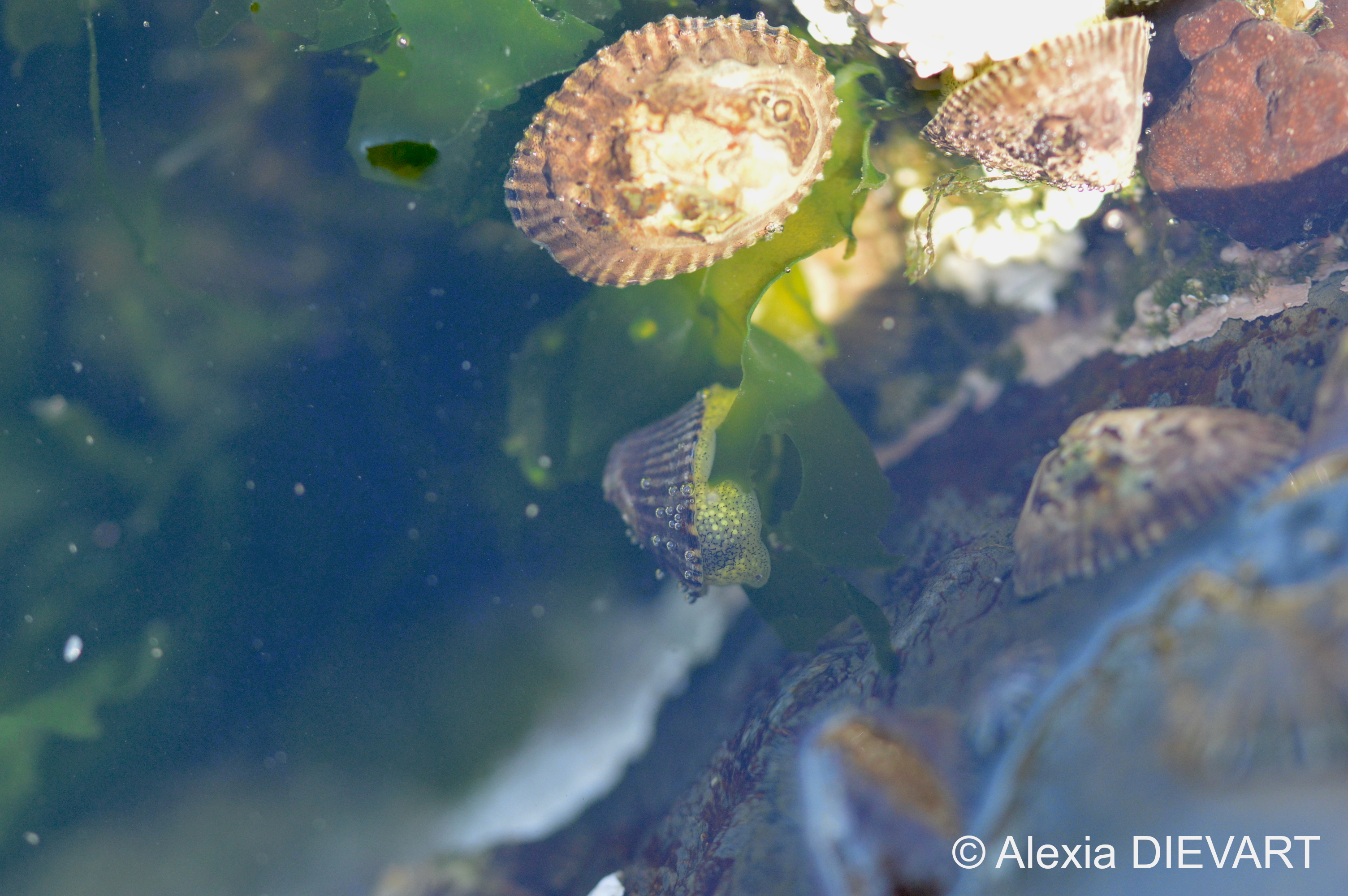
Mouille Point, Cape Town, Western Cape (2020).

Why ‘false-limpets’ ?
False-limpets in the genus Siphonaria all belong to the family Siphonariidae. Siphonariid limpet shells can be distinguished from true limpet shells by examining the inside of the shell. In Siphonariids, there is a well-marked lateral groove on the right side of the shell and a corresponding interruption of the ring of muscle attachment scars. These markers show the positioning of the pneumostome or pulmonary orifice.
Related species
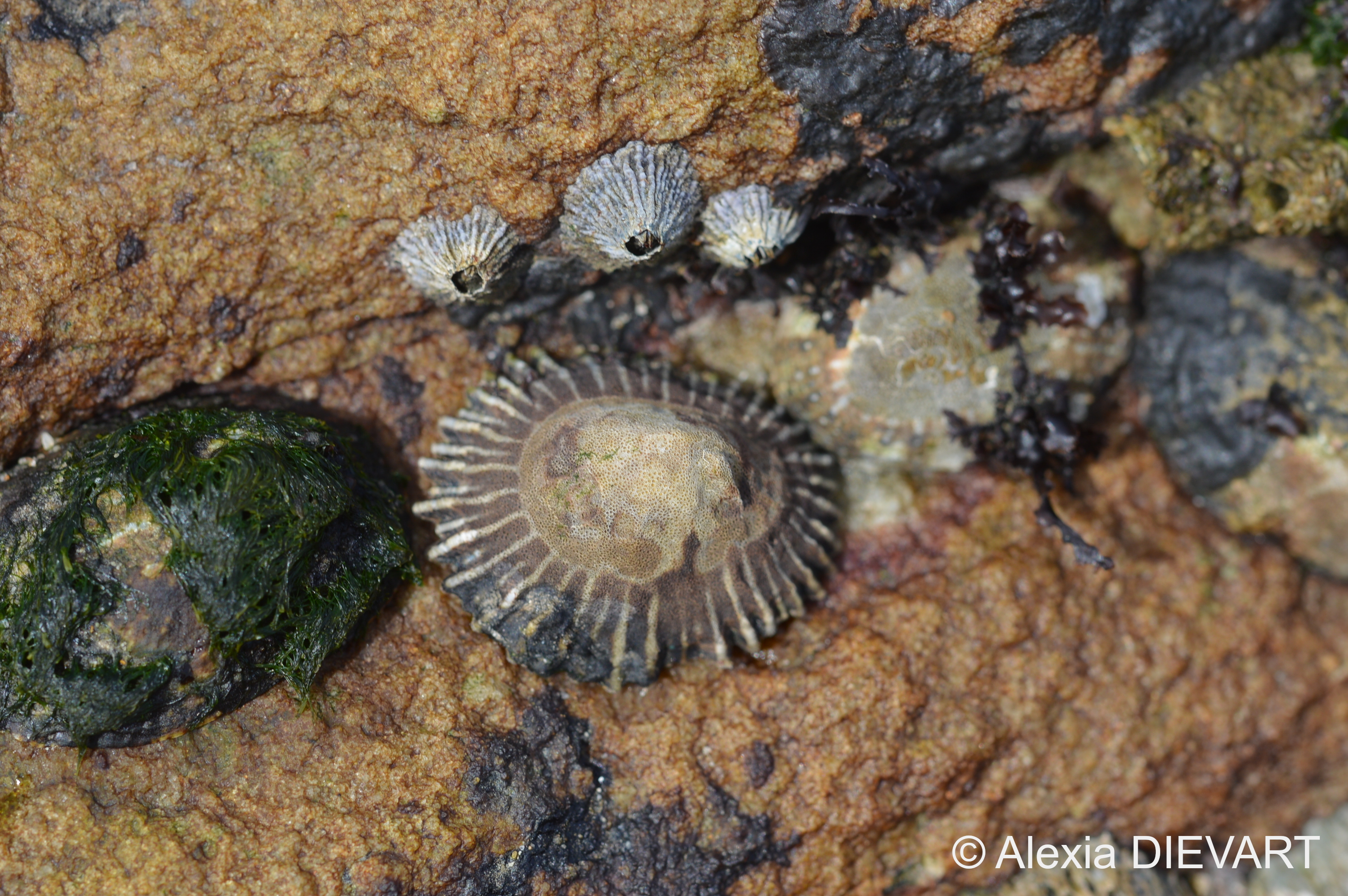
Saw-edge false-limpet (Siphonaria serrata)
Previously called Siphonaria aspersa.
Shell taller than S. capensis, with obvious siphonal lobe on the right. Prickly ribs project from the serrated margin.
Interior pale white to brown with pale rays radiating through the darker margin. Dark flecks on the sides of the foot.
Two Oceans: A Guide to the Marine Life of Southern Africa (1994, 2016).

Ribbed false-limpet (Siphonaria concinna)
Previously called Siphonaria deflexa.
Ribs well-spaced and never prickly, with 20-25 large ribs alternating with smaller ribs.
Two Oceans: A Guide to the Marine Life of Southern Africa (1994, 2016).
Inside of the shell has a large white central patch and a broad black margin shot with narrow white rays. Side of the foot with fine white spots.
Juveniles have iridescent blue-green flecks on the outer surface of the shell.

 F*CK FISH
One thought on “Cape false-limpet (Siphonaria capensis)”