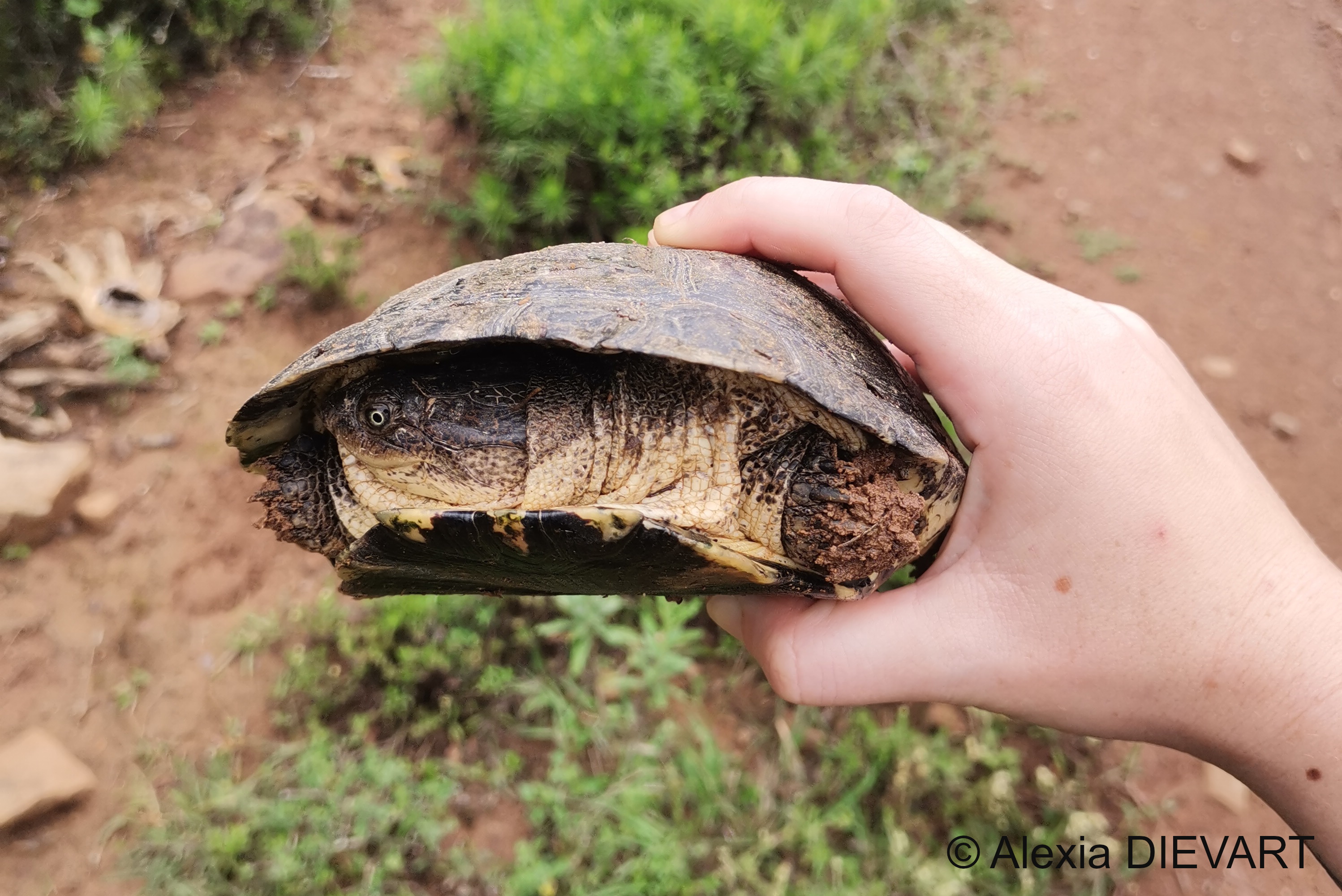
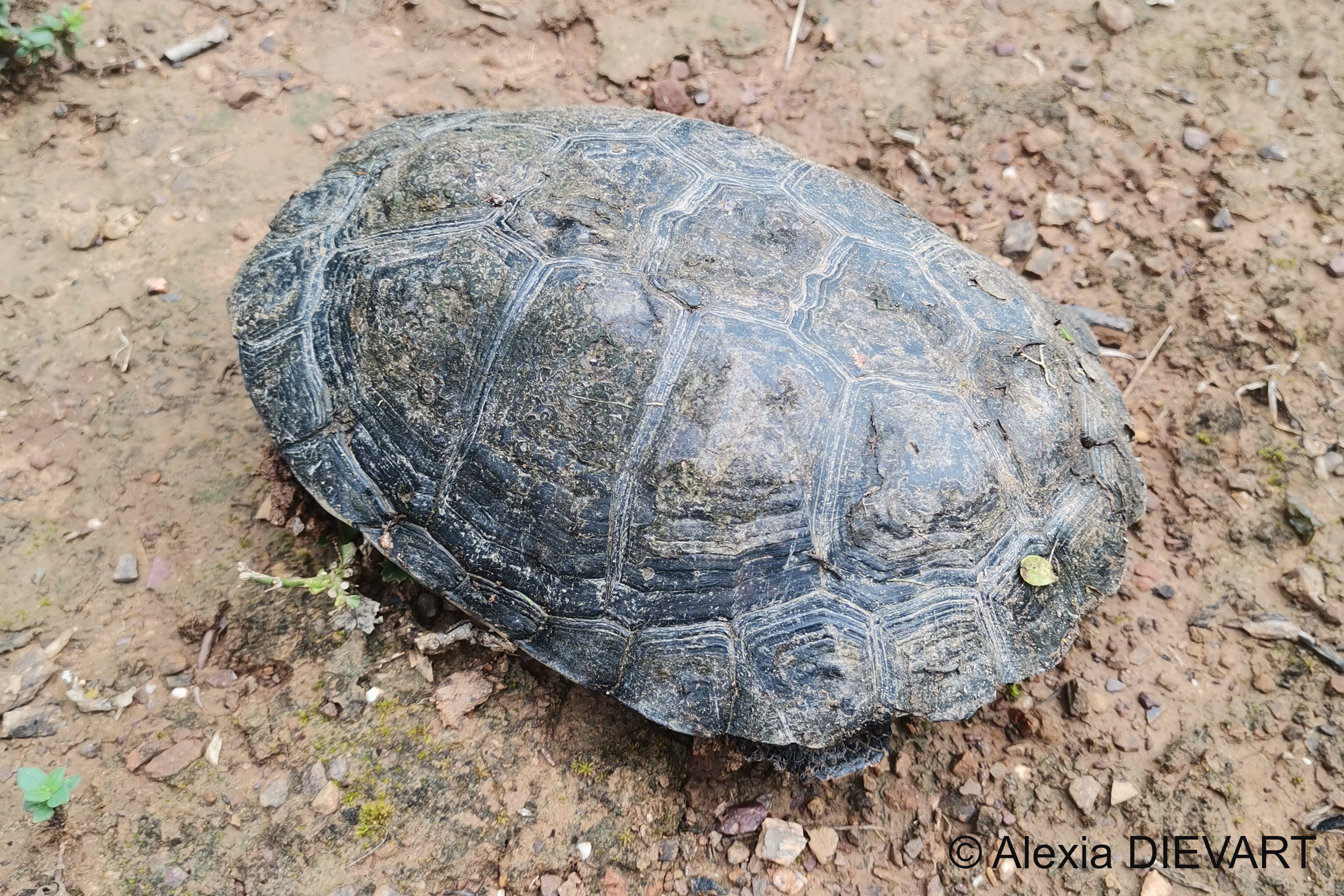
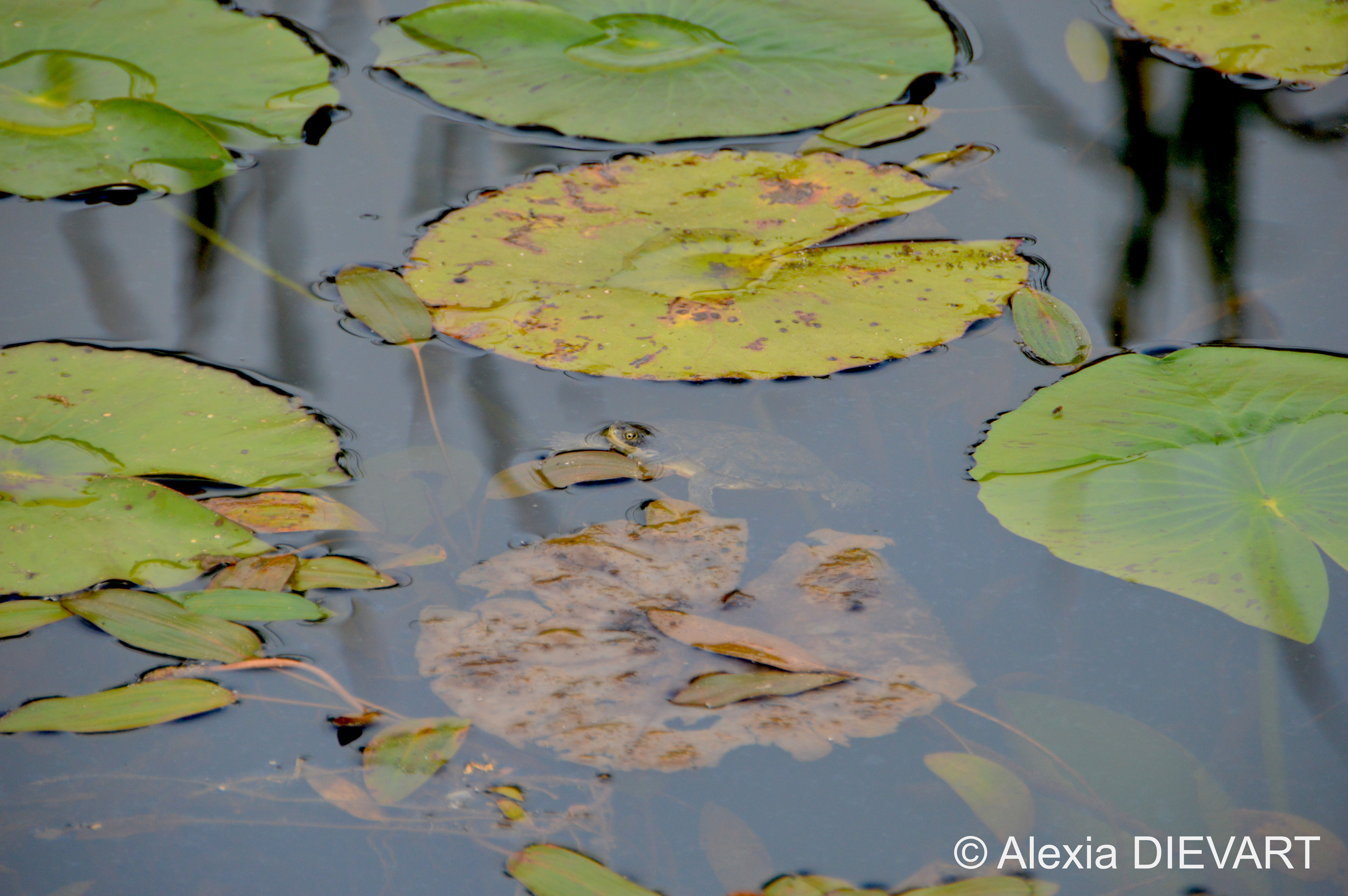
Large-sized, often dark-coloured helmeted terrapin. Pectoral scutes always with broad or very broad contact at the plastral midseam. Either two small temporal scales present on each side of the head, or one large undivided temporal scale. Two small barbels below the chin. Soft parts dorsally darker than ventrally. Carapace and plastron of adults often mainly or entirely dark.
In the western and northwestern parts of the range, adults may be light-coloured with mainly or entirely yellow plastra.26 cm in shell length, up to an exceptional maximum straight carapacial length of 32.5 cm.
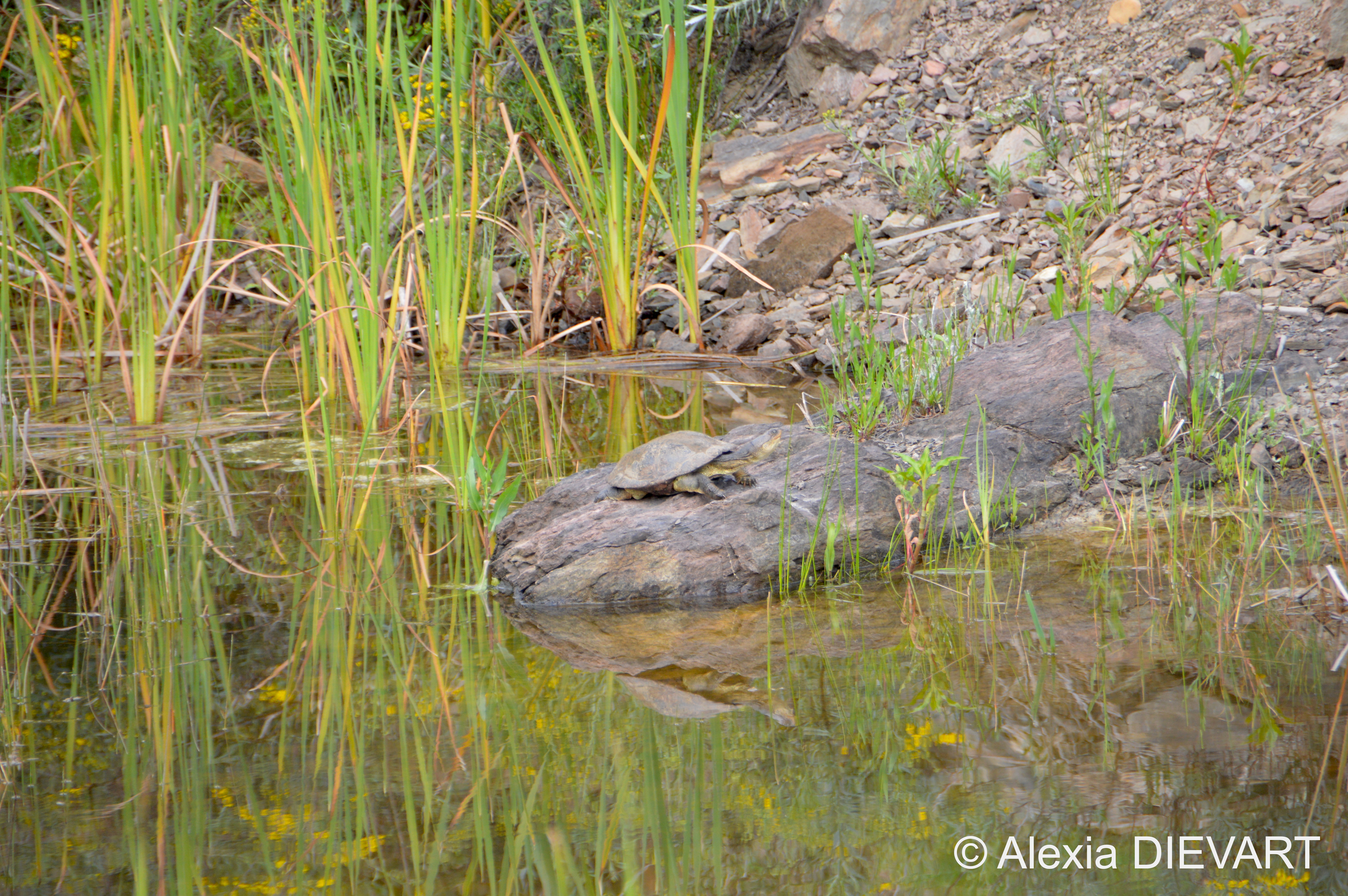
Widespread and common, frequenting both ephemeral and permanent water bodies, including seasonal pans, flooded quarries and farm dams, but avoids mountainous terrain and forests. May be found some distance from wetlands during wet weather. During dry periods, may aestivate in dry mud or under vegetation. Can move large distances overland, and often observed basking at water’s edge, or even on the backs of hippos.
Freshwater Life (2015), SANBI (2017), The Reptile Database
Primarily carnivorous, diet includes aquatic invertebrates, fish, amphibians, birds and small mammals, but also ingests waterweeds and their roots.
Discover in Image

 F*CK FISH