Also referred to as the mountain tortoise, or bergskilpad (in Afrikaans).
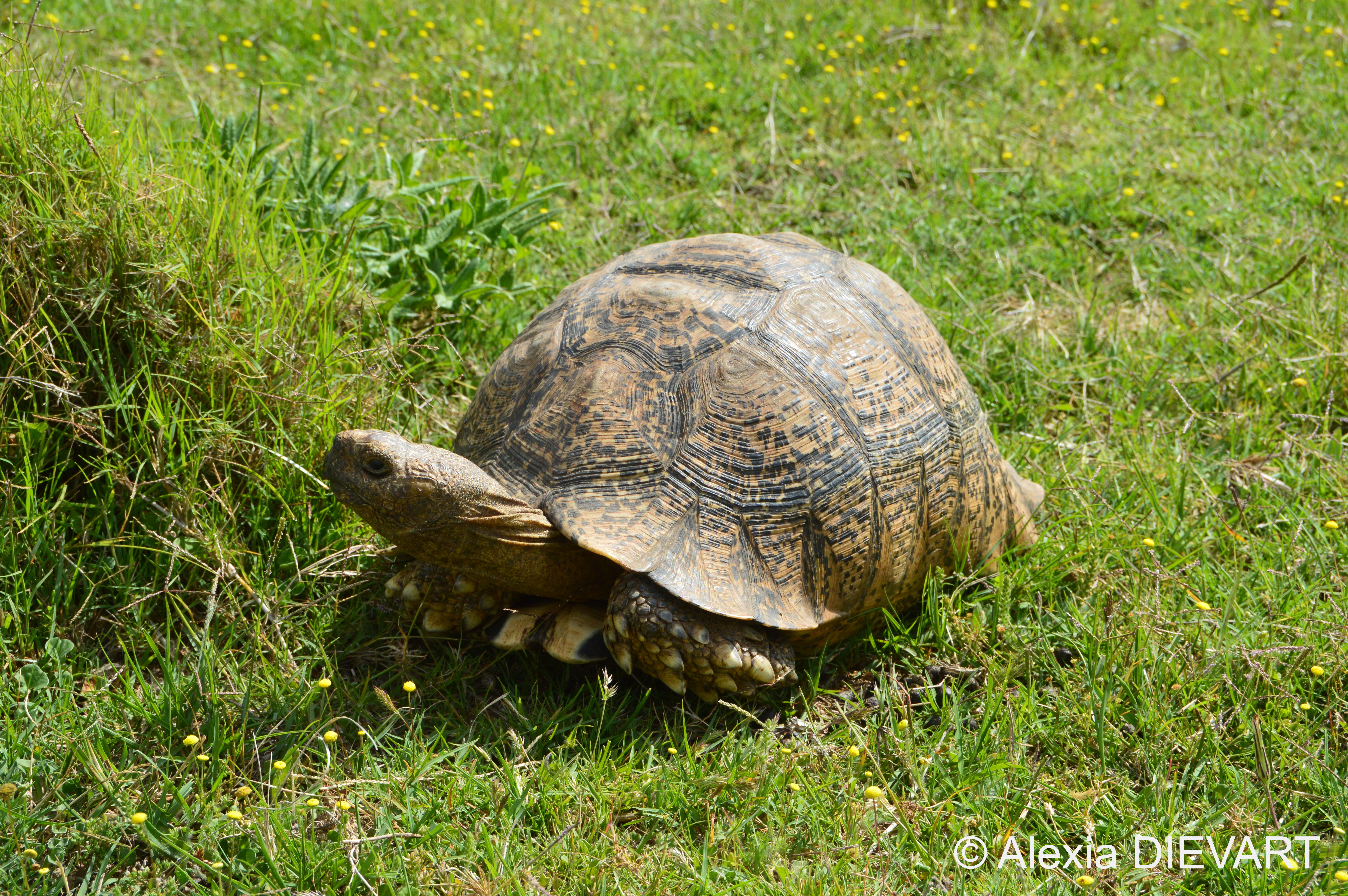
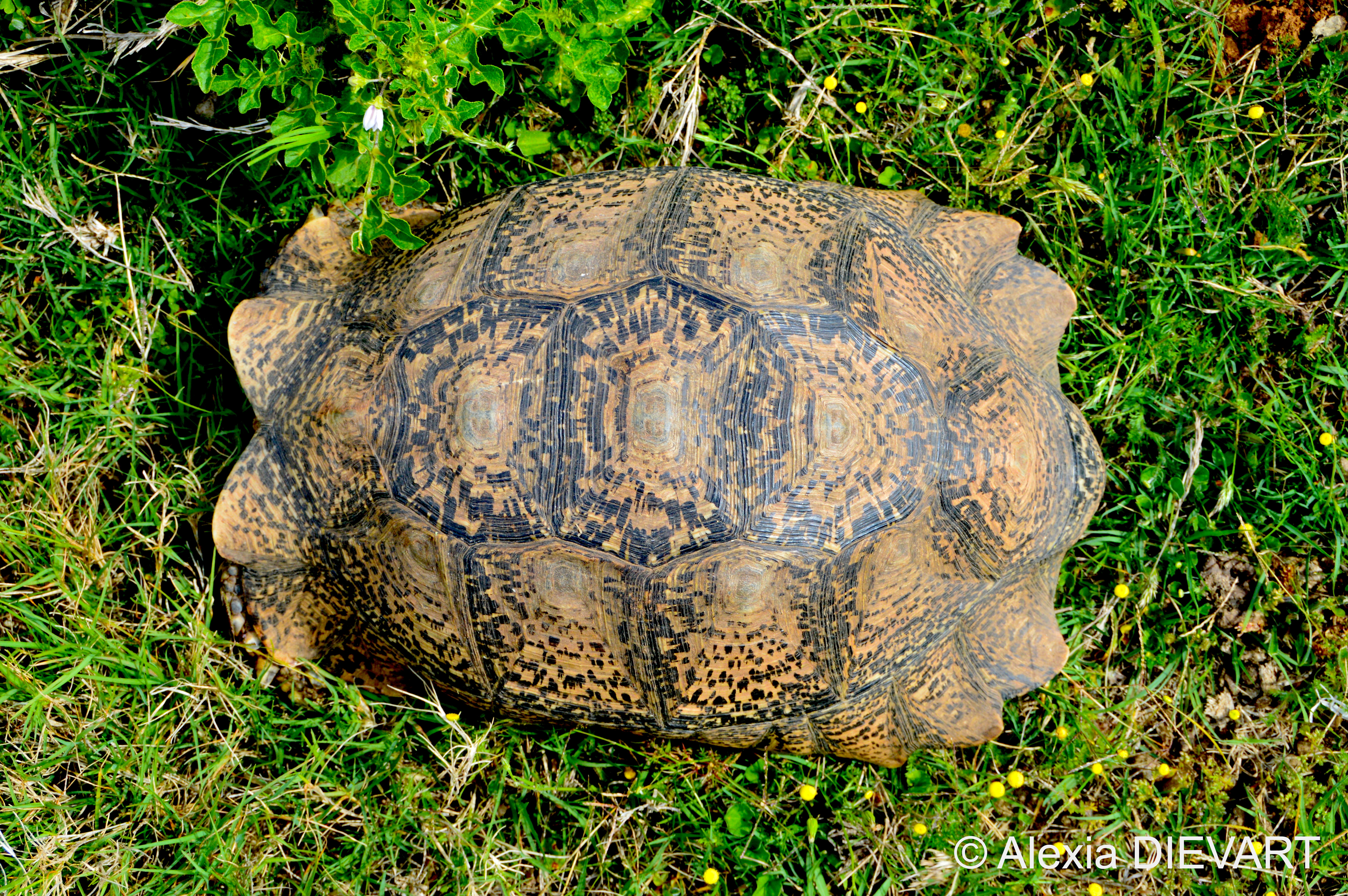
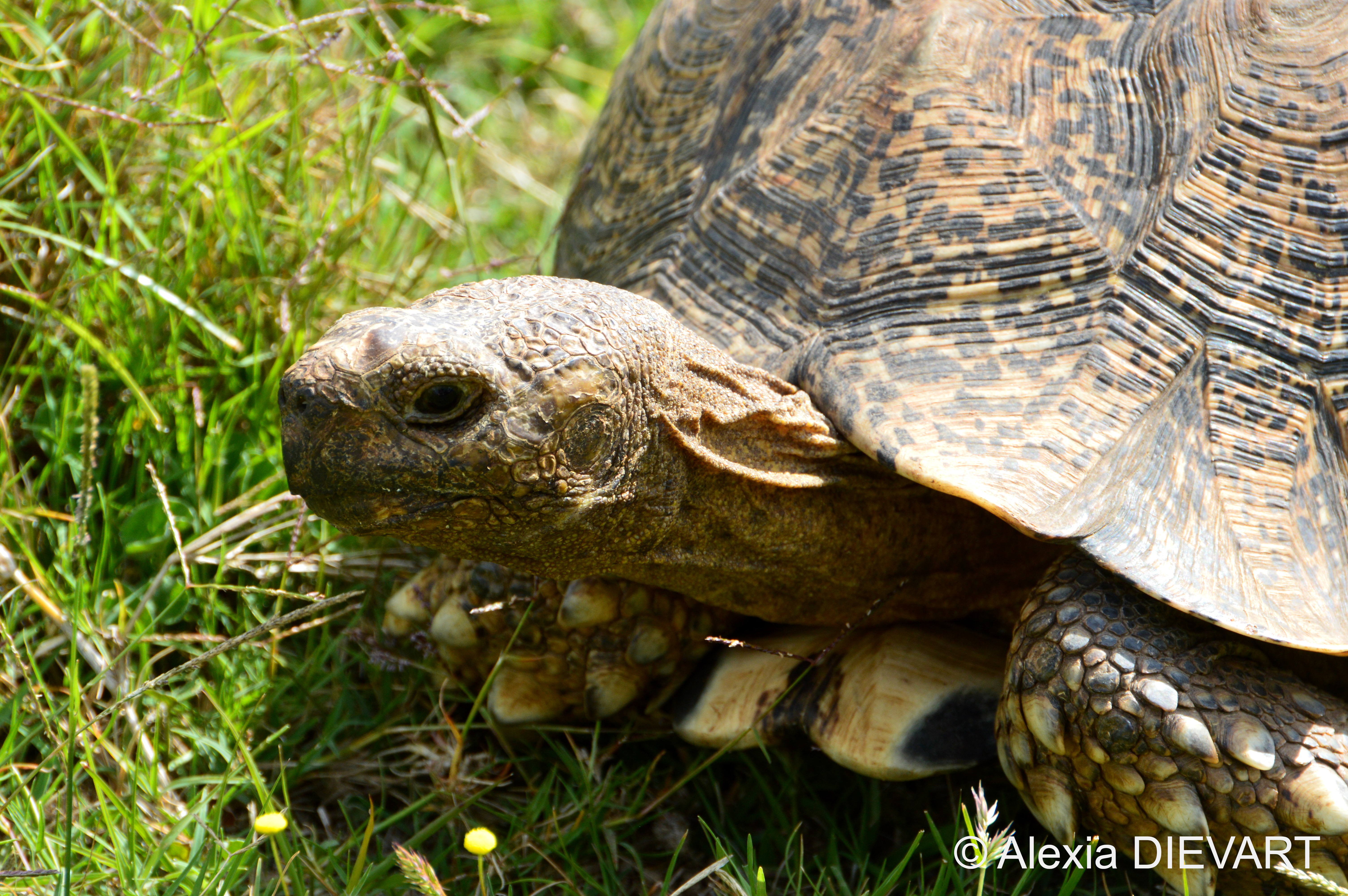
Fourth largest species of tortoise in the world, with typical adults reaching 40 cm for 13 kg. Maximum adult size vary along their distribution range, with southern and northern tortoises being larger and heavier. Females usually grow faster and larger than males. Individuals show marked variations in size, shape of the carapace, and degree of patterning and colouration.
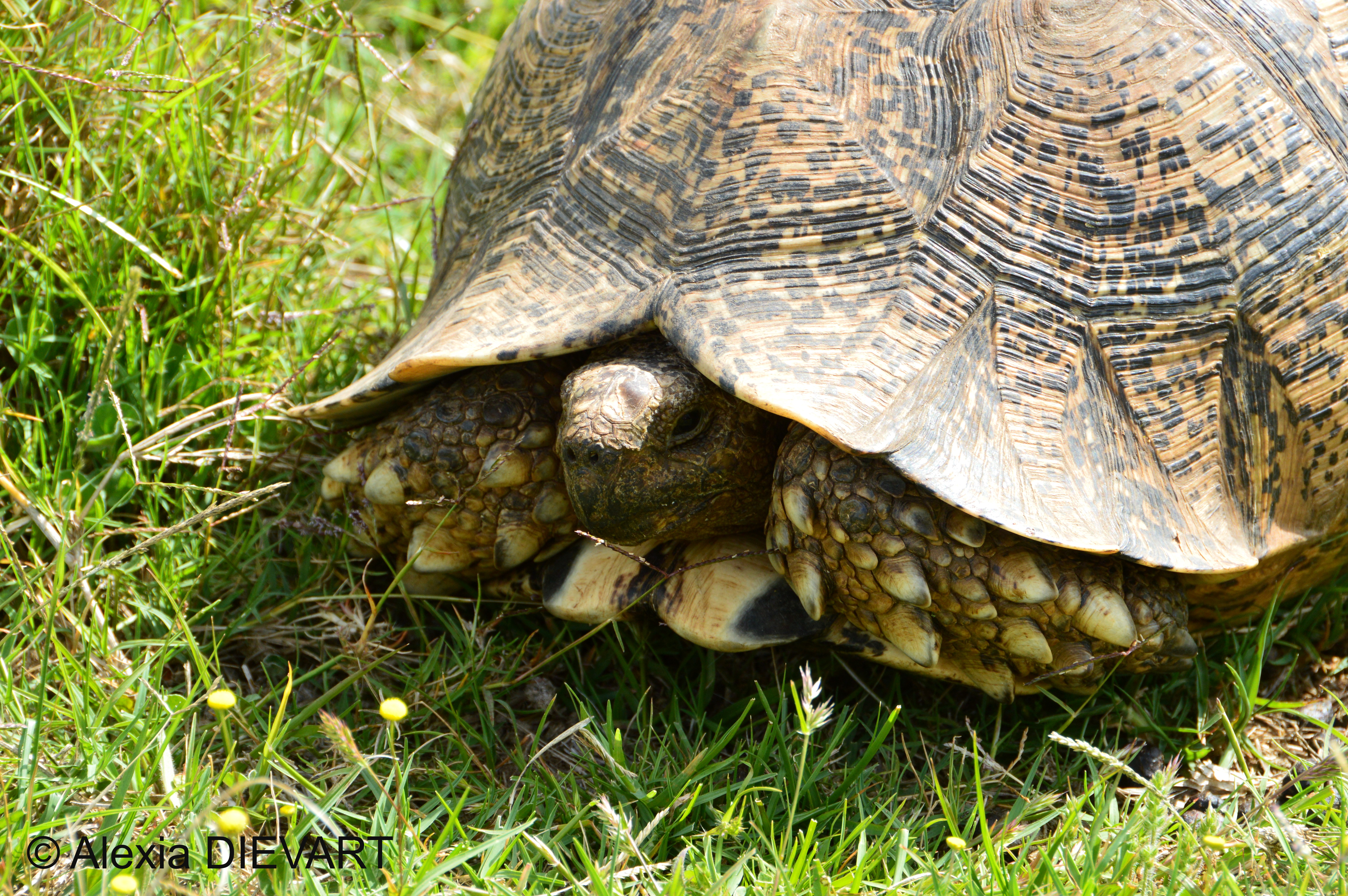
High domed carapace with steep sides, notched at front. Nuchal shield absent. Dorsal scutes sometimes raised like small pyramids. Plastron cavity (lower surface of the shell) well developed with paired gulars, equal in length and width. Moderately large head with a hooked upper jaw. Legs well developed with five claws on each of the front feet, and four on each hind foot. Forelimbs armoured with large, irregularly shaped spiny scales. 2 – 3 buttock tubercles on each hind limb.
Widespread throughout the african savannahs, but restricted in arid areas with water sources. Generalist, it is found in a variety of habitats, from sea level to over 2 900 meter high. Home range varies depending on food and shelter availability, with females having larger gome ranges than males.
In the semi-arid Nama Karoo, tortoise densities are low, down to 1.7 per 100 ha, while in the mesic thickets of the Eastern Cape, the densities shoot up to 85 per 100 ha !
Discover in Image

 F*CK FISH