
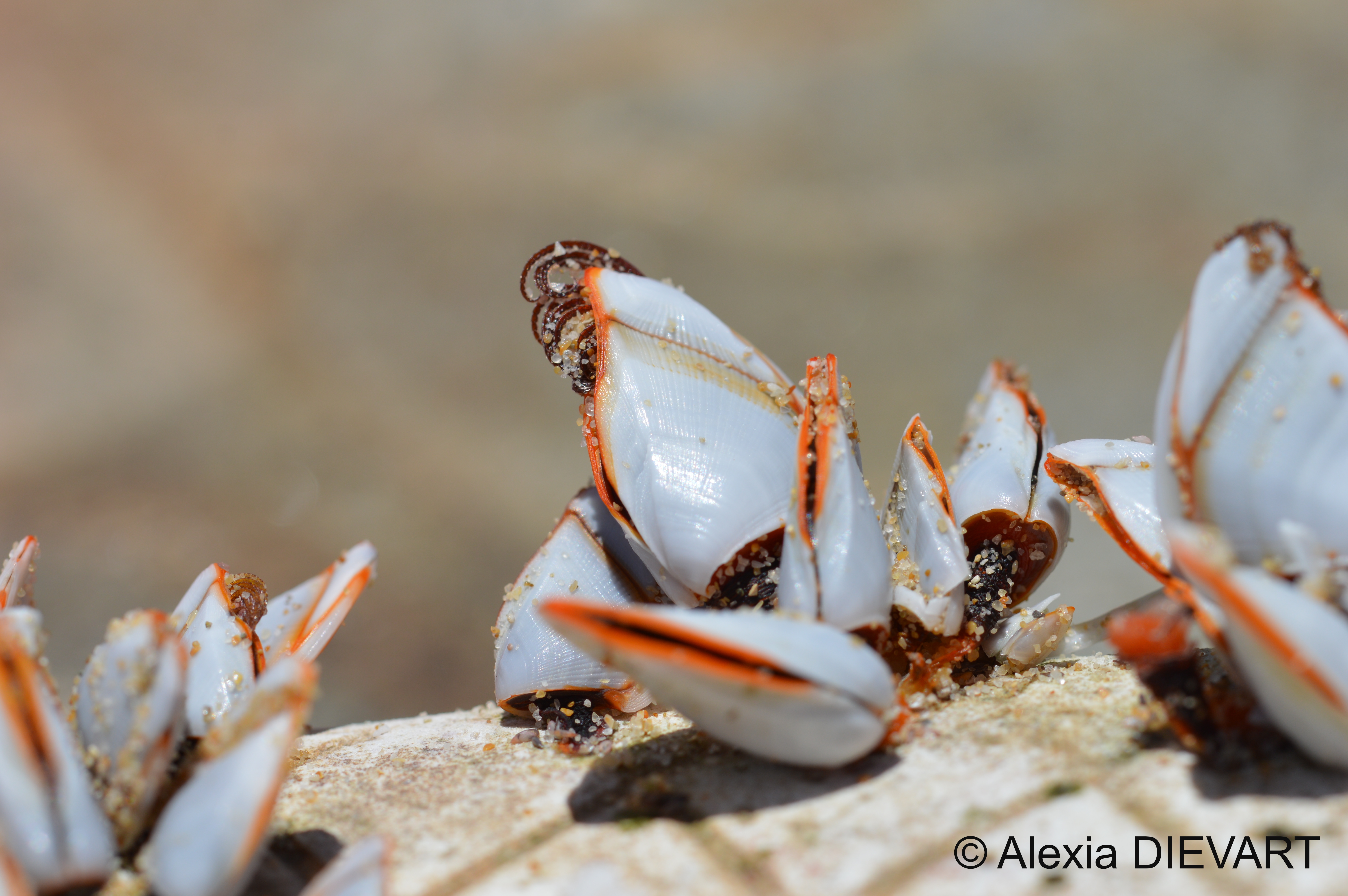
Off-white stalked barnacle. Shelled body flat, triangular in shape and compressed, wide at bottom and narrowing to a point.
Shell plates (5) calcareous, not overlapping and with no gaps in between, with orange edges, covered with radiating ridges and grooves.
Fleshy orange stalk (or peduncle) attached to the substrate, usually as long as the shelled part (called capitulum). Peduncle may be hidden in the shell.
Feathery appendages extend from the opposite end of the shell when feeding.About 4 cm in capitulum length.
Occurs in dense colonies on ships or floating objects, but most commonly observed on driftwood cast ashore.
Two Oceans: A Guide to the Marine Life of Southern Africa (1994, 2016), Texas A&M University (2012).
Cosmopolitan pelagic species, found chiefly in temperate and tropical seas.
Discover in Video
Discover in Image
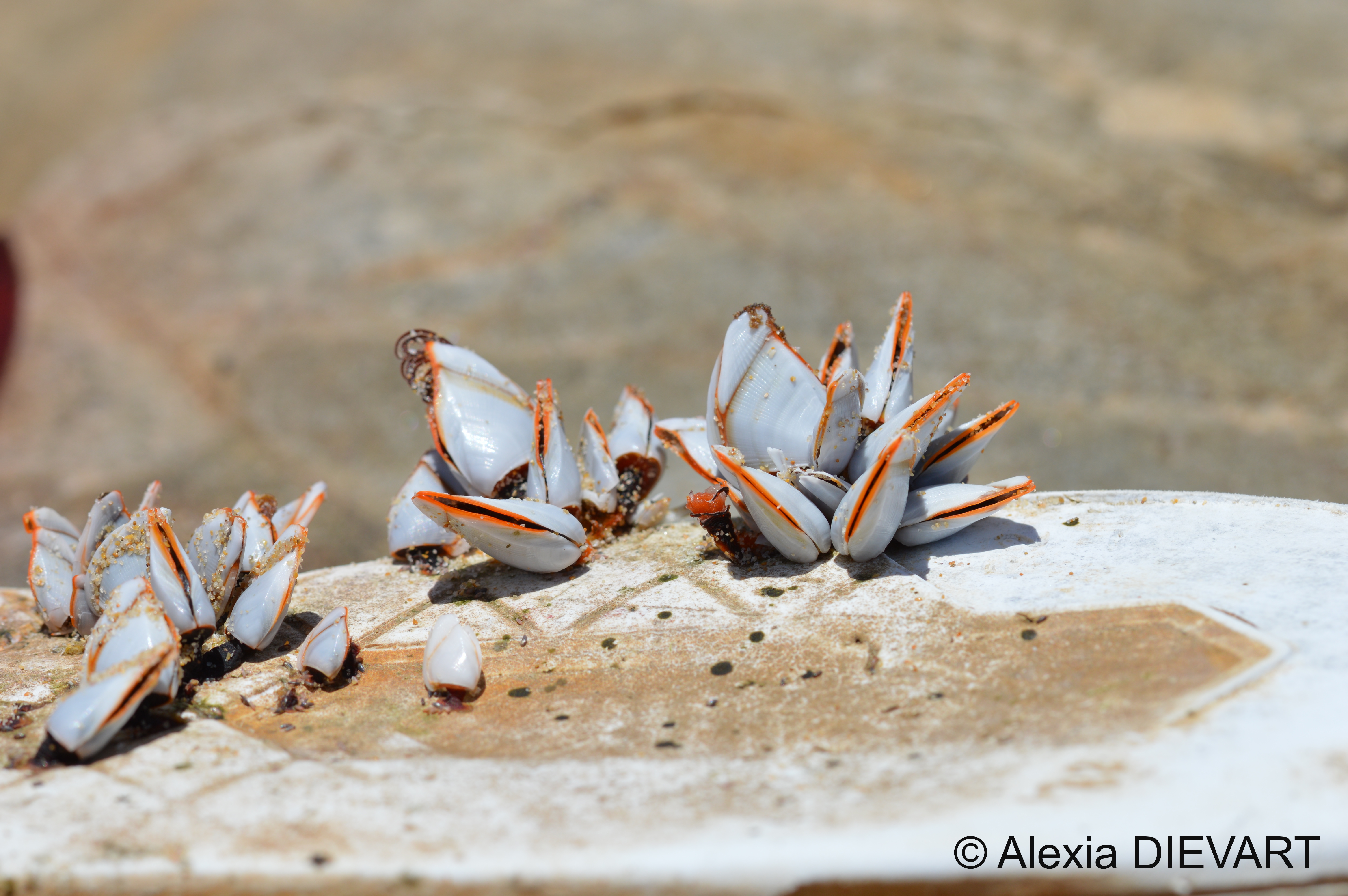
Port Alfred, Eastern Cape (2024).
Why calling it a ‘goose barnacle’ ?
Before the 11th century, bird migration was not understood. In Britain and Northwestern Europe, it was common to observe different species of geese, such as the brant goose and the barnacle goose, during the winter. However, these species of geese breed in the far North in the summer, so the nests, eggs and baby geese were unknown to the British people and associates.
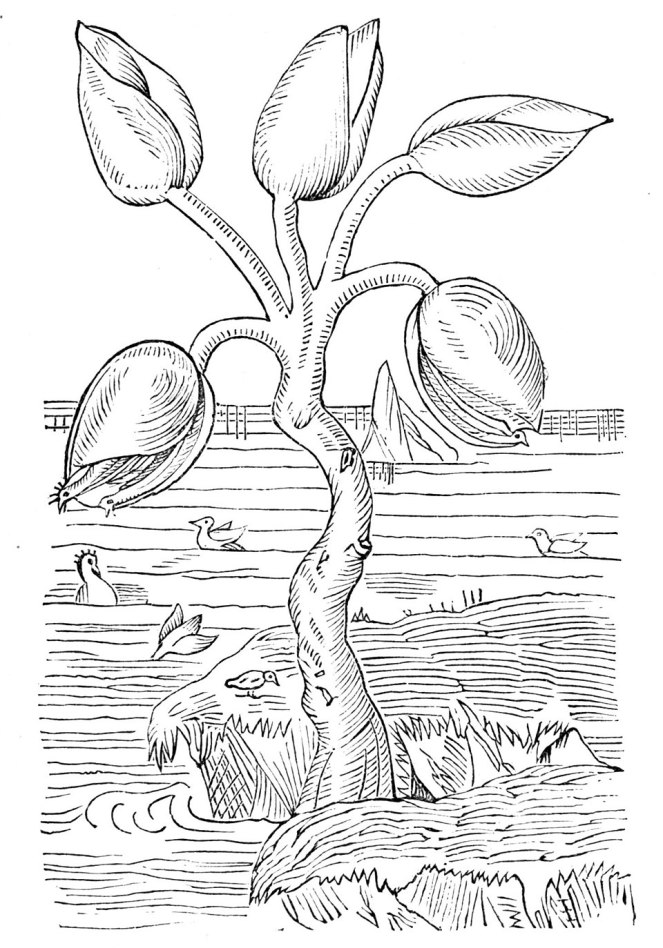
It was thus believed that geese hatched from the shells of goose barnacles, which grew on ‘trees’ – because the density of the colonies and the presence of a sometimes quite long peduncle was mistaken for a tree structure at the time – or in floating ‘nests’ (e.g., driftwood) on the beach.
Because of this, the barnacle geese were considered to be fish by Roman Catholic clerics, and could be eaten on fast days, such as Lent !
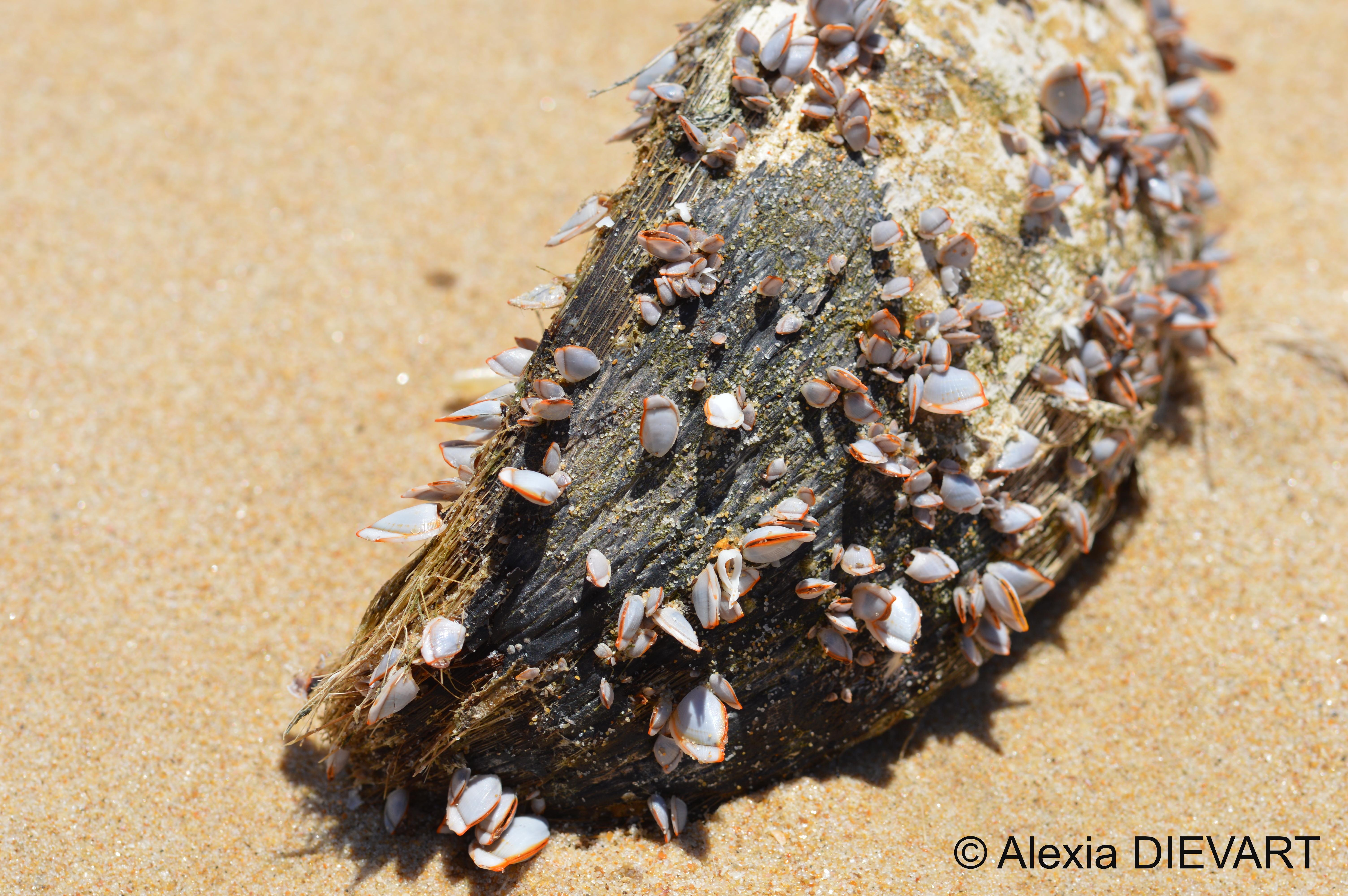
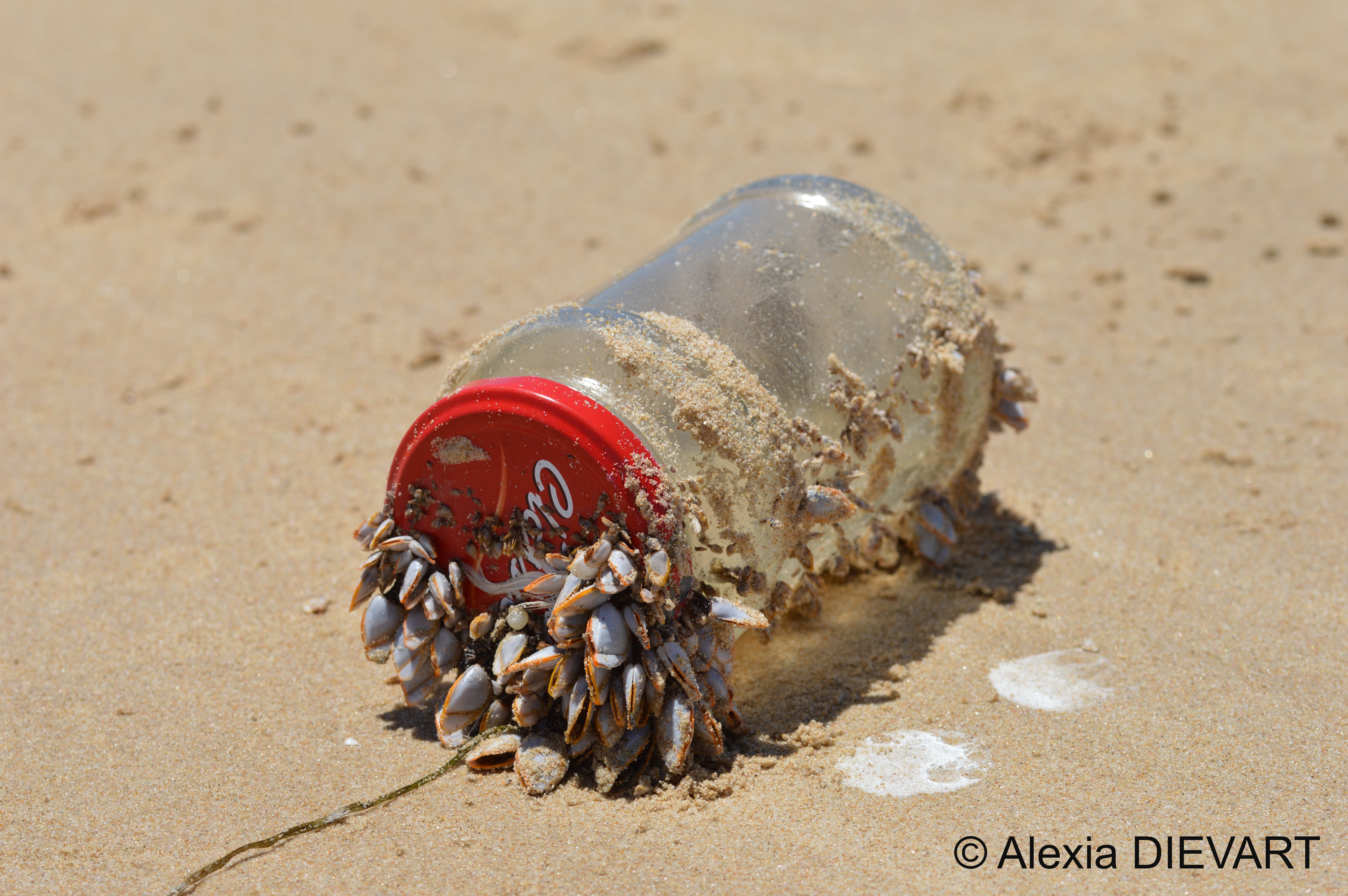
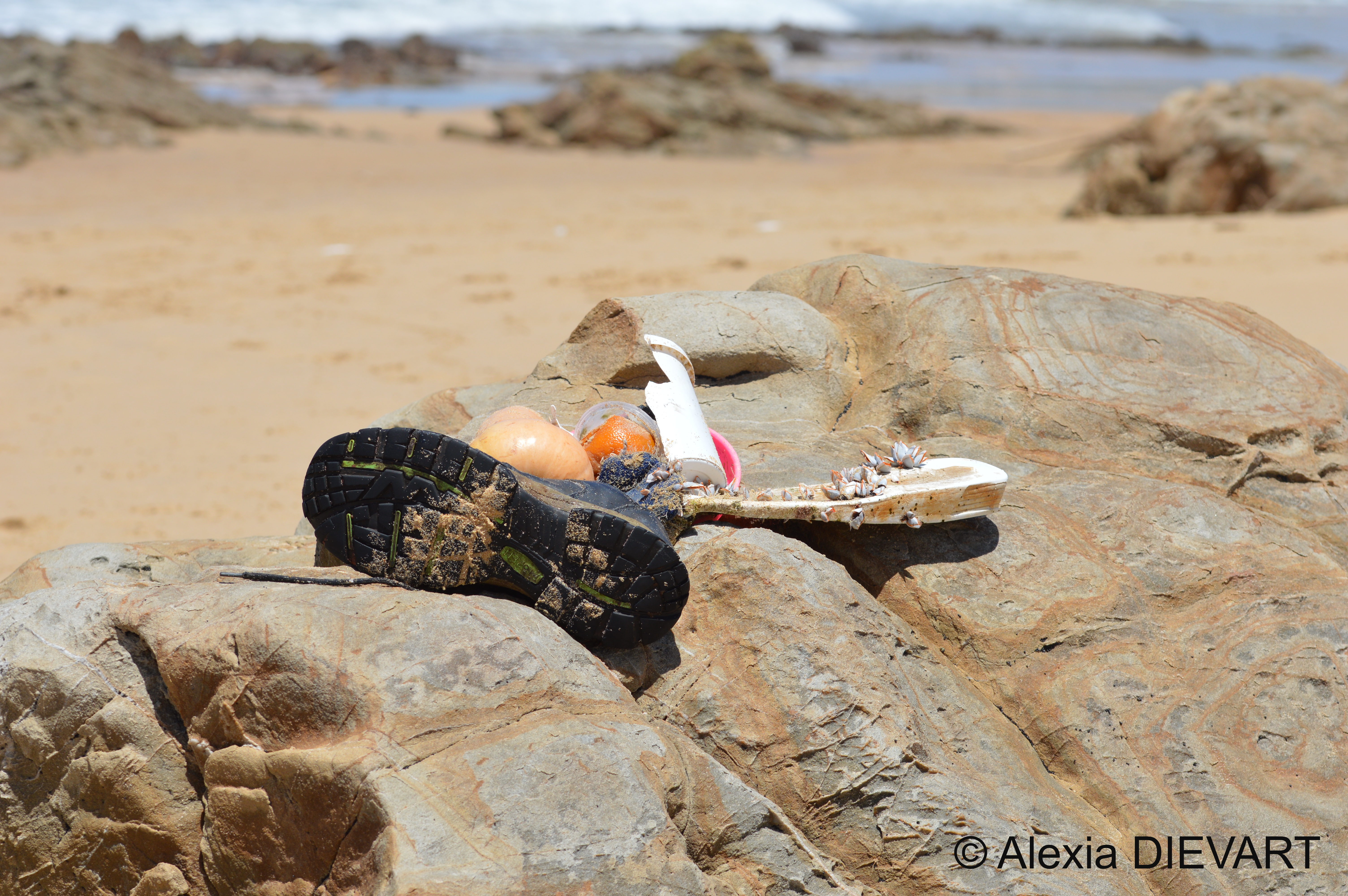
Port Alfred, Eastern Cape (2024).

 F*CK FISH