
Medium to large evergreen, long-lived plant producing initially a single erect trunk and can grow up to 7 meters tall. Some plants will produce suckers at the base of the trunk, which in time develop to a height of 4 to 5 m.
Leaves straight or curved backwards, up to 3 meters in length. Young leaves light green, longer when grown in the shade than in full sun. New leaves produced in the spring, but not necessarily every year.
Leaflets rigid, fairly broad, with one or both margins toothed, lacking prickles at the base (which distinguishes it from Encephalartos natalensis).
Usually 2-5 greenish-yellow cones, up to 50 cm long. Female scales covered with protuberances.
Seeds scarlet red, up to 4 cm long.The cones are poisonous to humans ! Seeds are consumed by birds, especially the Knysna loerie and trumpeter hornbill, and are then disseminated.
Widespread in the Eastern Cape and south-western KwaZulu Natal provinces of South Africa. Naturally occurs near the coast, including in open scrubs, on steep rocky slopes, and in evergreen forests in valleys and river banks.
Discover in Image
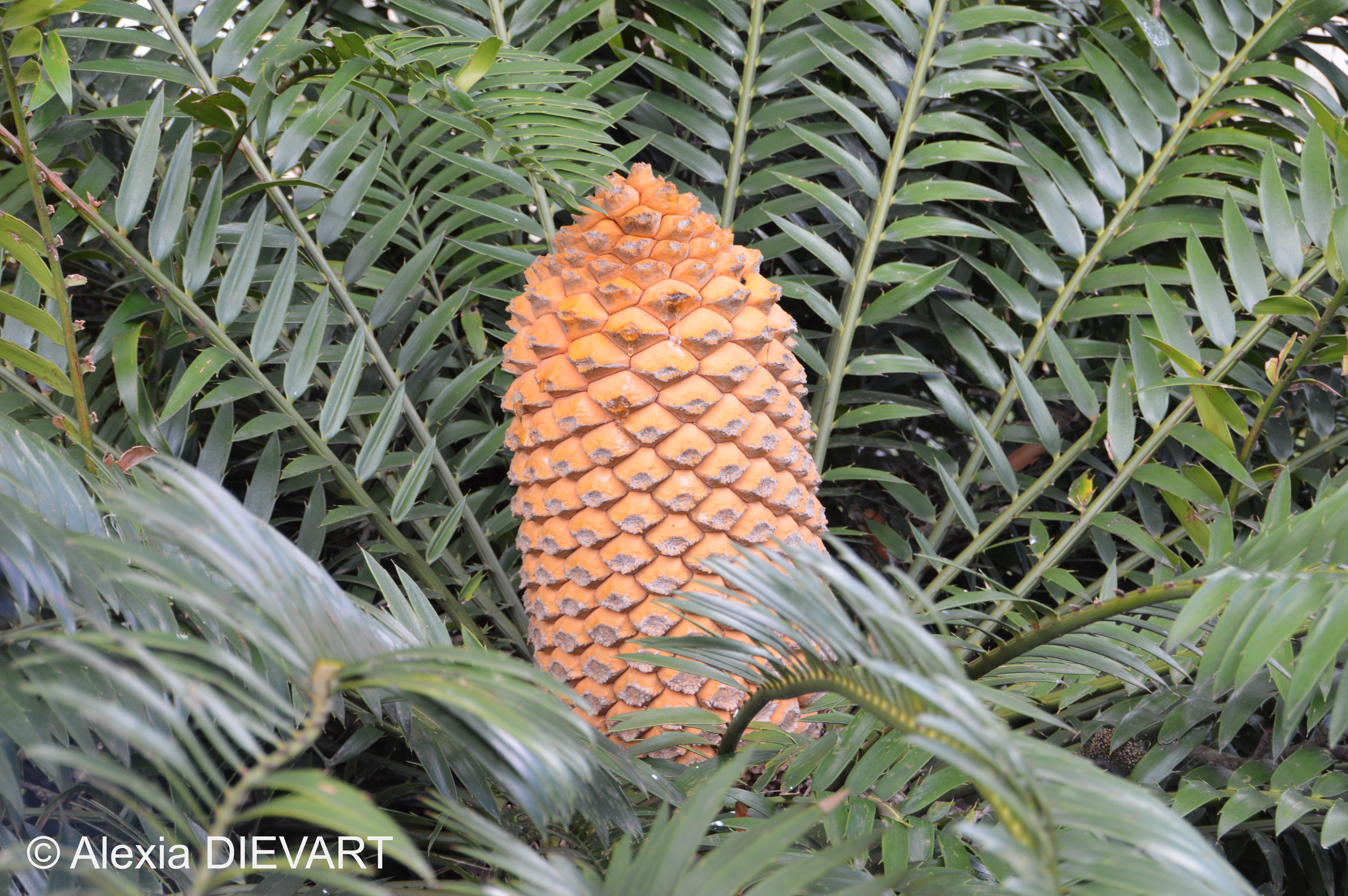
The Walsingham Farm, Port Alfred, Eastern Cape (2024).

 F*CK FISH