
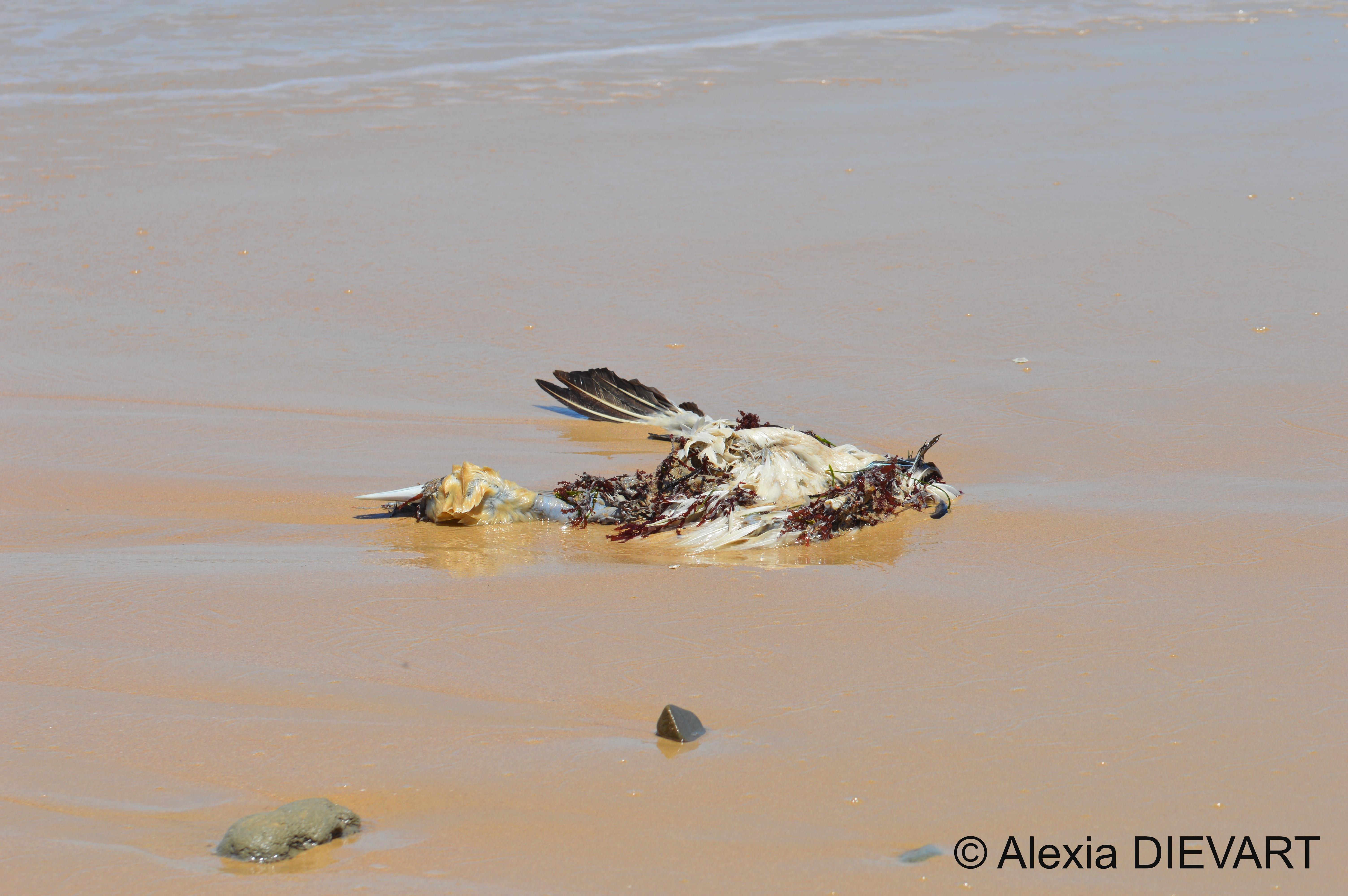
The largest gannet in the Sulidae family.
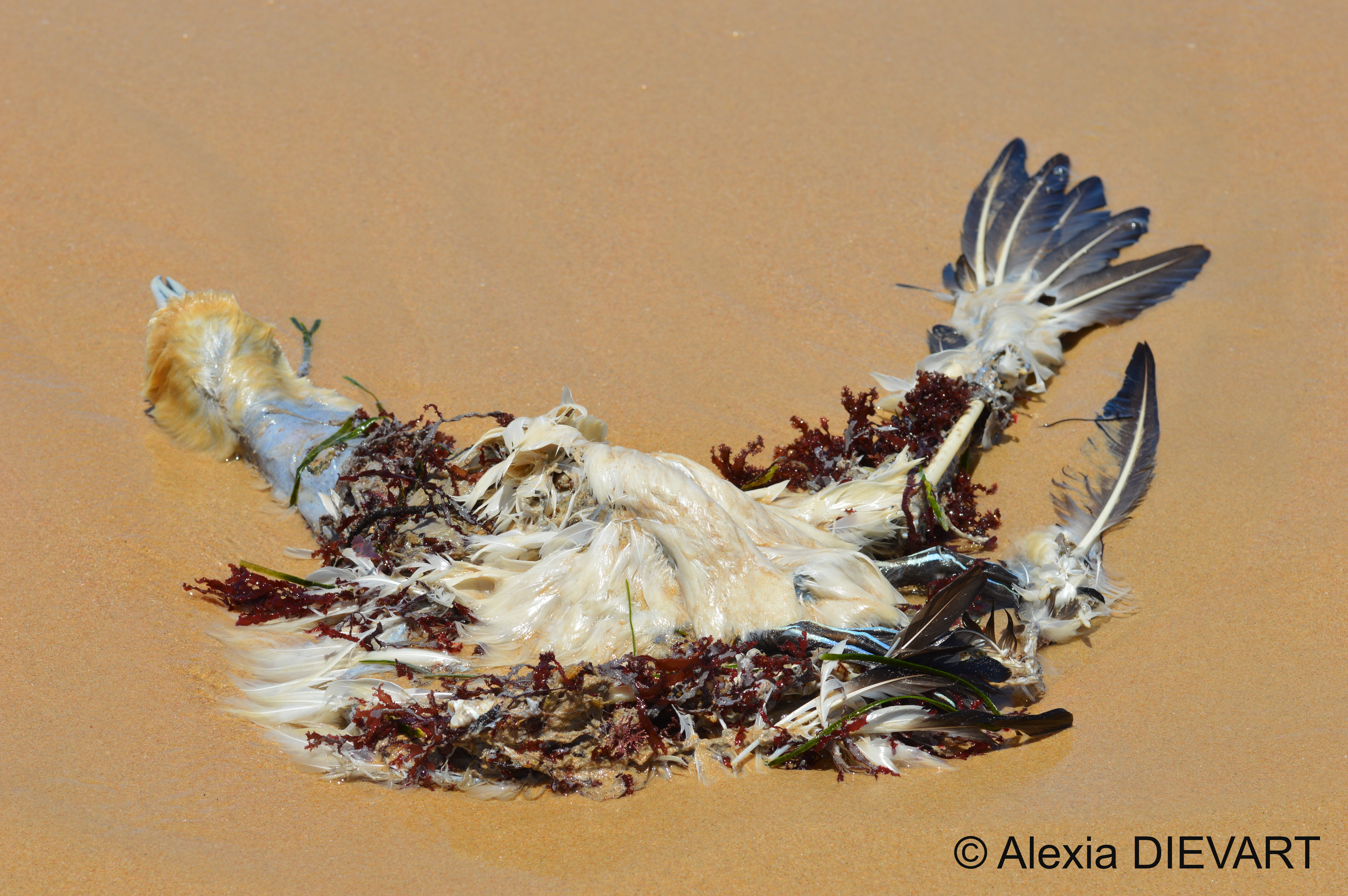
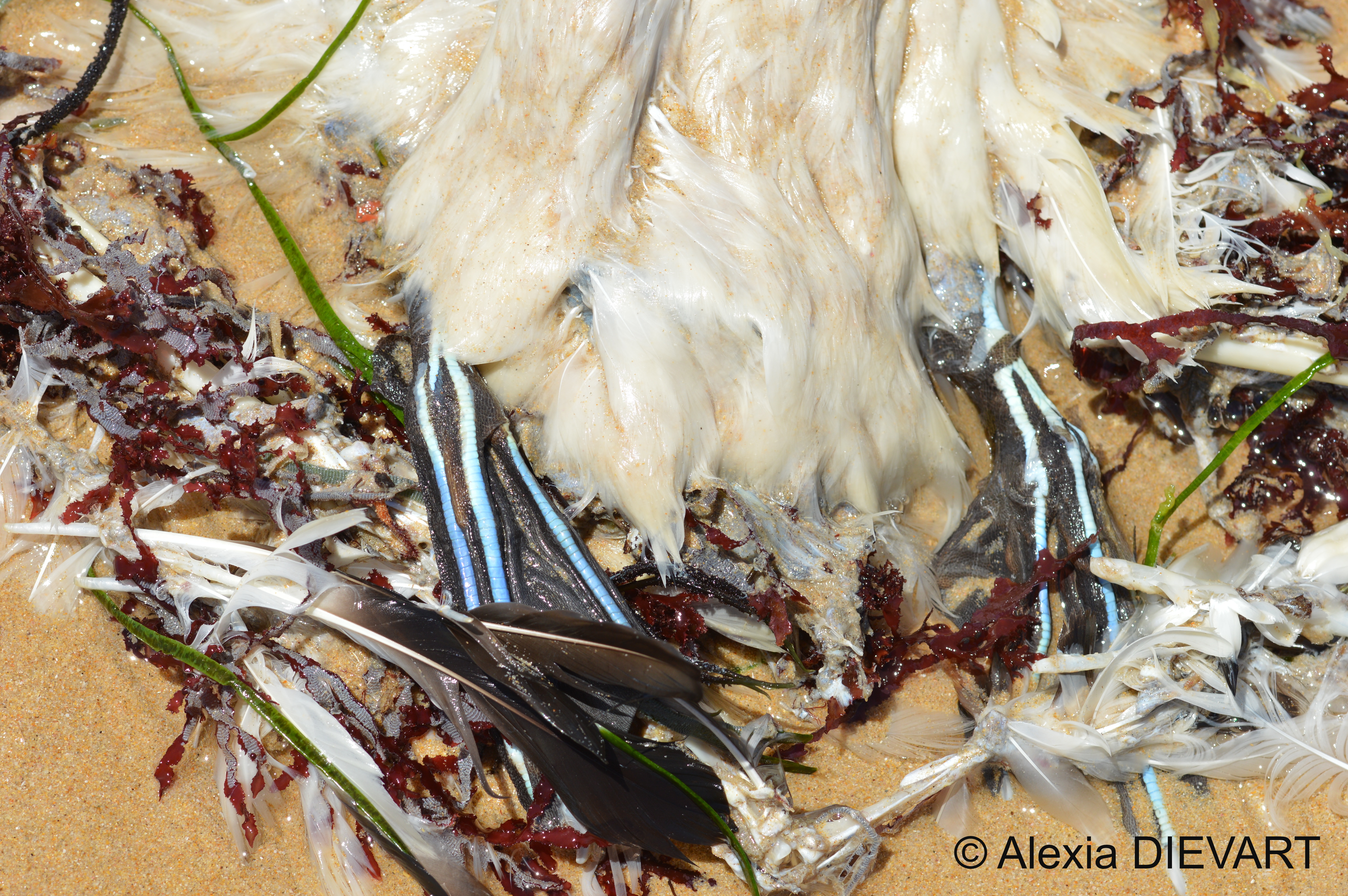
Adult white with golden head, black stripe across the eyes and long black gular stripe down the throat, black tail and flight feathers. Some have 1 – 4 white outer-tail feathers. Pale blue bill pointed with fine serrations near the tip, without external nostrils. Pale blue ring around the pale eyes.
Juvenile brown with white spots, whitening gradually starting from the head, and can be confused with the brown bobby, although larger and lacking a clear-cut brown bib and white belly.Between 84 – 85 cm, with a wingspan of 1.6 – 1.7 meter and a weight of 2.3 – 3.1 kg.
Endangered and a breeding endemic bird in Southern Africa. Nests on 6 offshore islands off the Cape and Namibia, forming huge colonies on flat areas in spring and summer. Incoming birds can recognize their mates in the dense colonies and an elaborate greeting follows their return, which includes ‘fencing’ of bills, head-bowing and mutual preening.
Two Oceans (2007), Birds of Southern Africa (2020).
Adults fly long distances to feed although largely confined to the continental shelf, plummeting from considerable heights to catch fish, often around trawlers. Large numbers follow the sardine run up the East Coast of South Africa towards KwaZulu-Natal in winter, while others migrate up the West Coast to the Gulf of Guinea.
Gannet guano is harvested and used as a fertilizer.
Discover in Image

 F*CK FISH