
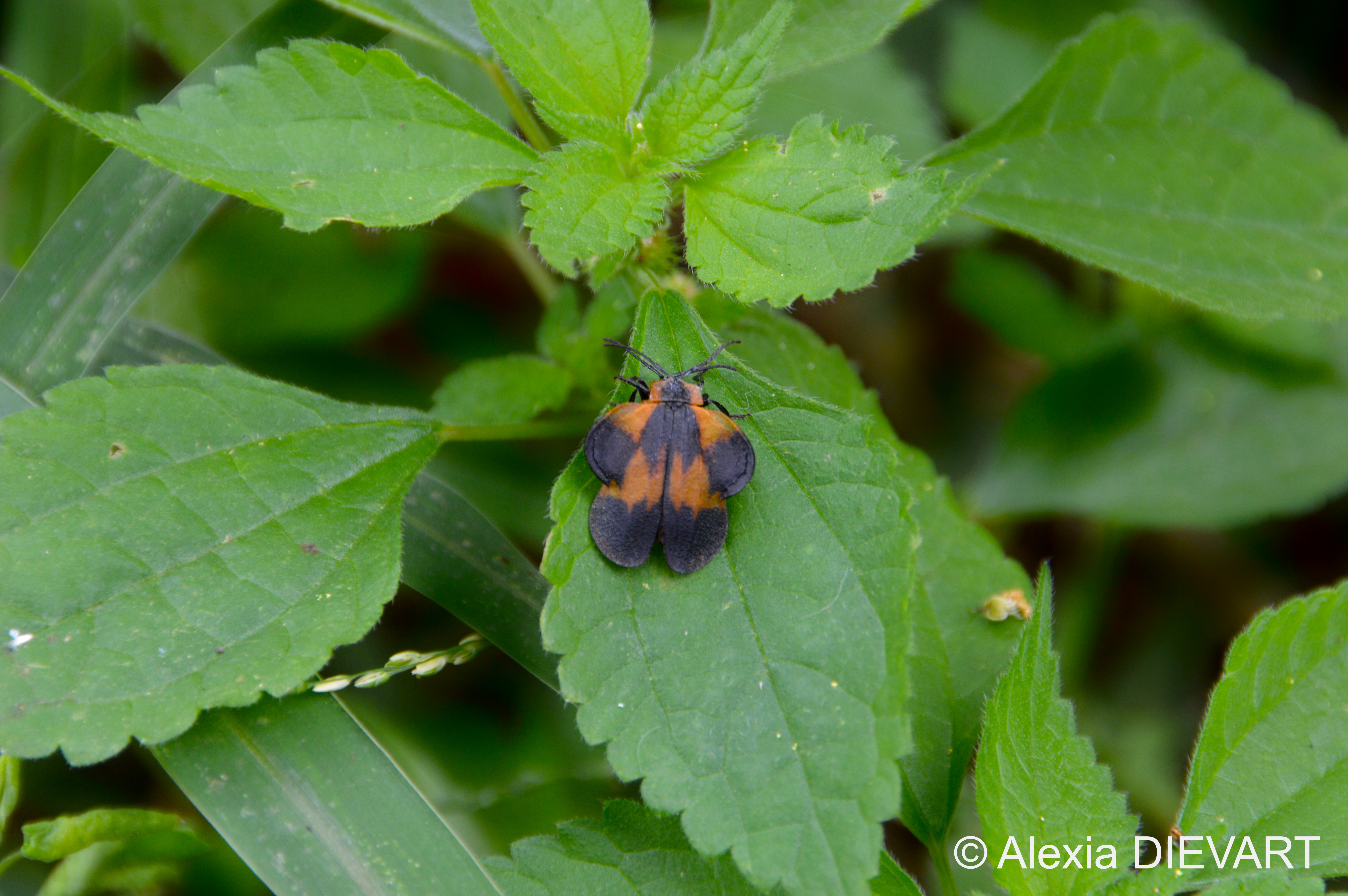
The Walsingham Farm, Port Alfred, Eastern Cape (2024).
A member of the net-winged beetles in the tribe Lycini, family Lycidae.
An ochraceous bug with species-specific black markings. Head very deeply depressed, eyes forming two deep pits, and long rostrum about 2 times the distance between eyes. Antennae with 5 – 10 serrate. Antennae, head, legs, scutellar area, mesal part of the abdomen and pronotum, and posterior 1/3 black. Rounded black market on the antero-lateral, dilated part of elytra. Rest of elytra and sides of pronotum and abdomen ochraceous.
Male : 13 – 21 mm in length, 10 – 19 mm in width. Female : 17 mm in length, 12 mm in width.
A very rare species from the coastal regions of southern Africa, but easily distinguishable.
An overlooked species
As I was taking a stroll in the beautiful Albany thicket that covers the game reserve I currently live on, I came into contact with what I thought was ‘a cool looking orange and black beetle’. I unfortunately did not have my macro lens, but I did take a few (blurry) pictures of this beetle, amongst the hundreds of pictures of dragonflies I snapped on the same day. I then forgot about it for a few months, until it was time to sort out all of my pictures and attempt to identify every single animal, plant or fungi. What I did not know is that I had encounter, for the first time in my life, a rare species ! Indeed, these two beetles – yes, there are two on top of each other as you can observe two pairs of antennae – belongs to the family Lycidae and the tribe Lycini, namely the net-winged beetles.
After a deep dive into the observations of beetles in the genus Lycus on iNaturalist for a few hours, I found a look-alike species with only 3 observations in South Africa. As a rule of thumb, I often believe I won’t encounter a rare species so I searched in vain for a more common one that could fit my beetle description. But I found something even better ! There is a single thesis, written by Kitty Wanda Stamhuis in 1993, that revised the genus Lycus in Southern Africa. And this thesis has drawings of each beetle species !

This species can easily be distinguished by the dilated anterior humeral area of the elytra – basically the ‘shoulder’ of the bug – and the associated black markings, as well as the form of the aedeagus – the reproductive male organ. Both the elytral form and coloration seem to be very consistent.
This is a very rare species from the coastal regions of southern Africa !
So rare in fact that this species did not make the list on the Wikipedia article about this genus of beetle !
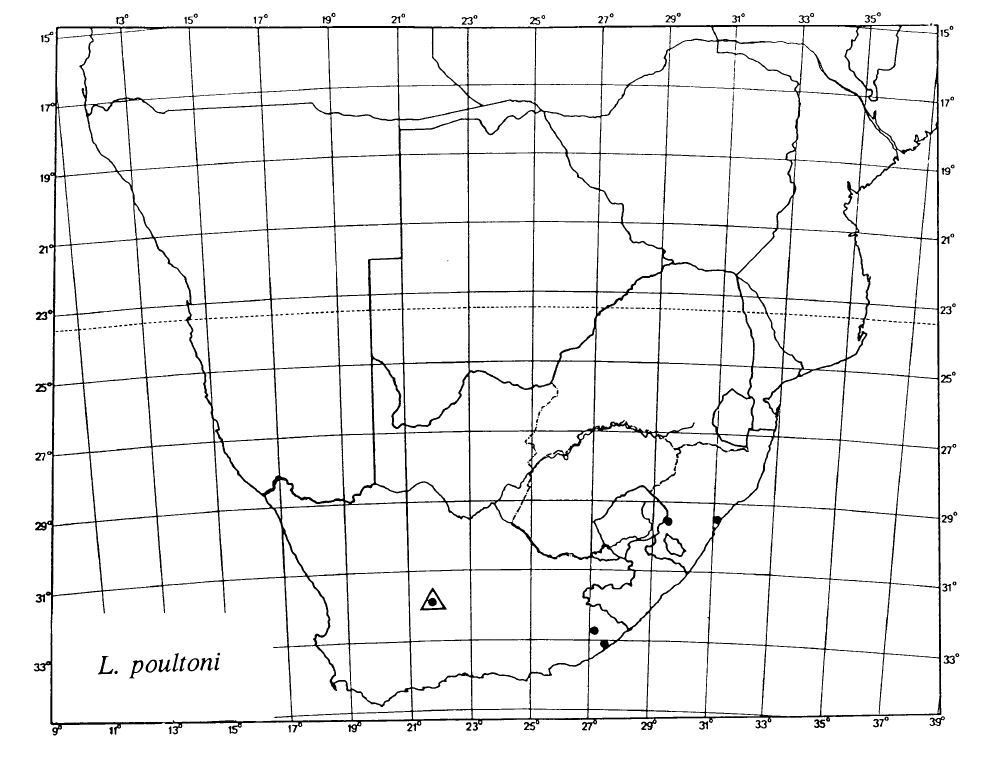
Here is the distribution of Lycus poultoni observed by Stamhuis (1993) – on the left – vs on iNaturalist – on the right.


 F*CK FISH