
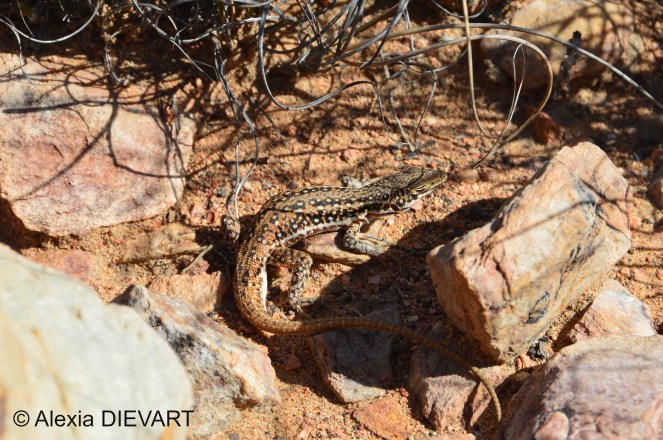
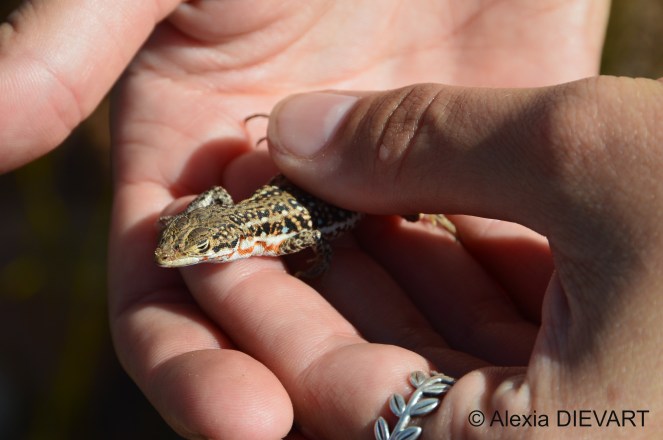
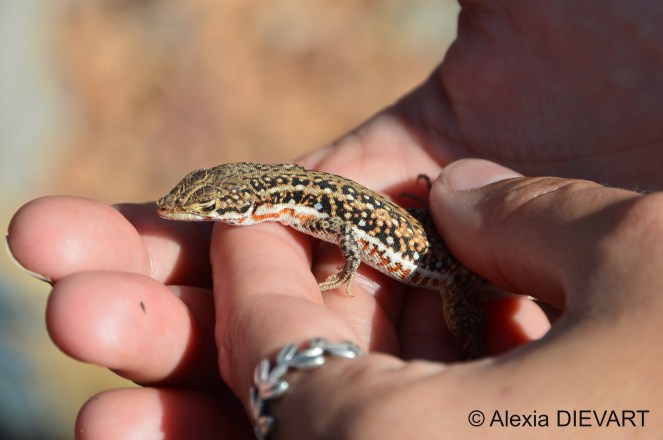
Orange to grey lizard, with white-blue and dark bordered ocelli (eye-like markings) on flanks and numerous paler spots on the back, which may fuse into a dorsolateral lines.
Sexes distinguished in adults by the presence of a hemi-penal bulge (a bulge on the base of the tail where the sex organs are stored in males).About 50 mm long from snout to base of the tail.
Ground-dwelling lizard, common in areas with open ground and plenty of rock fragments. Its legs are most effective on compacted sands. Although it has low endurance for exercise, it has greater capacity for explosive bursts of speed compared to lizards that actively hunt their prey.
SANBI.
Predominantly a sit-and-wait predator of insects that uses both chemo-sensory organs and visions for hunting and predator avoidance. Adults males move distance of 30 meters per day in non-degraded habitats. Home range sizes are around 200 meter square, but daily movement is adjusted according to food availability.
Although common, very little is known about its life history and ecology !
Discover in Image

 F*CK FISH