
Although small and easily overlooked, Amphipoda is a diverse order of malacostracan crustaceans found in profusion in most habitats. There are more than 9,900 species of amphipods described so far. Mostly are marine, but amphipods are found in almost all aquatic environment. Over 300 species of amphipods occur in southern African waters.
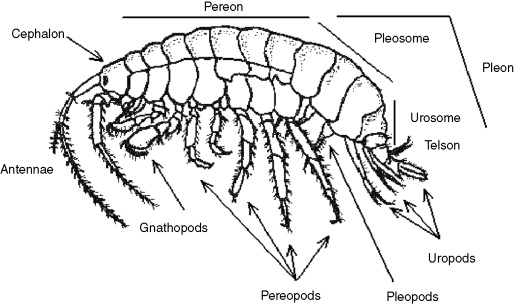
The body is compressed laterally, from each side – as opposed to the body of isopods that is compressed ventrally, or flattened – and is often protected by large side plates.
The head bears unstalked eyes. The first two pairs of legs generally form nippers, while the remaining five end in a simple claw, which gave amphipods their name from the Greek amphi, both and podos, foot.
Each abdominal segment typically carries two branched appendages, the first three being called pleopods and the remaining three uropods.
Amphipods have no ‘real’ carapace and they are side swimmers and hoppers. Eggs are carried in a conspicuous brood pouch below the body, and hatch directly into the adult form.
Most amphipods crawl or burrow amongst seaweeds, or in sediment, feeding on detritus or carrion. But many build tubes and filter food particles from the water.
 F*CK FISH