
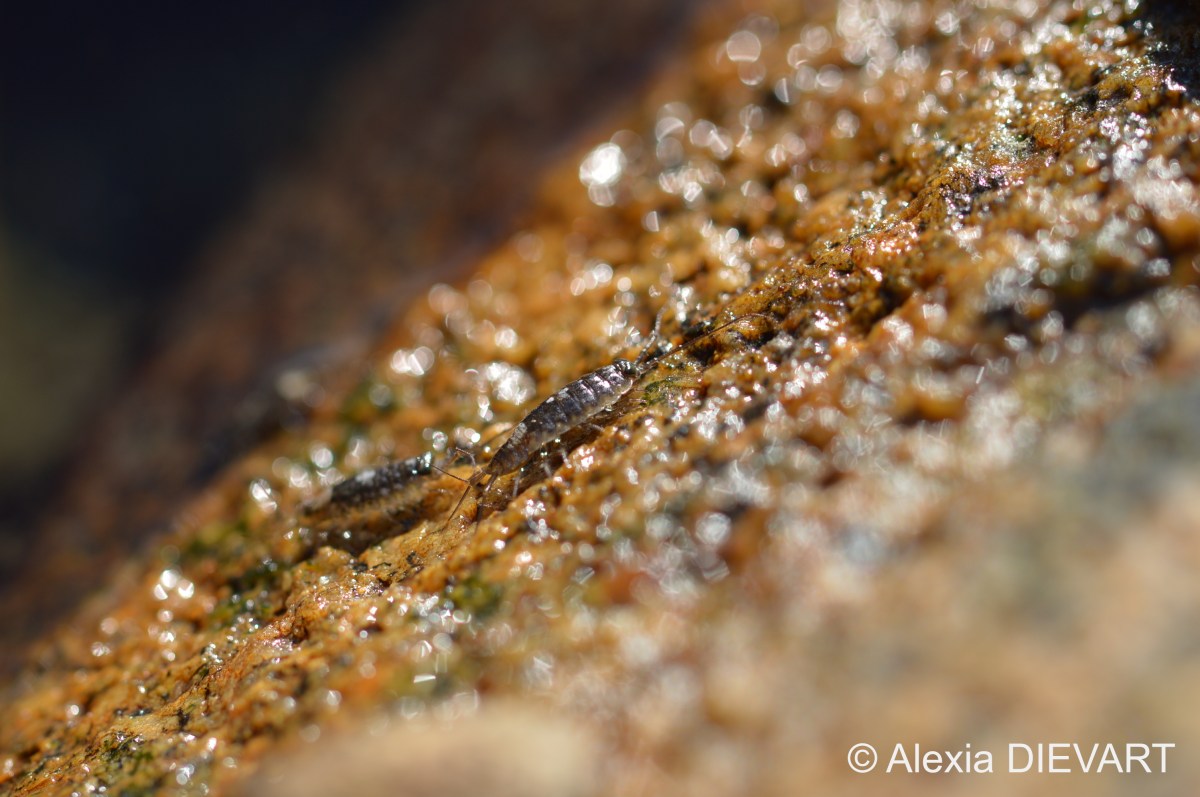
The order Isopoda includes a diverse group of small crustaceans, such as woodlice and their relatives, which occur in abundance in virtually all marine habitats, from the intertidal to the deepest oceans, as well as in terrestrial and freshwater environments. Over 270 species occur in southern Africa.
The body is usually flattened or depressed, although it can be cylindrical. The head has unstalked eyes and the thorax bears seven pairs of similar legs (hence the name isos, same, and podos, foot). The abdomen (i.e., the pleon) is extremely variable in form. Typically, it consists of five segments, beneath each of which lies a pair of flap-like pleopods, used both for swimming and as gills. These are followed by a tail-fan made up of a central telson and a pair of uropods. Some or all of the pleon segments may fuse with the telson to form a so-called pleotelson. Alternatively, the uropods may be folded beneath the telson to form a chamber to protect the delicate pleopods.
Eggs are geld in a brood pouch beneath the thoracic segments of the female, and develop directly into the adult form.
 F*CK FISH