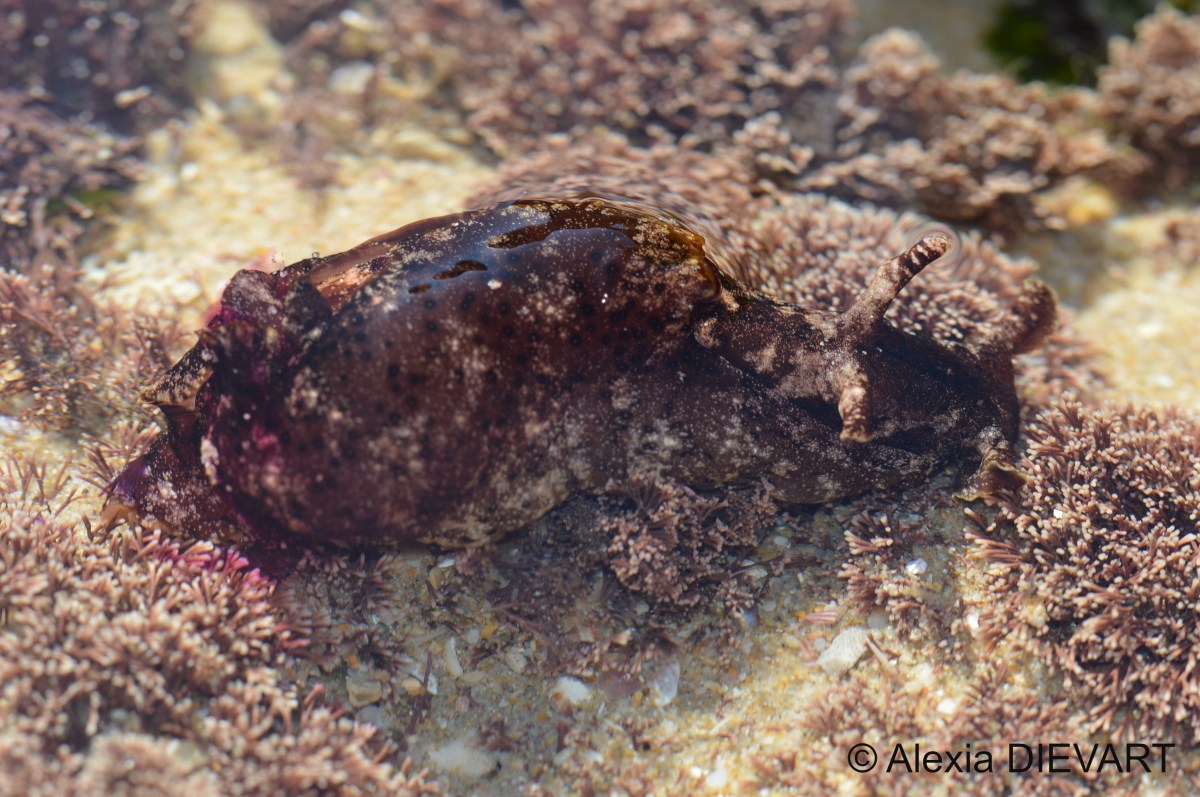
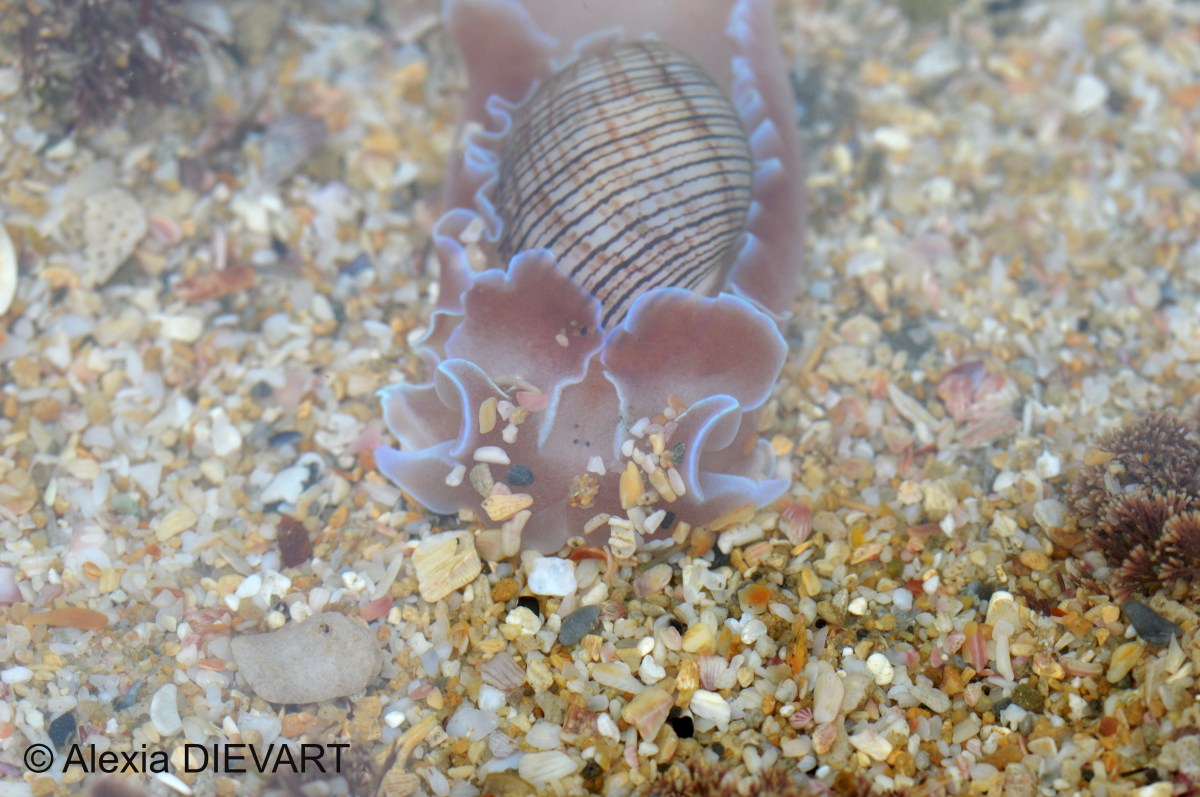
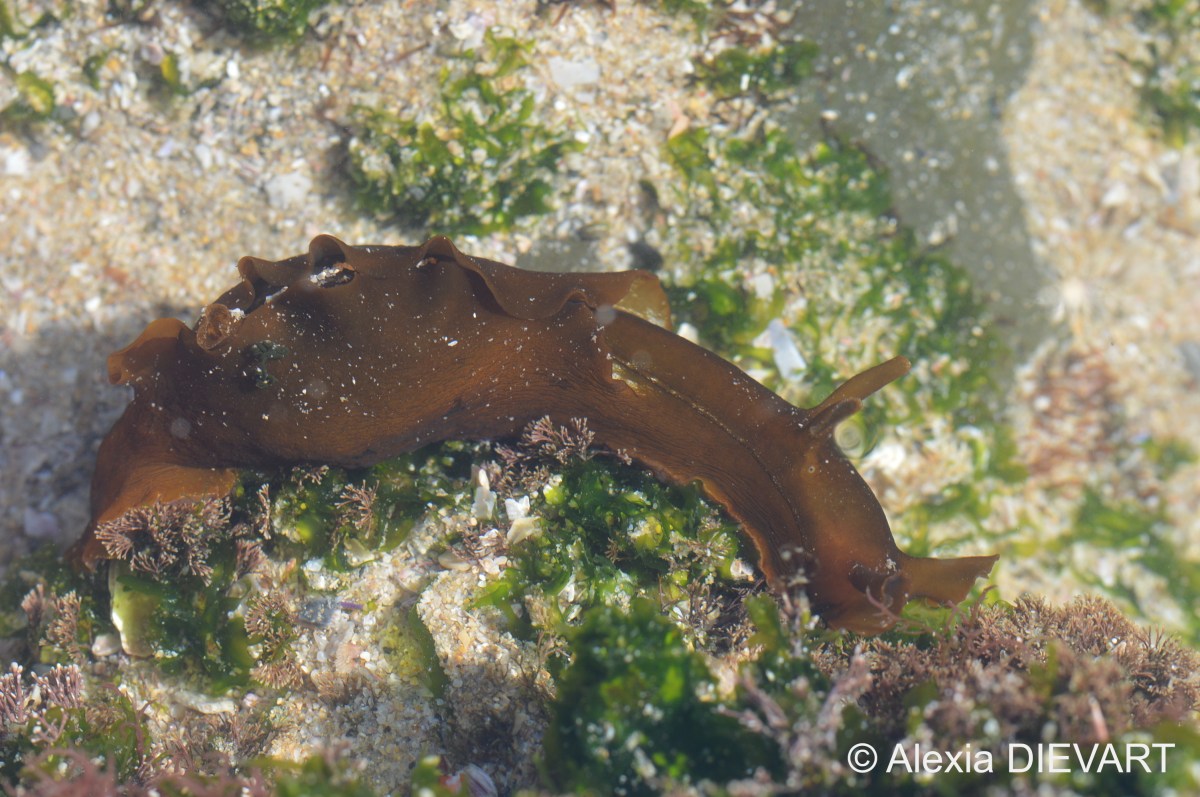
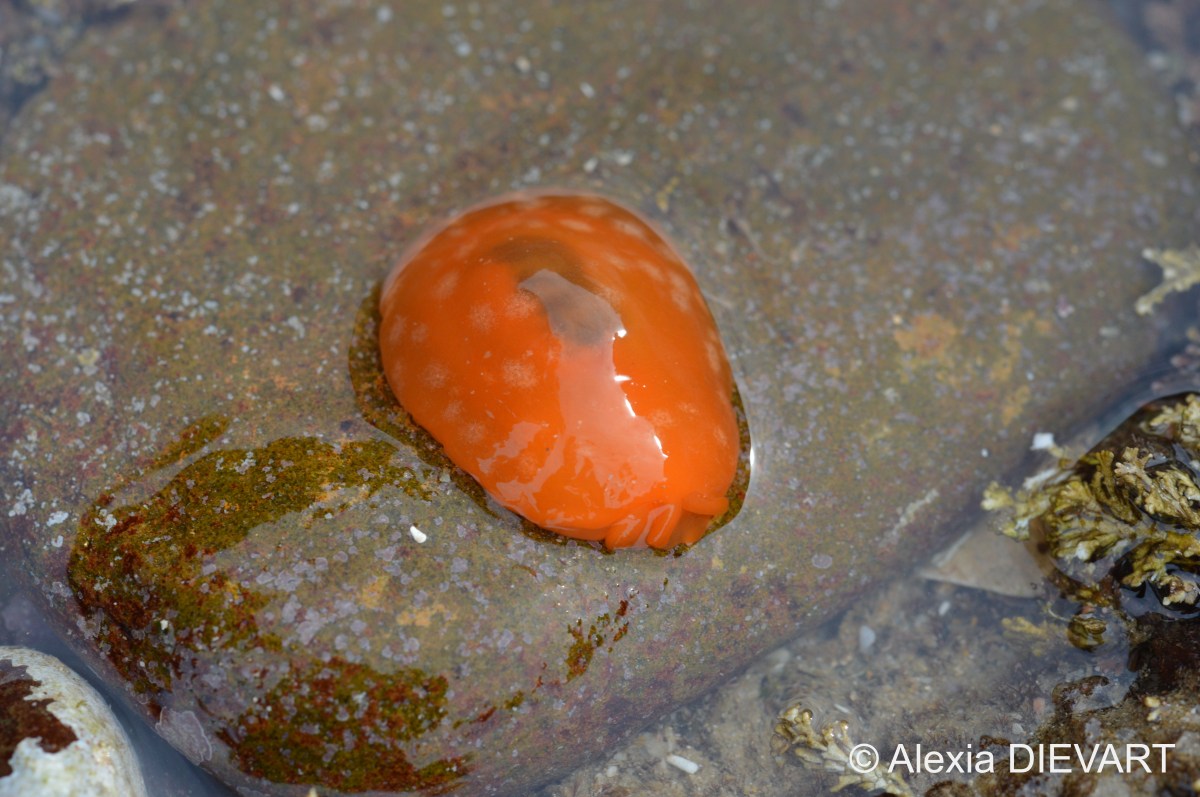
The informal group Opisthobranchia includes the bubble shells, sea hares, sea slugs and nudibranchs, and is characterized by a reduction or a total loss of the shell. Nearly 300 species are found in southern Africa, many still unnamed.
Most opisthobranchs have a second pair of sensory tentacles, called rhinophores, on the top of the head. The original gills are often lost and may be replaced by a plume of secondary gills around the anus, or by finger-like projections on the back called cerrata.
With their soft body parts exposed, many opisthobranchs defend themselves by secreting toxic chemicals or re-utilizing stinging cells derived from their prey. The flamboyant color patterns of many nudibranchs warn potential predators of their unpleasant taste. Most species are specialized predators, making them difficult to keep in aquaria.
Unlike most mollusks, opisthobranchs are hermaphrodites, although incapable of self-fertilization. Eggs are laid in jelly-covered strings or ribbons, and hatch into planktonic larvae.
 F*CK FISH