
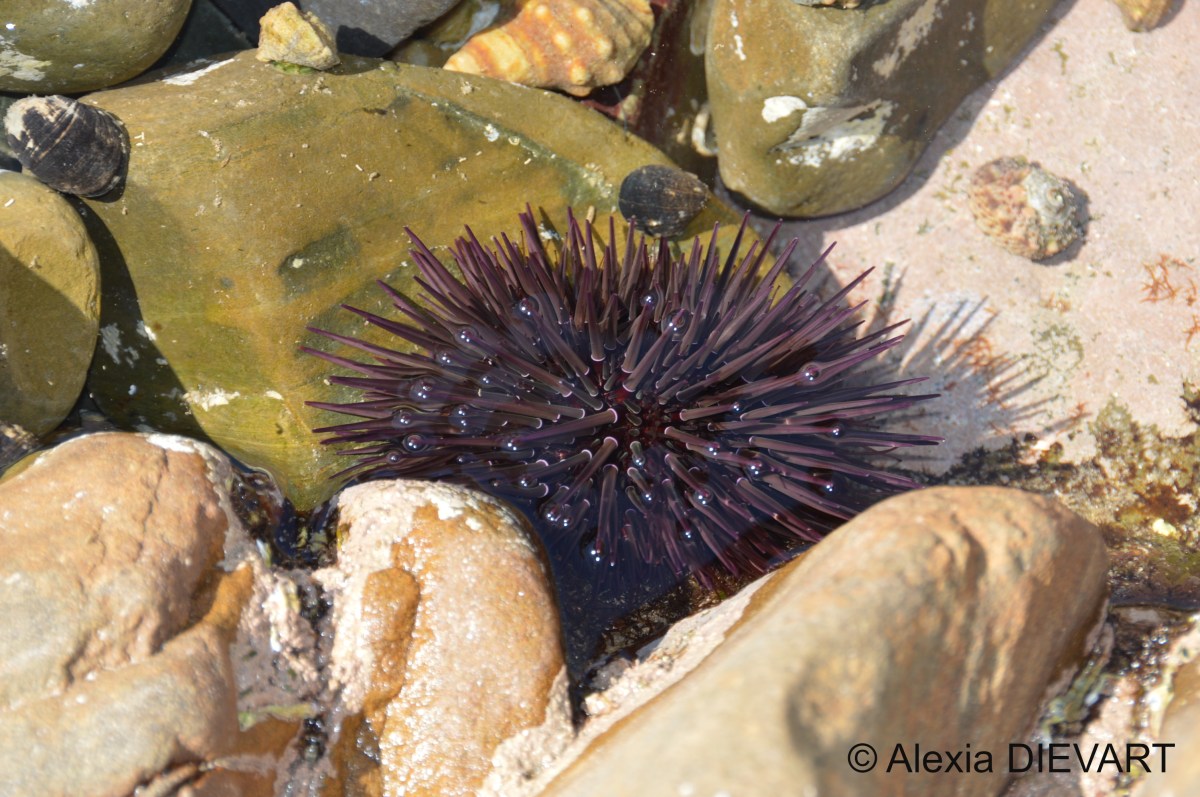
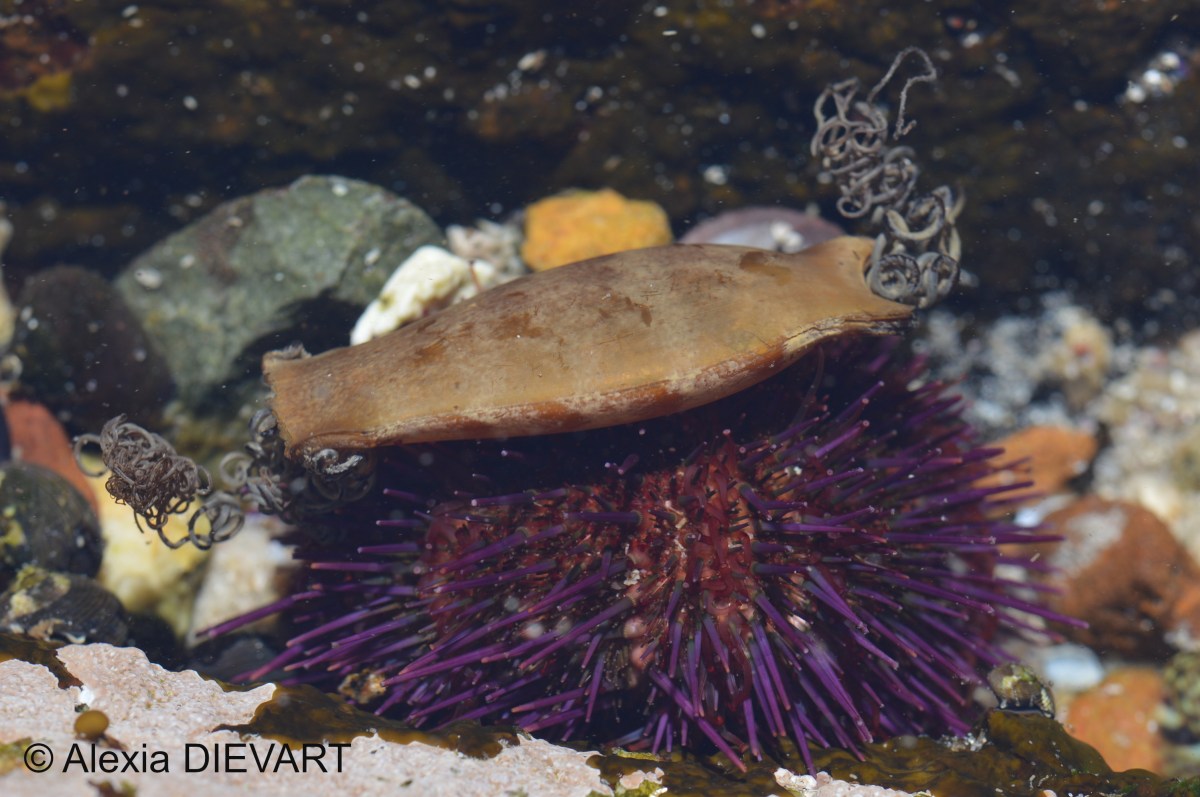
Sea urchins constitute the class Echinoidea and are also well-known echinoderms.
Their bodies are encased in a hard shell made of calcium carbonate, called the test, formed by the fusion of the spines in the skin. Through tiny pores in this shell, tubefeet protrude and serve to move urchins around. Long protective spines project from the test. These are mounted on a ball-and-socket, and can be swiveled to point directly at any threat. In most cases, the spines are harmless to humans, if irritating. A few species have long, lance-like spines with backward pointing serrations – they can penetrate deeply and then break off, and may even require surgical removal. Some long-spined species discharge toxins through the tips of their broken spines. Like starfish, urchins are dotted with tiny pedicellaria that resemble grapling irons. These three-jawed structures are used in defence against predators and are usually armed with poison glands. They are harmless to humans in almost all cases, but one species, Toxopneustes pileolus, is potentially lethal.
Urchins are grazers and the more mobile and abundant species control the growth of seaweeds. In the tropics, where predatory fish abound, most urchins shelter in crevices and catch drifting seaweed. Some are able to burrow into rock, creating holes in which they shelter.
 F*CK FISH