
Members of the phylum Mollusca, freshwater molluscs live in freshwater habitats, both lotic (flowing water), such as rivers, streams, canals, springs and cave streams, and lentic (still water), such as lakes, ponds and ditches.
Molluscs have unsegmented body, divided into a head, a visceral mass incorporating the body organs, and a muscular foot. The body is normally contained within a hard shell made of calcium carbonate.
Two major classes of molluscs have representatives in freshwater ecosystems : the gastropods (snails and limpets) and the bivalves (freshwater mussels and clams). It appears the other classes within the phylum Mollusca (e.g., cephalopods, chitons, echinoderms) never made the transition from a fully marine environment to a freshwater environment.
Bivalves
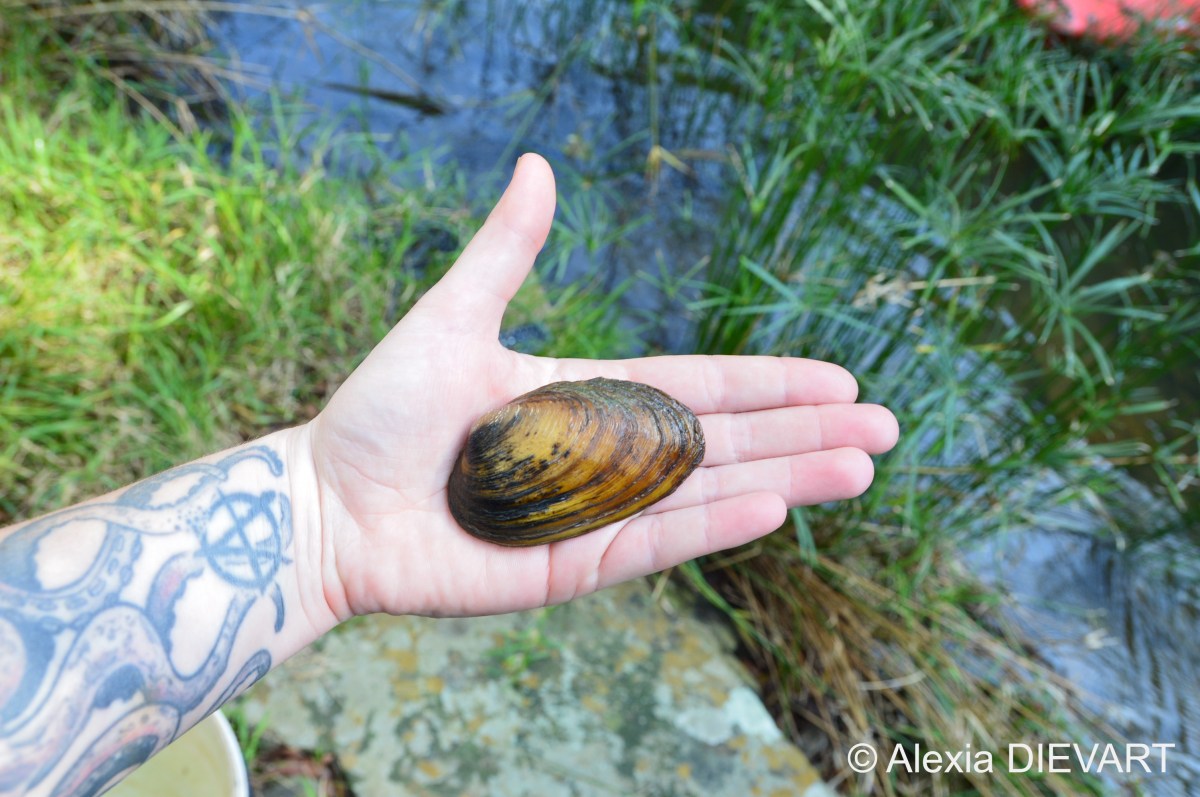
Although the majority of bivalves are found in marine habitats, a number of families have evolved to live in fresh or brackish water : the freshwater mussels, and the freshwater clams. In South Africa, there are 25 species of freshwater bivalves, belonging to six families.
Freshwater bivalves have a simple morphology that varies among taxa, and are distributed throughout the world. The shells of bivalves are comprised of two matching halves, called valves, hinged together dorsally. Most large bivalves have shells that are longer than they are high, but in small species, the reverse may be true.
Freshwater bivalves feed largely on decaying organic matter and detritus. They mostly burrow into sandy or muddy sediments, using their muscular foot, and open and close their valves using their powerful adductor muscles. They filter food from water passing through their sieve-like gills.
 F*CK FISH