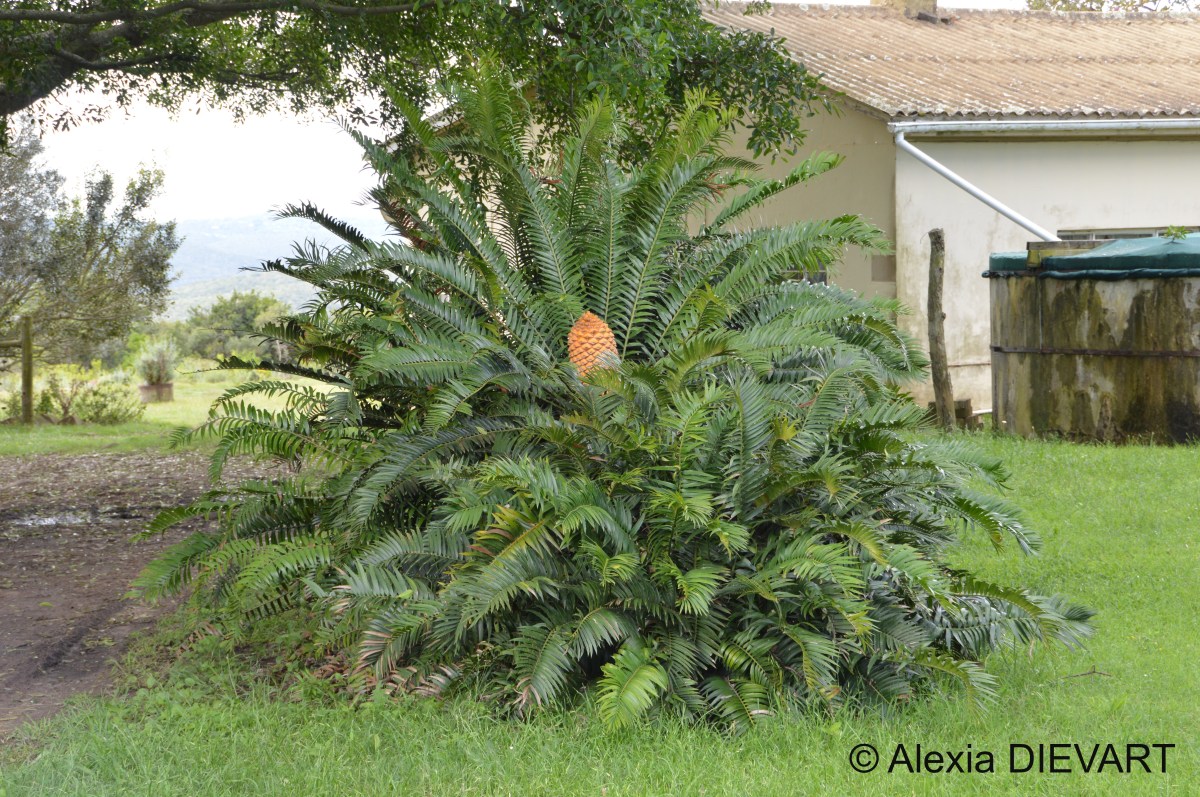
Cycads are seed plants that typically have a stout and woody trunk with a crown of large, hard, stiff, evergreen and (usually) pinnate – or arranged like feathers – leaves. They vary in size, with trunks ranging from a few centimeters to several meters tall, typically grow slowly and have long lifespans. Because of their resemblance, cycads are often mistaken for palms or ferns, but they belong to a completely different group of plants.
Cycad species are dioecious, which means individual plants are either male or female, and both bear cones – called strobili – somewhat similar to conifer cones, but generally much bigger. Cycads are gymnosperms, meaning their unfertilized seeds are open to the air to be directly fertilized by pollinators, which can be very specialized.
South Africa has been recognized as one of the global hotspots for cycad diversity, with 38 species documented – nearly all of them belonging to the genus Encephalartos, and one species in the genus Stangeria.
 F*CK FISH