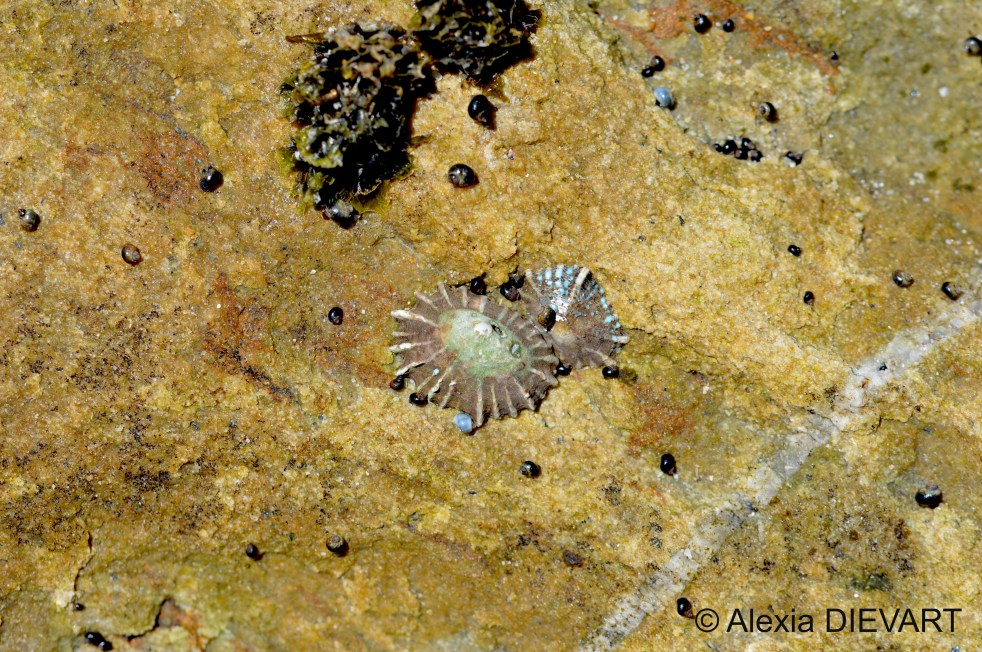
Adult and juvenile ribbed false-limpets on an exposed rock. Port Alfred, Eastern Cape (2024). Previously called Siphonaria deflexa. Apex of the shell almost central, smooth, white and oval. Outline oval but slightly swollen on the right to accommodate a siphon that extends outwards from the lung cavity. Ribs well-spaced and never prickly, with 20-25 (or… Continue reading Ribbed false-limpet (Siphonaria concinna)
Tag: Cape Town
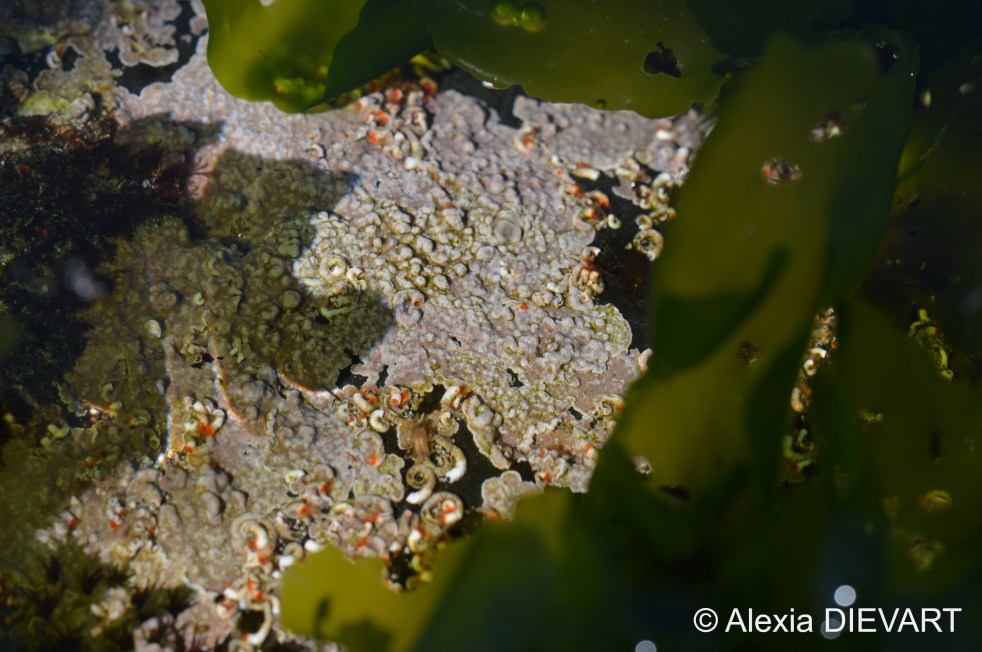
Spiral fanworms (Spirorbis sp.)
Spiral fanworms on coralline algal crust at the bottom of a rock pool. Mouille Point, Cape Town, Western Cape (2020) - iNaturalist Minute coiled worms with spiral shells. Head with a small number of feathery filter-feeding branches and a stalked operculum that blocks the shell. About 2 mm. Abundant everywhere, dotting most rocks in the… Continue reading Spiral fanworms (Spirorbis sp.)

Cape false-limpet (Siphonaria capensis)
Two Cape false-limpets (Siphonaria capensis) in a shallow rock pool. Mosselbaai, Western Cape (2022) - iNaturalist Apex of the shell almost central. Outline oval but slightly swollen on the right to accommodate a siphon that extends outwards from the lung cavity. About 40-50 low, flat ribs that are roughly equal in size and scarcely project,… Continue reading Cape false-limpet (Siphonaria capensis)
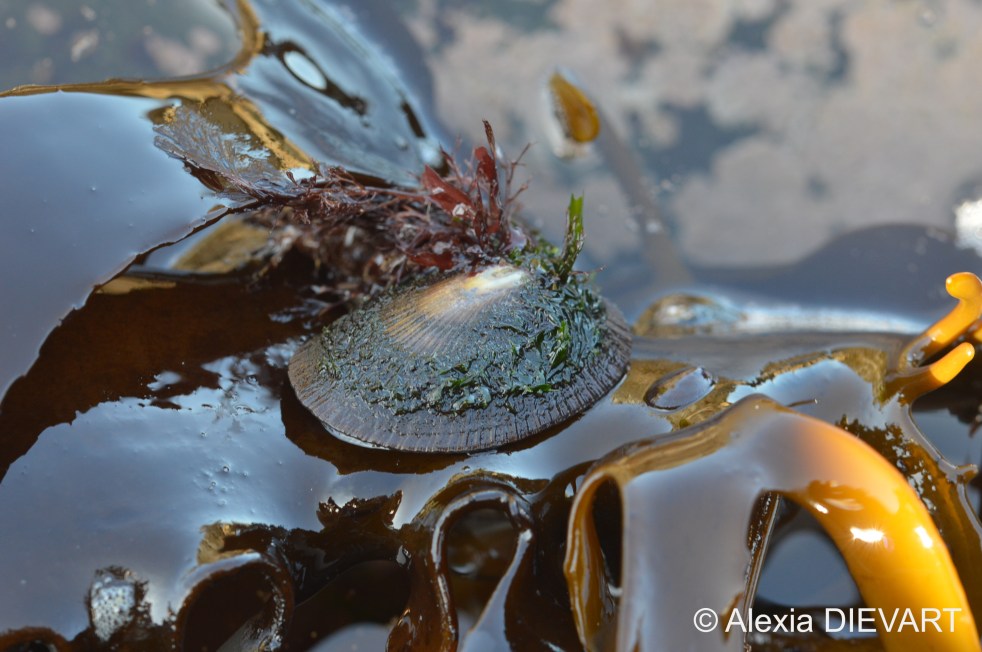
Kelp limpet (Cymbula compressa)
Kelp limpet on a drifting kelp stem. Mouille Point, Cape Town, Western Cape (2020) - iNaturalist Shell elongated, the sides compressed so that the opening is concave, designed to fit a cylindrical kelp stem. Shell 'rocks' on a flat surface. Outer surface brown, finely ribbed. Interior blue-white to brown. About 90 mm. Found almost exclusively… Continue reading Kelp limpet (Cymbula compressa)
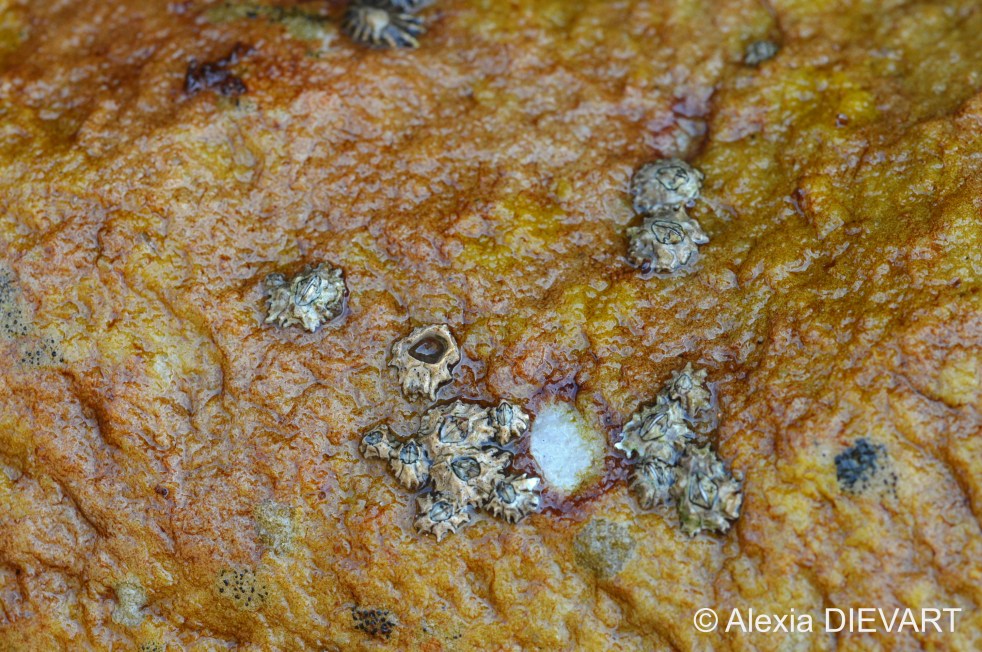
Toothed barnacle (Chthamalus dentatus)
Toothed barnacles on a rock face. Cape Agulhas, Western Cape (2020) - iNaturalist A small, flat, dirty-white barnacle with a membranous (not calcareous) base. The projecting, finger-like ridges on the six shell plates produce the characteristic star-shaped outline. Between 5 - 10 mm. Common in the upper intertidal, especially on the South and East coasts.… Continue reading Toothed barnacle (Chthamalus dentatus)
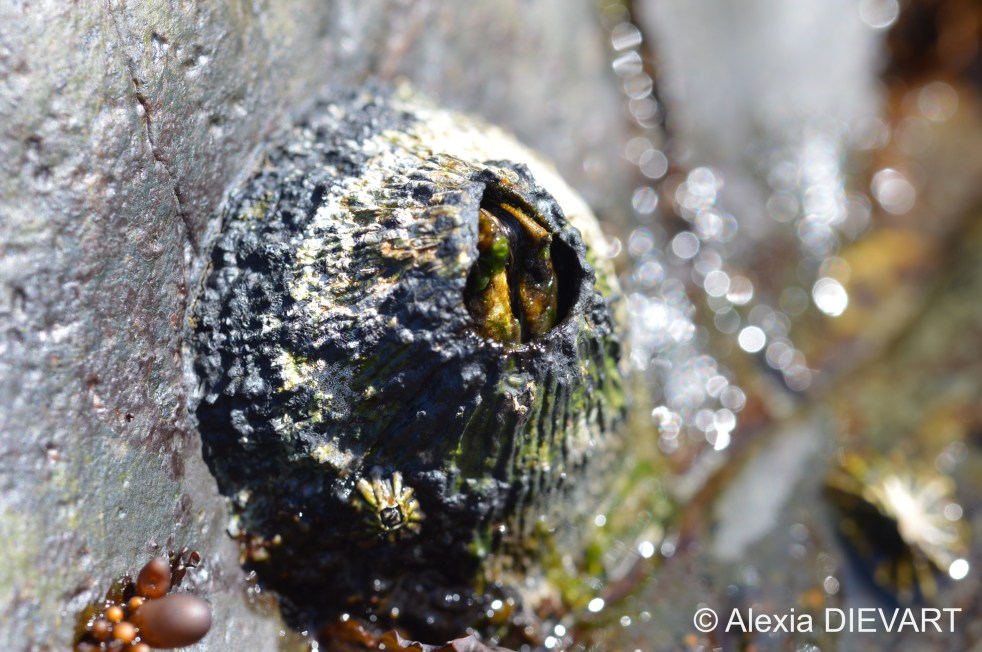
Grey volcano barnacle (Tetraclita serrata)
Close-up of a grey volcano barnacle. Mouille Point, Cape Town, Western Cape (2020) - iNaturalist Tall, dark-grey and volcano-shaped, with only four strongly-ribbed shell plates, the edges of which are difficult to distinguish. About 20 mm. One of the dominant invertebrates in the mid-intertidal zone of moderately sheltered shores. Two Oceans: A Guide to the… Continue reading Grey volcano barnacle (Tetraclita serrata)
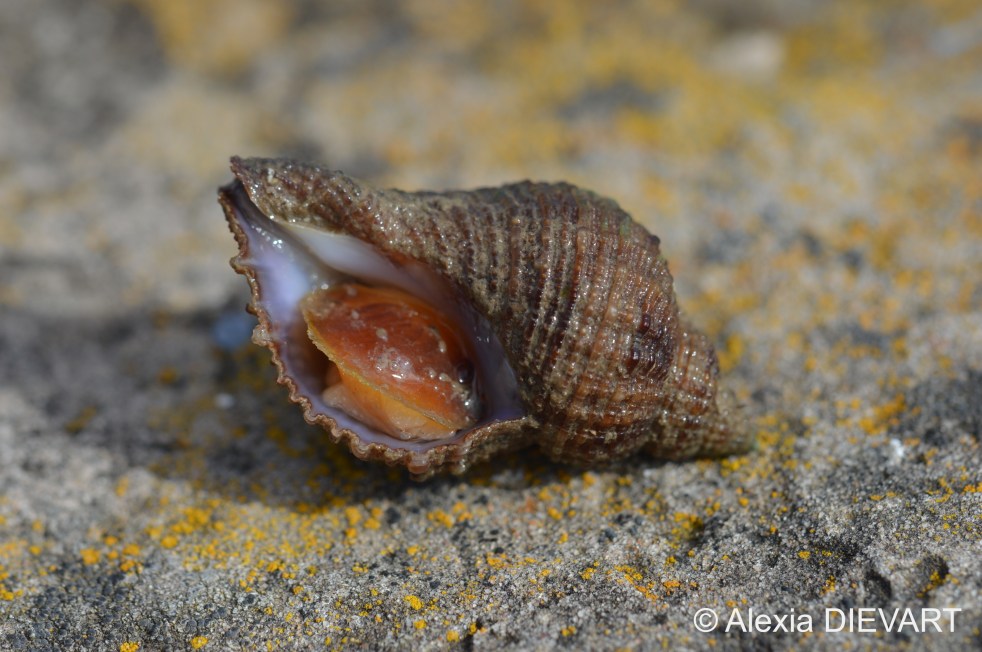
Scaly dogwhelk (Nucella squamosa)
Details of the operculum and the foot of the scaly dogwhelk. Unknown location, South Africa (2021). About 15 spiral ridges overlies longitudinal ridges, giving the shell a scaly (squamous) appearance.Operculum horny, brown-orange. Foot light orange, speckled white. About 35 mm. Occurs low on the shore or subtidally. Lays egg capsules resembling flat clubs. Shell usually… Continue reading Scaly dogwhelk (Nucella squamosa)
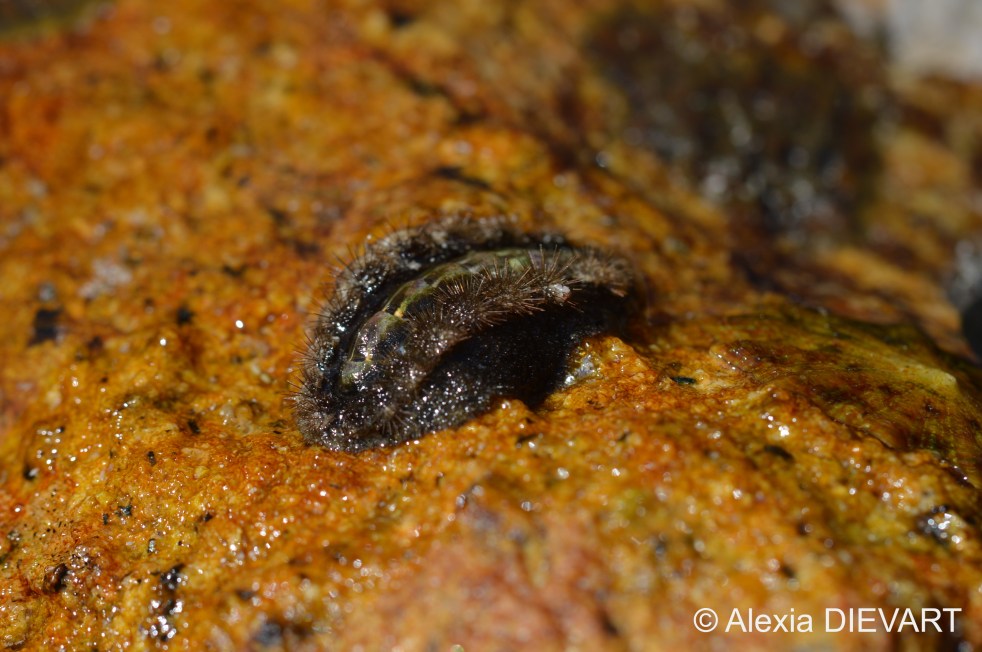
Spiny chiton (Acanthochitona garnoti)
Unfouled chiton on a rock, spines out. Fishhoek, Western Cape (2020) - iNaturalist Shell valves dull brown with oblique pale stripes, largely buried by the wide girdle. Girdle dotted with small spicules and with a series of nine pairs of characteristic tufts of long glassy spines. 30 - 45 mm. Unusual in that it is… Continue reading Spiny chiton (Acanthochitona garnoti)
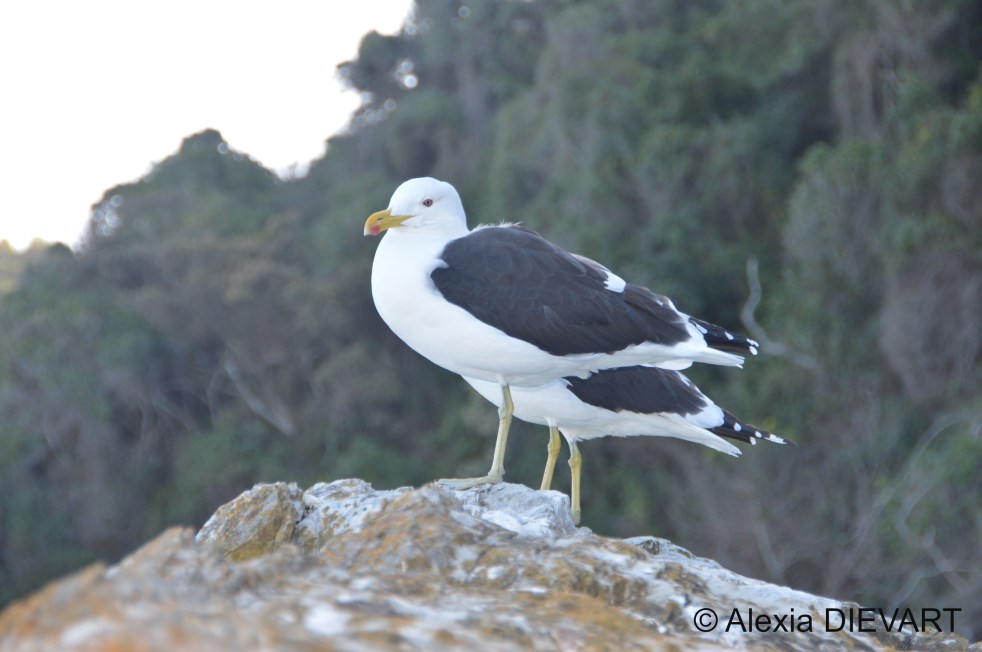
Kelp Gull (Larus dominicanus)
Two kelp gulls - only one visible - on a rock along the coast. Stormsrivier Mouth, Western Cape (2018) - iNaturalist The largest gull in the region, also called the Dominican gull. Heavily built, with relatively short wings (folded wings do not project well beyond the tail tip), a robust bill, a steep forehead, and… Continue reading Kelp Gull (Larus dominicanus)

Knobbly anemone (Bunodosoma capense)
Details of the tentacles and the papillae. Mouille Point, Cape Town, Western Cape (2020) - iNaturalist Previously known as Bunodosoma capensis. Column streaked with small non-adhesive knobs, called papillae. Up to 96 spherules present in fosse.Papillae are usually darker and brighter in contrast with the background colour, which can be cream-white, pink, orange, red, blue… Continue reading Knobbly anemone (Bunodosoma capense)
 F*CK FISH