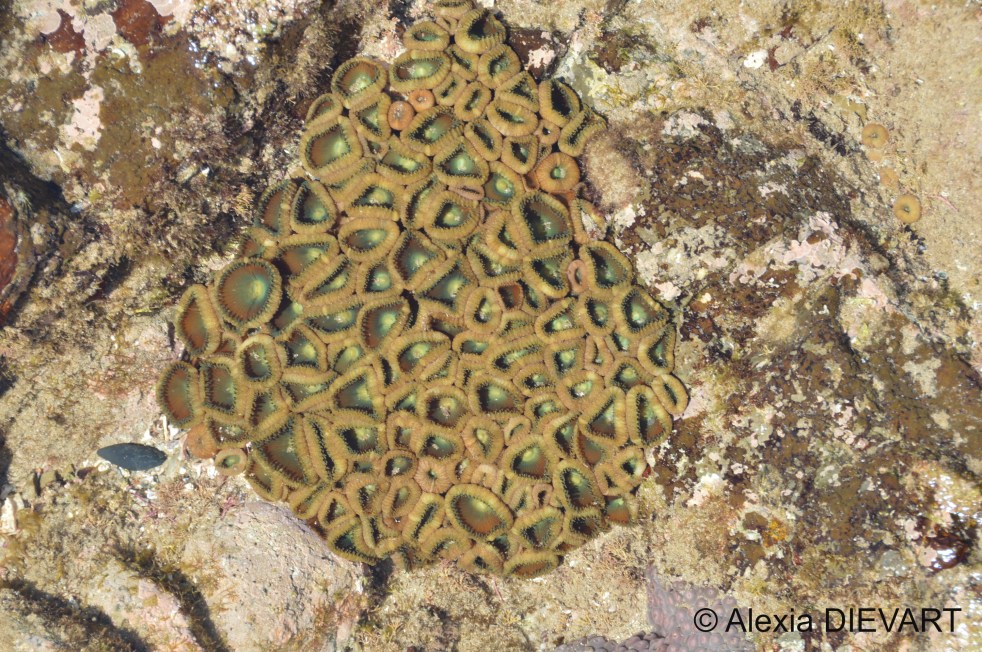
A colony of green button polyps covering the bottom of a rock pool. Port St Johns, Wild Coast, Eastern Cape (2021). Polyps are tall and only thinly connected at their bases by underground stems - called stolons. Column brown, embedded with fine sand grains, giving a sandpapery texture. Column trumpet-shaped when expanded. The wide oral… Continue reading Green button polyp (Palythoa mutuki)
Tag: rocky shore
Toothed barnacle (Chthamalus dentatus)
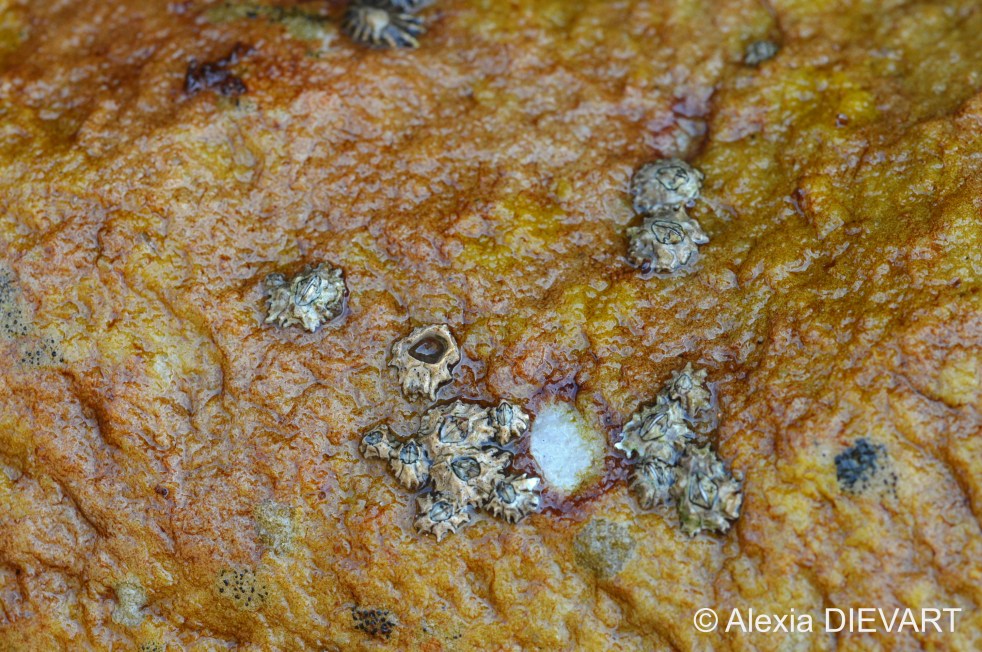
Toothed barnacles on a rock face. Cape Agulhas, Western Cape (2020) - iNaturalist A small, flat, dirty-white barnacle with a membranous (not calcareous) base. The projecting, finger-like ridges on the six shell plates produce the characteristic star-shaped outline. Between 5 - 10 mm. Common in the upper intertidal, especially on the South and East coasts.… Continue reading Toothed barnacle (Chthamalus dentatus)

Berry caulerpa (Caulerpa racemosa)
Berry caulerpa embedded in a carpet of zoanthids. Port St Johns, Wild Coast, Eastern Cape (2021) - iNaturalist A mat of rhizomes giving rise to bunches of swollen light blue-green 'berries'. The shape of the berries vary and may be club-shaped, round or trumpet-shaped. Bunches up to 20 mm high. Forming carpets on protected rocks… Continue reading Berry caulerpa (Caulerpa racemosa)
Blue coral-worm (Pomatoleios kraussii)
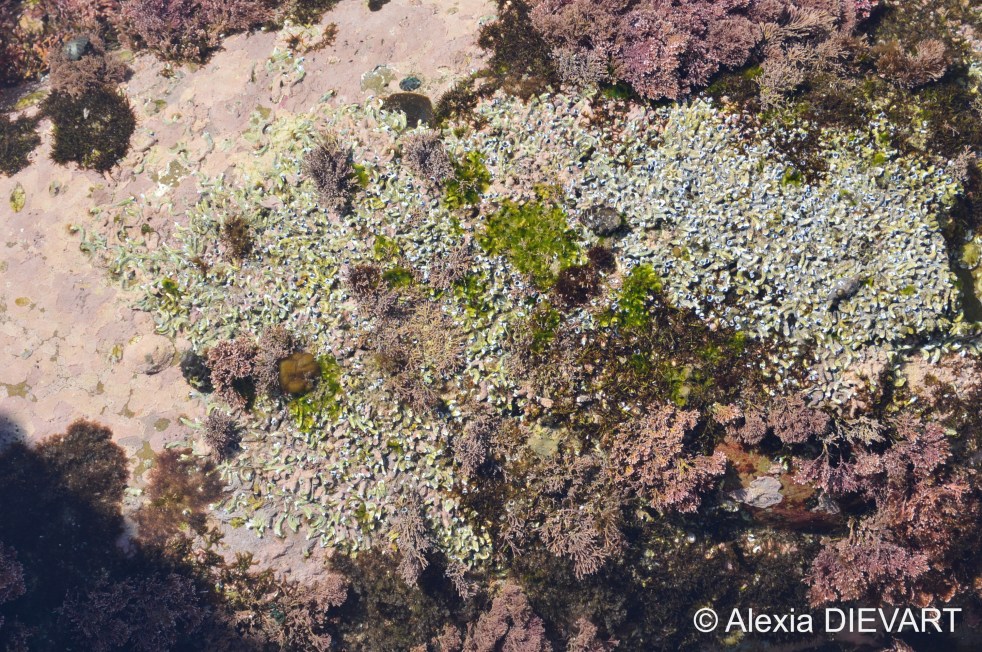
Blue coral-worm reef. Port St Johns, Wild Coast, Eastern Cape (2021). Also known as Spirobranchus kraussii. Gregarious, building massive blue colonies of interwoven tubes which are calcareous (a feature of the family Serpulidae). Head with two rows of feathery branches and a stalked operculum that has two pointed 'wings' and a flat calcareous cap. Worms… Continue reading Blue coral-worm (Pomatoleios kraussii)
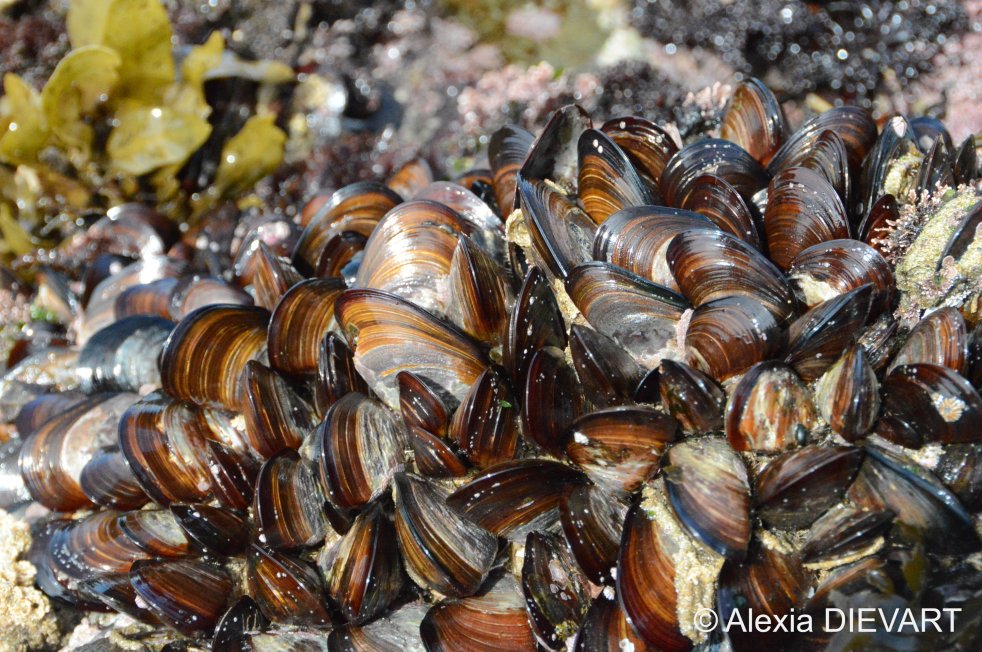
Brown mussel (Perna perna)
Eroded and less eroded brown mussels in a bed. Old Woman's River, Eastern Cape (2018). Shell smooth and yellow-brown, sometimes tinged with green or with a chevron pattern. Specimens from crowded intertidal beds often very elongated and almost rectangular in cross-section. Submerged, fast-growing specimens are taller and narrower. Up to 125 mm. The dominant mussel… Continue reading Brown mussel (Perna perna)
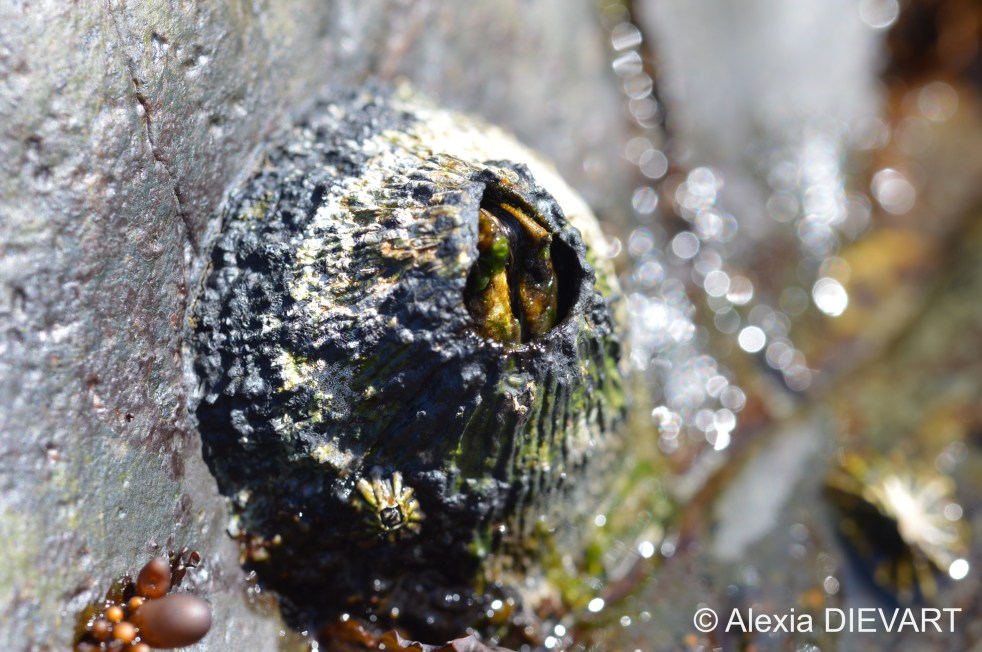
Grey volcano barnacle (Tetraclita serrata)
Close-up of a grey volcano barnacle. Mouille Point, Cape Town, Western Cape (2020) - iNaturalist Tall, dark-grey and volcano-shaped, with only four strongly-ribbed shell plates, the edges of which are difficult to distinguish. About 20 mm. One of the dominant invertebrates in the mid-intertidal zone of moderately sheltered shores. Two Oceans: A Guide to the… Continue reading Grey volcano barnacle (Tetraclita serrata)
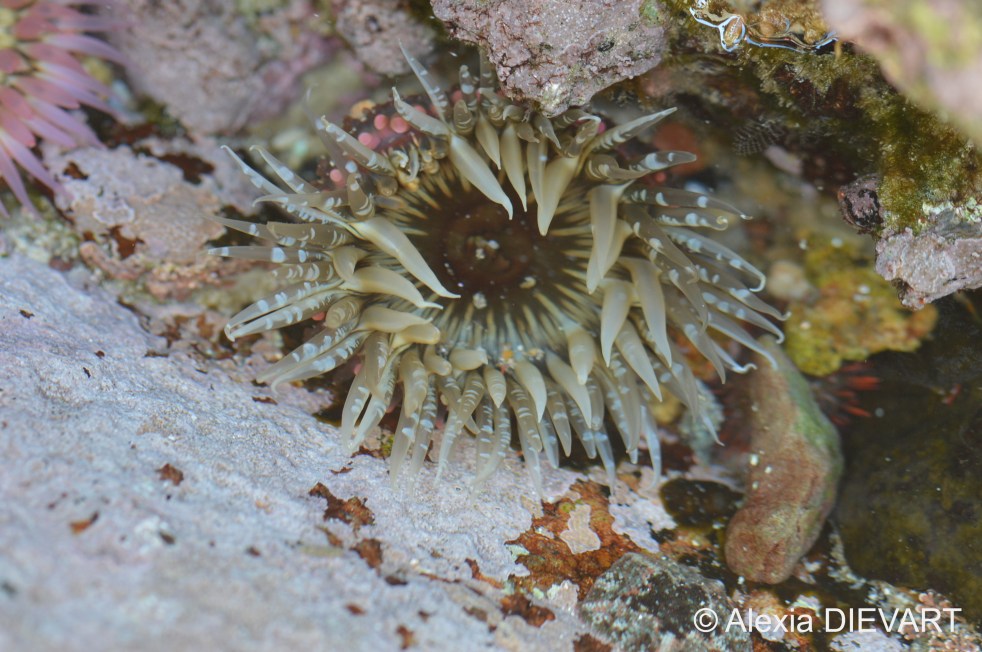
Crevice anemone (Anthopleura michaelseni)
Details of the spherules, and the long tentacles of the crevice anemone. Fishhoek, Western Cape (2020) - iNaturalist Also called long-tentacled anemone. Column with large sticky pads, to which shells and gravel adhere. Dark stripes usually radiate from mouth to the 96 long pink-to-brownish tentacles. Spherules present. Up to 150 mm in diameter, but commonly… Continue reading Crevice anemone (Anthopleura michaelseni)
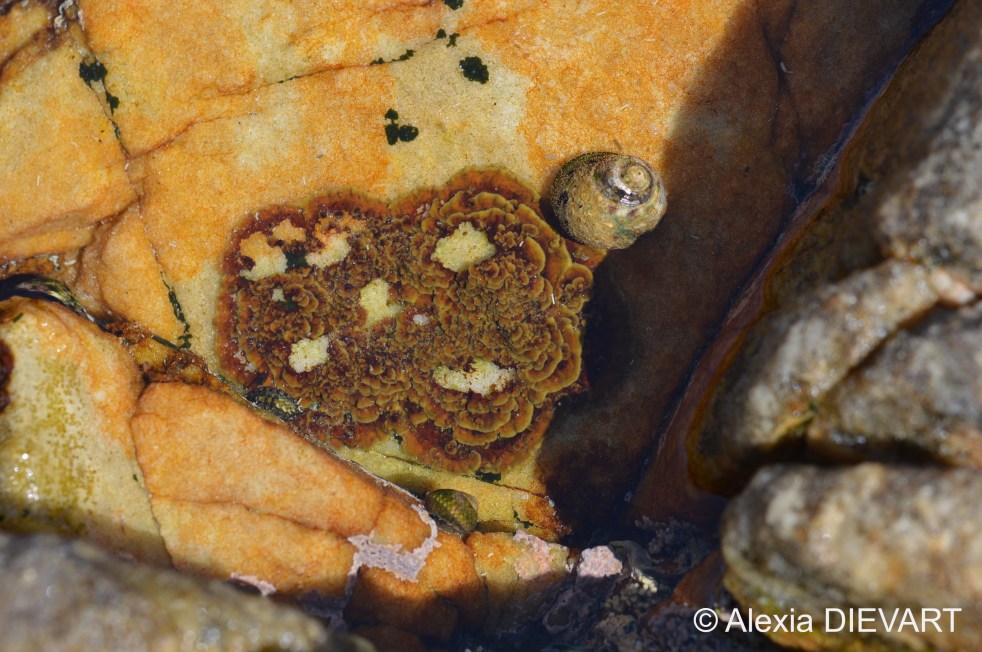
Ralfsia (Ralfsia verrucosa)
Details of the concentric rings of Ralfsia, with some missing patches (probably grazed). Cape Agulhas, Western Cape (2020). Ralfsia verrucosa can be considered an inactive taxon by some (for example, on iNaturalist). It is then replaced by Pseudoralfsia verrucosa. Forms flat patches or irregular, concentric rings. Brown, grading to khaki, with pale edges. About 1… Continue reading Ralfsia (Ralfsia verrucosa)

Reticulated starfish (Henricia ornata)
A maroon reticulated starfish found in a rock pool on the shore. Port Alfred, Eastern Cape (2023) - iNaturalist Arms long, very gradually tapering and cylindrical. Color orange to maroon with an irregularly-honeycombed surface texture. Up to 90 mm across. Thought to feed on sponges by everting the stomach and digesting the sponge tissue in… Continue reading Reticulated starfish (Henricia ornata)
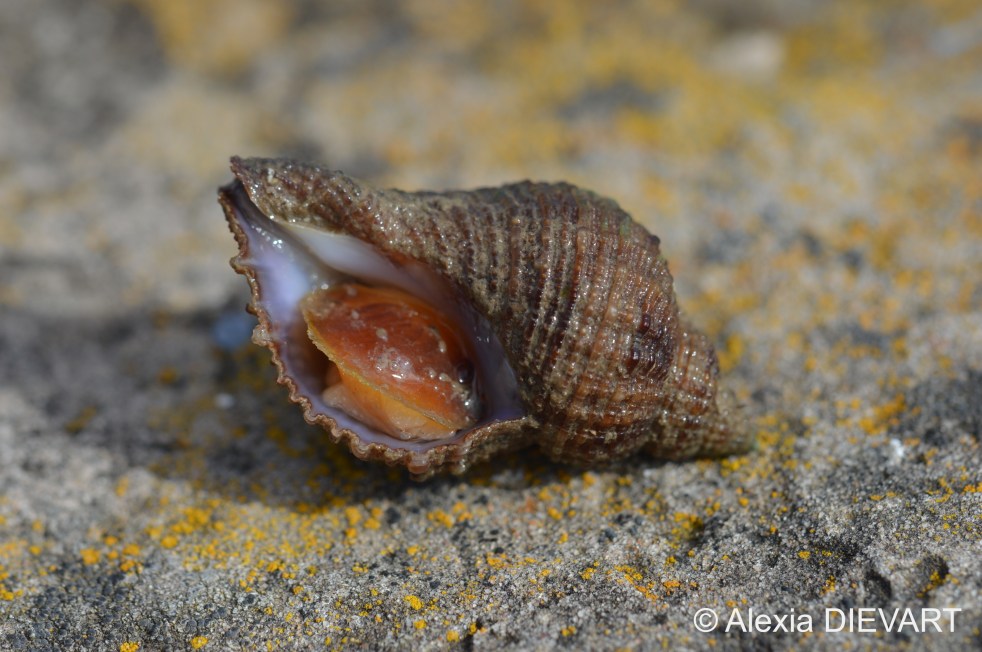
Scaly dogwhelk (Nucella squamosa)
Details of the operculum and the foot of the scaly dogwhelk. Unknown location, South Africa (2021). About 15 spiral ridges overlies longitudinal ridges, giving the shell a scaly (squamous) appearance.Operculum horny, brown-orange. Foot light orange, speckled white. About 35 mm. Occurs low on the shore or subtidally. Lays egg capsules resembling flat clubs. Shell usually… Continue reading Scaly dogwhelk (Nucella squamosa)
 F*CK FISH