
Large red starfish found under a low-hanging rock at low tide. Port Alfred, Eastern Cape (2023) - iNaturalist Previously known as Patiria granifera. Arms clearly tapering and flattened on their lower surface, giving them a semi-circular cross section. Colour deep orange to red, with a surface texture resembling small overlapping tiles. Up to 80 mm… Continue reading Red starfish (Callopatiria granifera)
Tag: South Africa
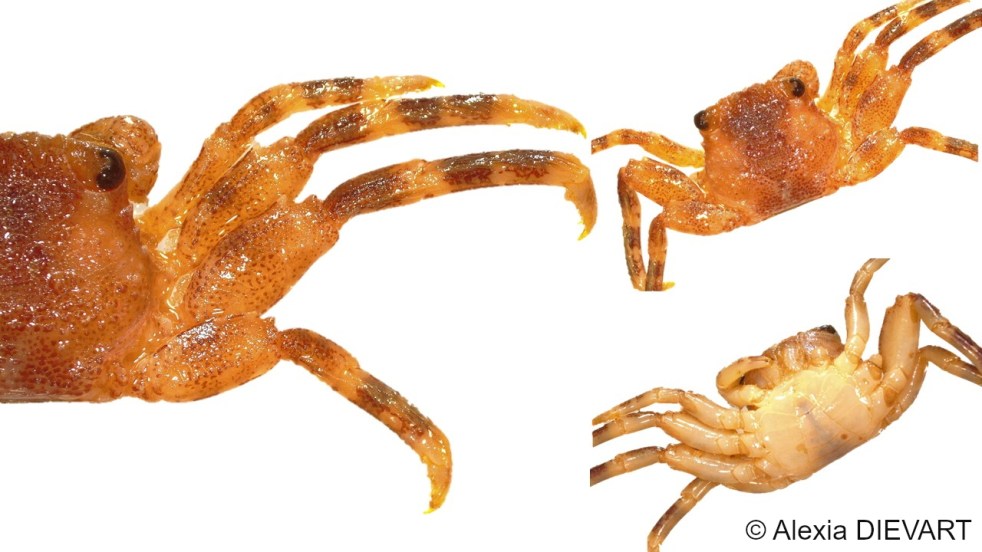
Tuberculate crab (Plagusia squamosa)
Composite image of the dorsal and underside view of a juvenile tuberculate crab recorded from the samples I processed during my PhD. Port Edward, KwaZulu-Natal (2022) - iNaturalist Also referred to as the scaly rock crab. Formerly considered a subspecies of Plagusia depressa (as Plagusia depress subsp. tuberculata). Similar to the Cape rock crab, except… Continue reading Tuberculate crab (Plagusia squamosa)
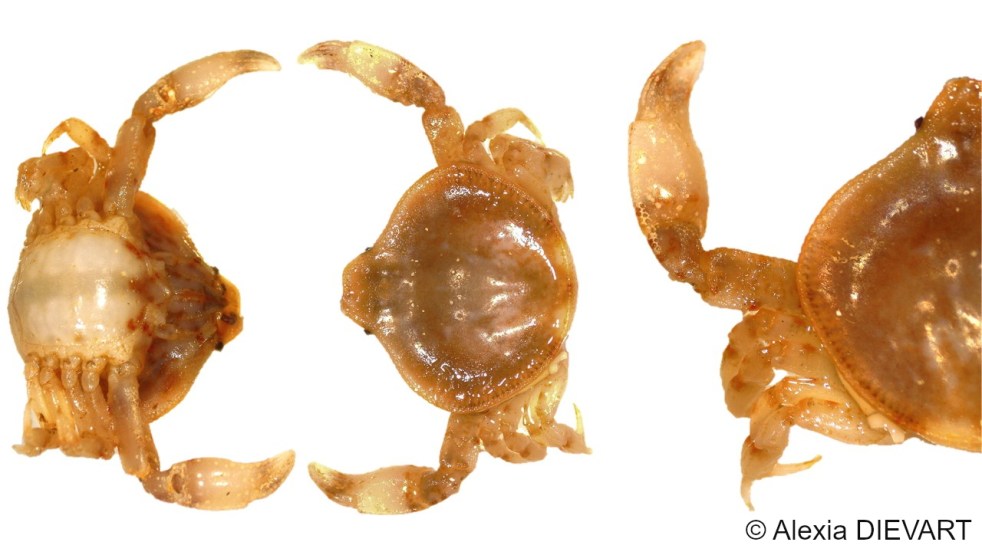
Pebble crab (Leucisca squalina)
Above and underside view of Leucisca squalina taken using a Leica microscope. Port Edward, KwaZulu-Natal (2022) - iNaturalist Carapace is light brown, sub-circular, broader than long, with a smooth dorsal surface and a moderately bi-lobed narrow front. Eyes hidden beneath the front. Chelipeds about half as long as carapace. Legs not granulated. Male abdomen with… Continue reading Pebble crab (Leucisca squalina)
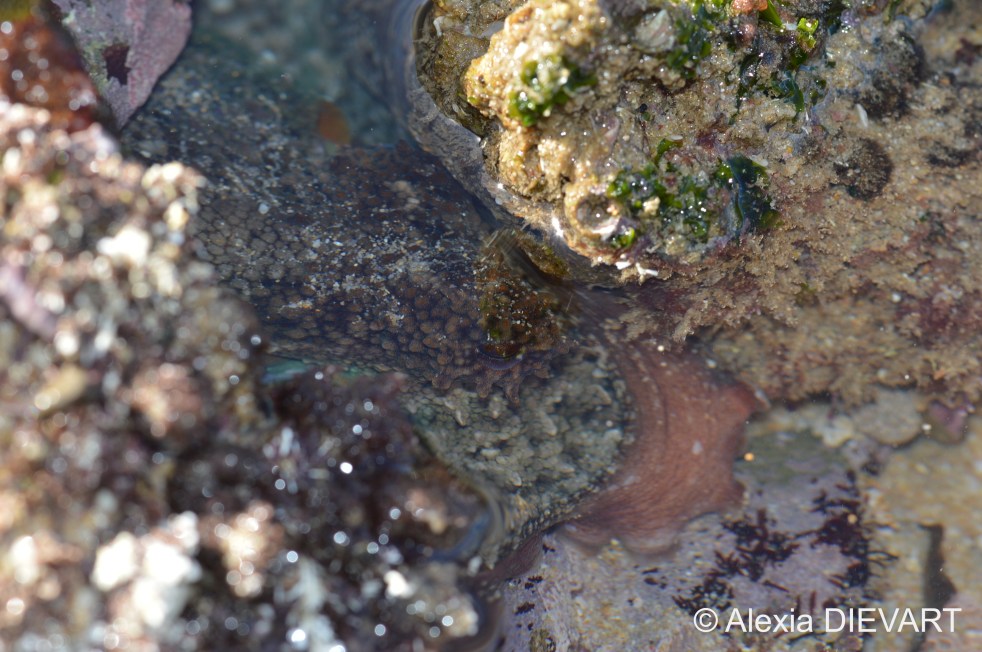
Common octopus (Octopus vulgaris)
Common octopus hiding in a rock pool. Unknown location on the South African coastline (2021). All Octopus species have eight arms, each with two rows of suckers, and lack an external shell. The species are distinguished by the tip of the male's right third arm (the hectocotylus arm), which is suckerless and transmits sperm to… Continue reading Common octopus (Octopus vulgaris)
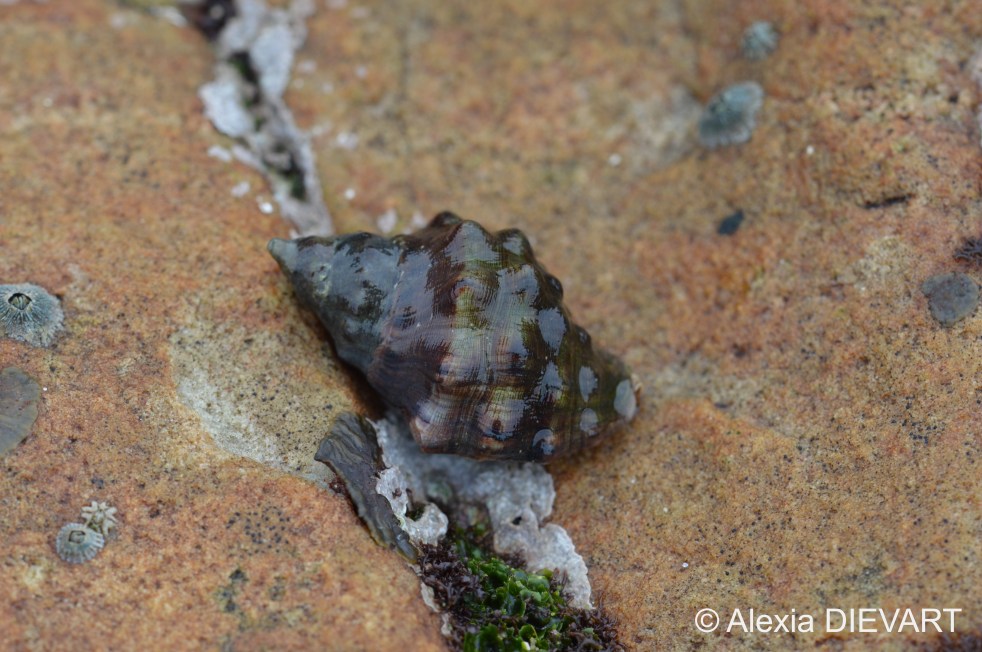
Knobbly dogwhelk (Mancinella capensis)
Details of the rows of tubercles on the knobbly dogwhelk. Port Alfred, Eastern Cape (2024) - iNaturalist Formerly named Thais capensis or Thylothais capensis. Spire almost as long as the aperture. Grey, with 3 - 4 spiral rows of obvious, paler tubercles. About 40 mm. Hides under rocks in low-shore pools or shallow waters. Eats… Continue reading Knobbly dogwhelk (Mancinella capensis)
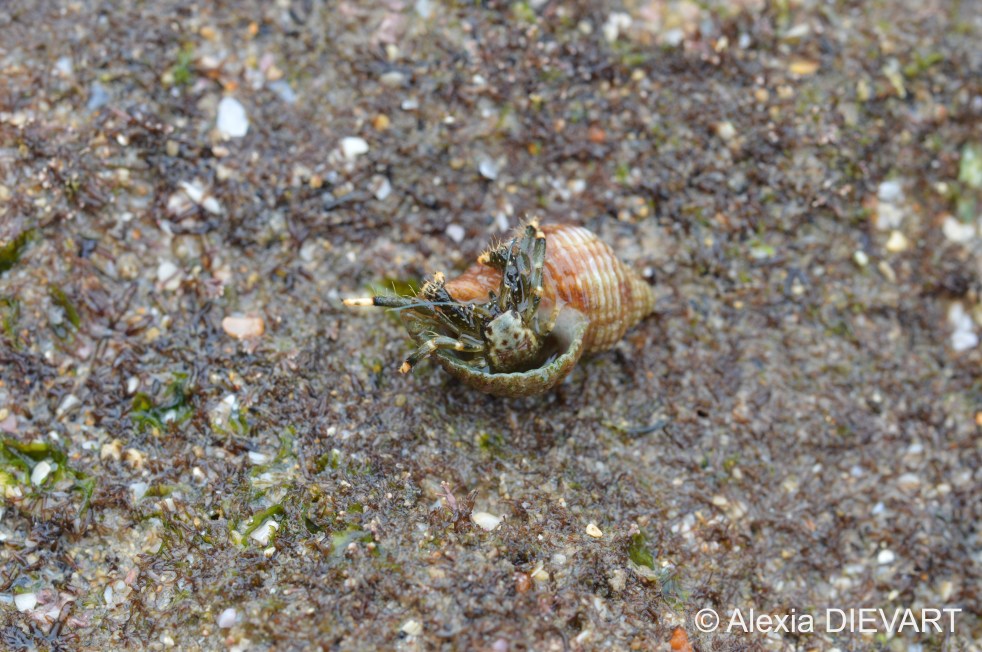
Yellow-banded hermit crab (Clibanarius virescens)
Specimen of yellow-banded hermit crab peaking out of a scaly dogwhelk (Nucella squamosa) shell and trying to flip himself. Port Alfred, Eastern Cape (2024). Body olive-green. Nippers about equal in size, spotted with yellow. Fingers yellow with black tips. Walking legs banded with yellow. Between 10 and 20 mm. Abundant hermit crab in mid-to-high shore… Continue reading Yellow-banded hermit crab (Clibanarius virescens)
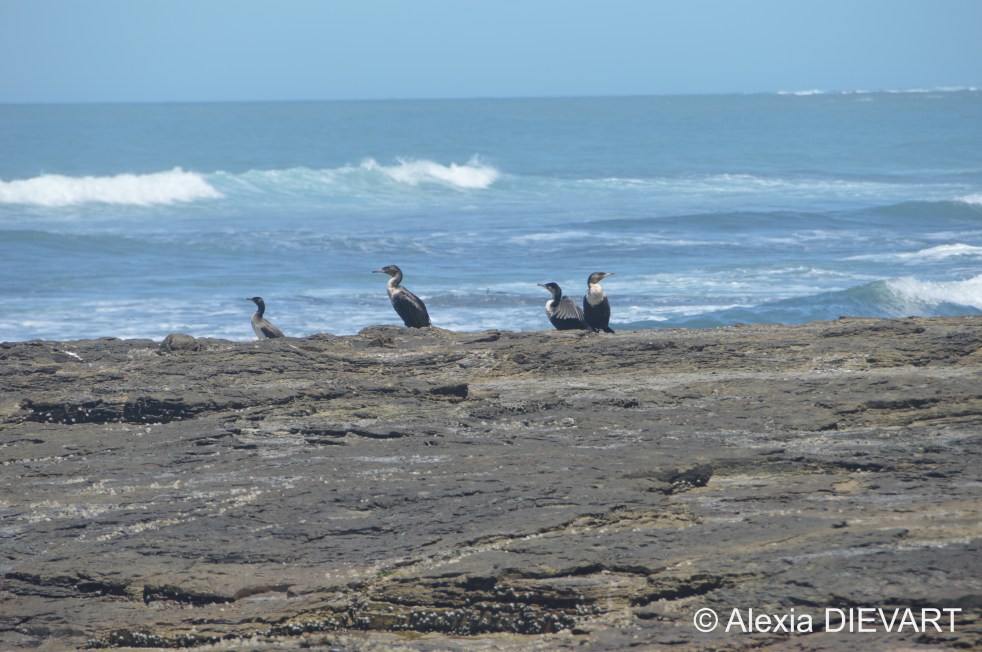
White-breasted cormorant (Phalacrocorax lucidus)
Gang of white-breasted cormorant on the rocky shore. Kidds Beach, Eastern Cape (2018). Adult has a white throat and breast, washed pink in marine populations, with white thigh patches in breeding plumage, yellow skin at the base of the bill, and turquoise eyes. Juvenile has white underparts and browner upperparts. About 90 cm. The largest… Continue reading White-breasted cormorant (Phalacrocorax lucidus)
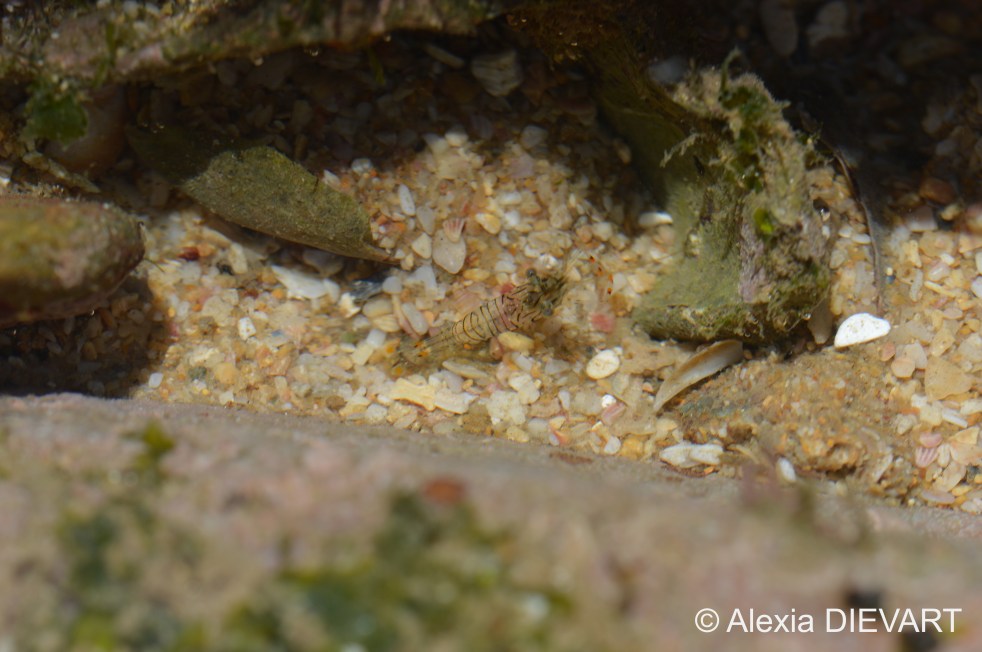
Sand shrimp (Palaemon pacificus)
Sand shrimp caught in a rock pool. Port Alfred, Eastern Cape (2022). Transparent, with vertical bars across the body. Opaque when preserved. Front legs with slender nippers and yellow spots at the joints. Rostrum well developed, toothed and almost saw-like. Between 25 mm. Lives in intertidal pools and shallow areas with a sandy bottom. Scavenges… Continue reading Sand shrimp (Palaemon pacificus)
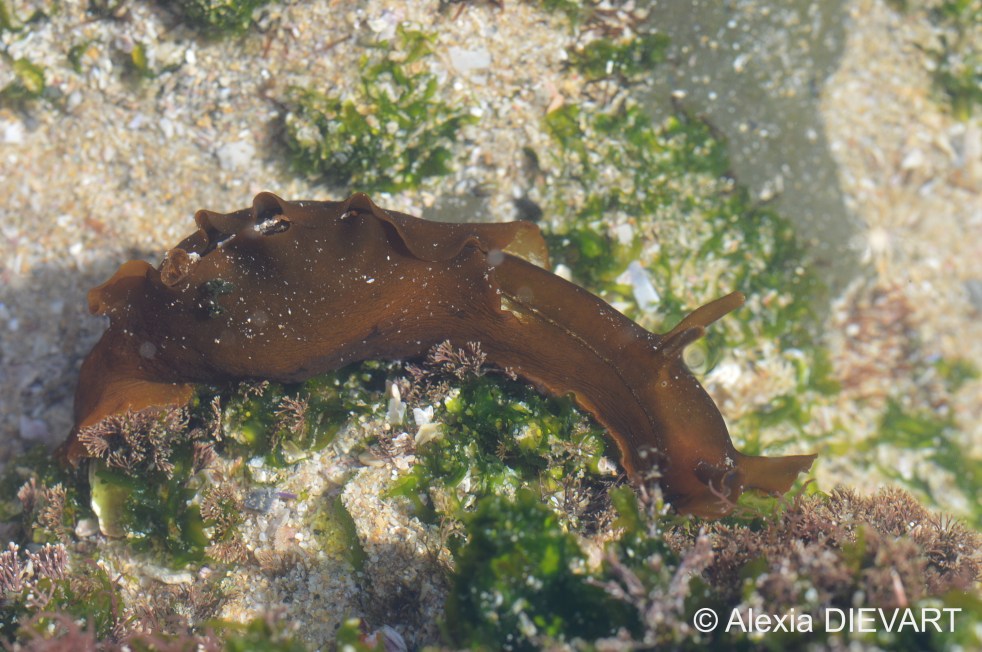
Pygmy seahare (Aplysia parvula)
Pygmy seahare cruising on an algal mat. Old Woman's River, Eastern Cape (2021) - iNaturalist A typical smooth-skinned sea hare with prominent tentacles and ear-like rhinophores. Plain brown or with tiny white dots. About 60 mm in length. Common in shallow bays and estuaries. Hides by day and emerges at night to graze on seaweeds.… Continue reading Pygmy seahare (Aplysia parvula)
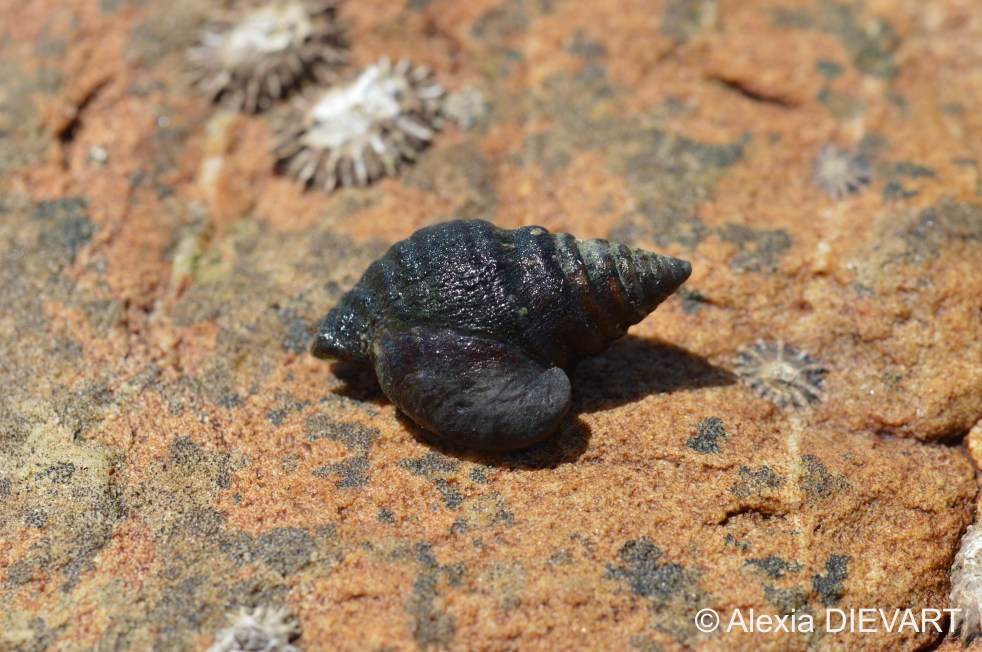
Variable burnupena (Burnupena lagenaria)
Variable burnupena outgrown by a slipper limpet. Port Alfred, Eastern Cape (2022). Shell is shorter (spire less than half the aperture length) and often has wavy dark flames.The commonest species on the South-East coast, where it has obvious coarse spiral ridges and its aperture is violet-brown, or yellow. On the West coast, it has an… Continue reading Variable burnupena (Burnupena lagenaria)
 F*CK FISH