
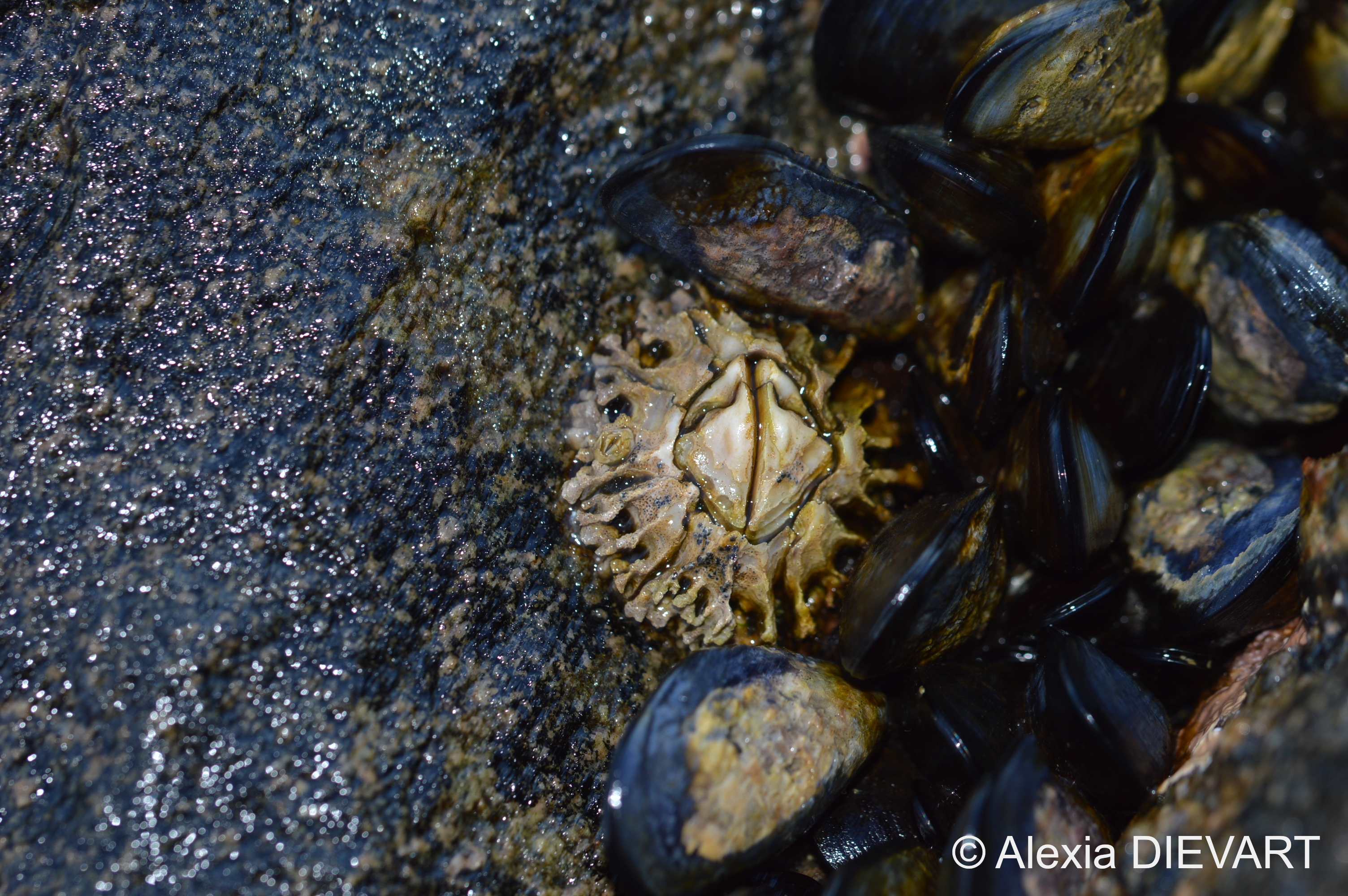
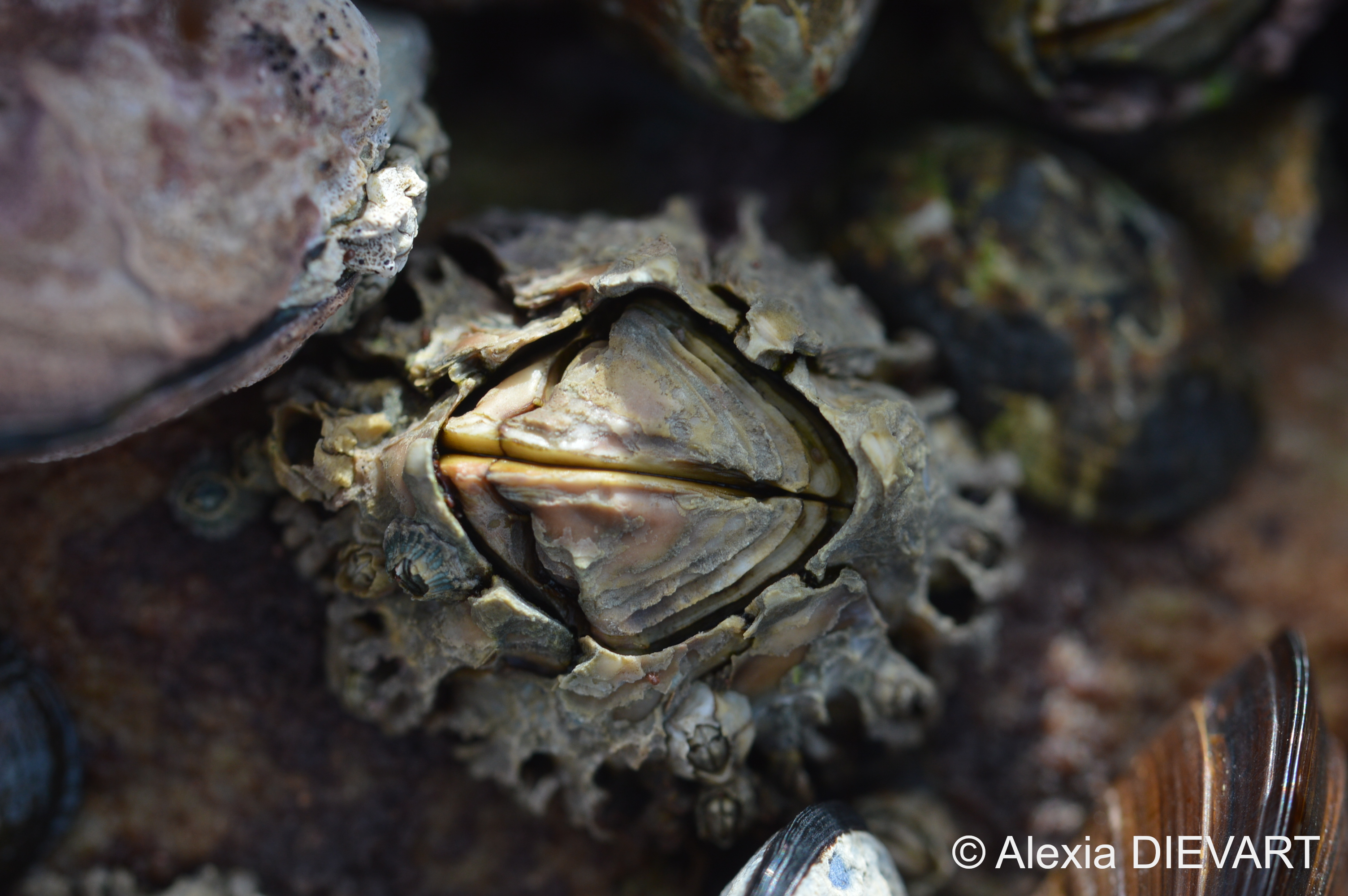
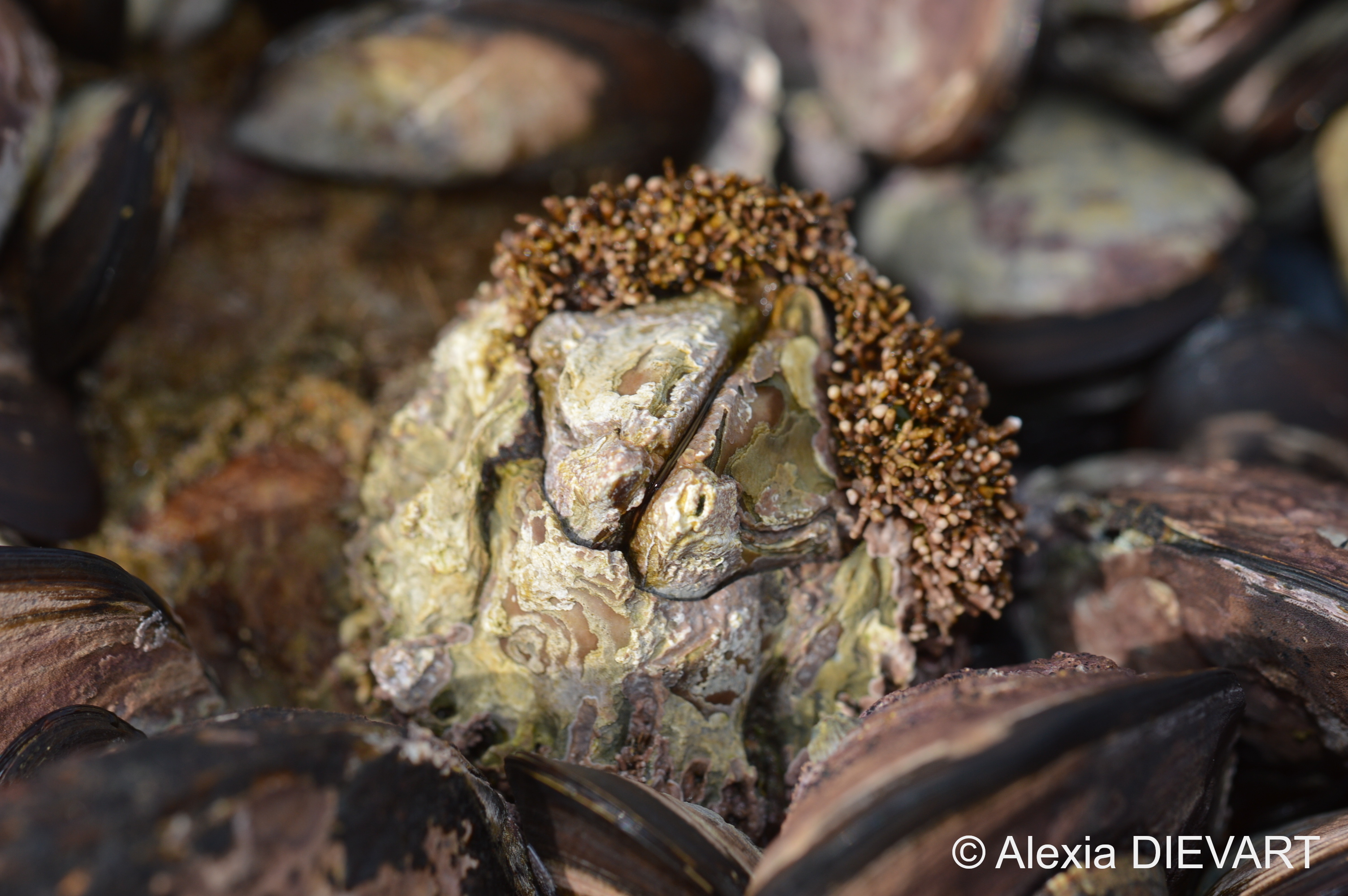
Moderately large with eight shell plates extremely rugged, irregular, massive, generally much corroded, steeply conical or even sub-cylindrical. Colour dirty-white, often slightly tinted yellow from the investing membrane, and from thin layers of punctured membrane alternating with the laminae of the shell.
In old specimens, the parietes have very irregular longitudinal ridges, or rather plates projecting out, sometimes much branched, and generally curved inwards so as to meet each other, thus forming a circle of cylindrical apertures around the basal margin.
Rostrum with alae, with are overlapped by the radii of the contiguous plates. Aperture large, quadrangular.About 10-25 mm.
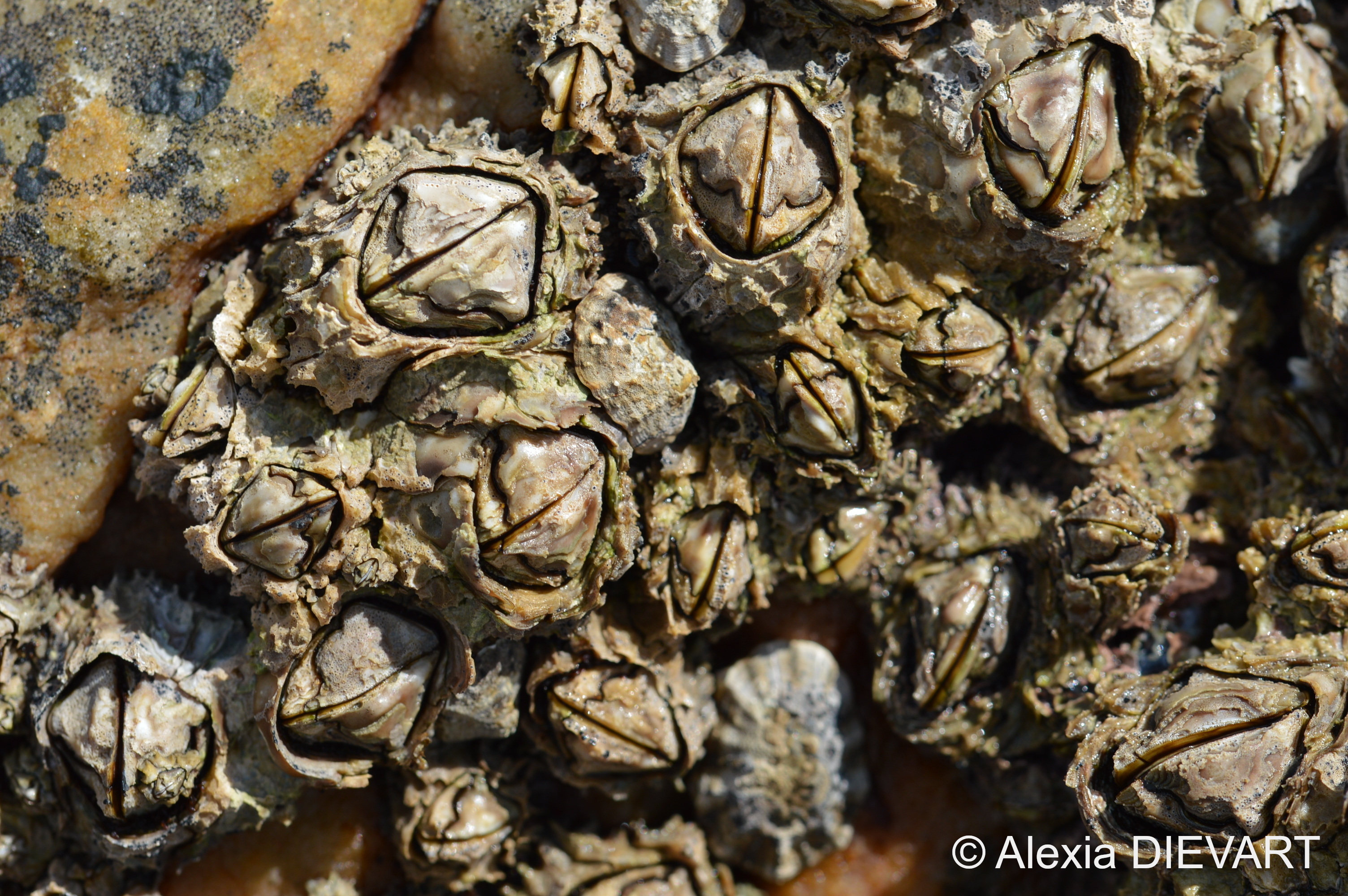
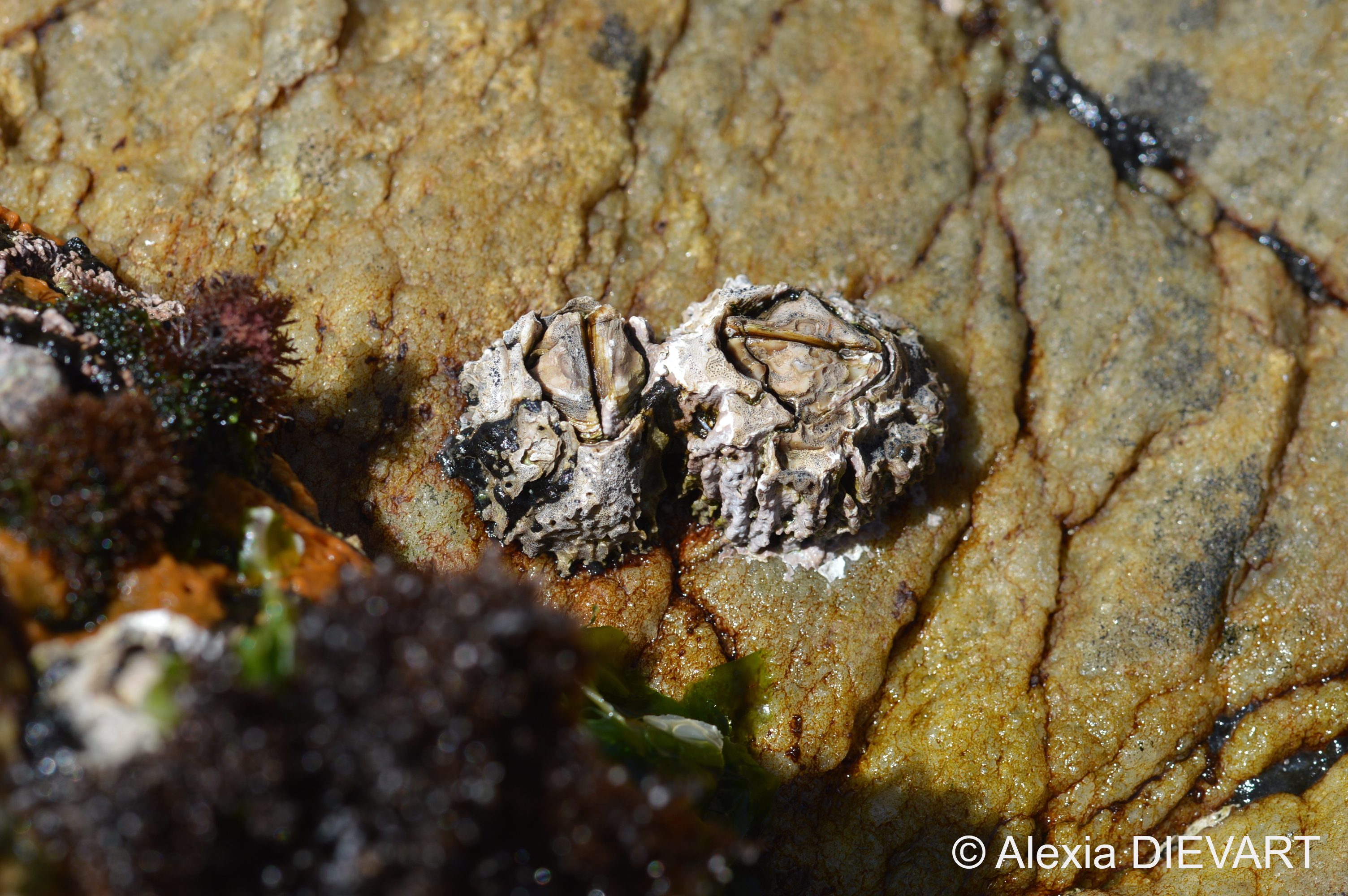
A dominant species on rocks in the mid-to-low intertidal zone, forming extensive, often closely-packed sheets, characteristic of wave-beaten shores. Often interacts with Tetraclita serrata and Chthamalus dentatus. Never found in estuaries. Feeds by spreading its legs at right-angles to waves and passively holding them extended while the water passes through them.
Two Oceans: A Guide to the Marine Life of Southern Africa (1994, 2016); A guide to marine life on South African shores (Day, 1969), Darwin (1854)
Discover In Video
Discover In Images


One thought on “Eight-shell barnacle (Octomeris angulosa)”