
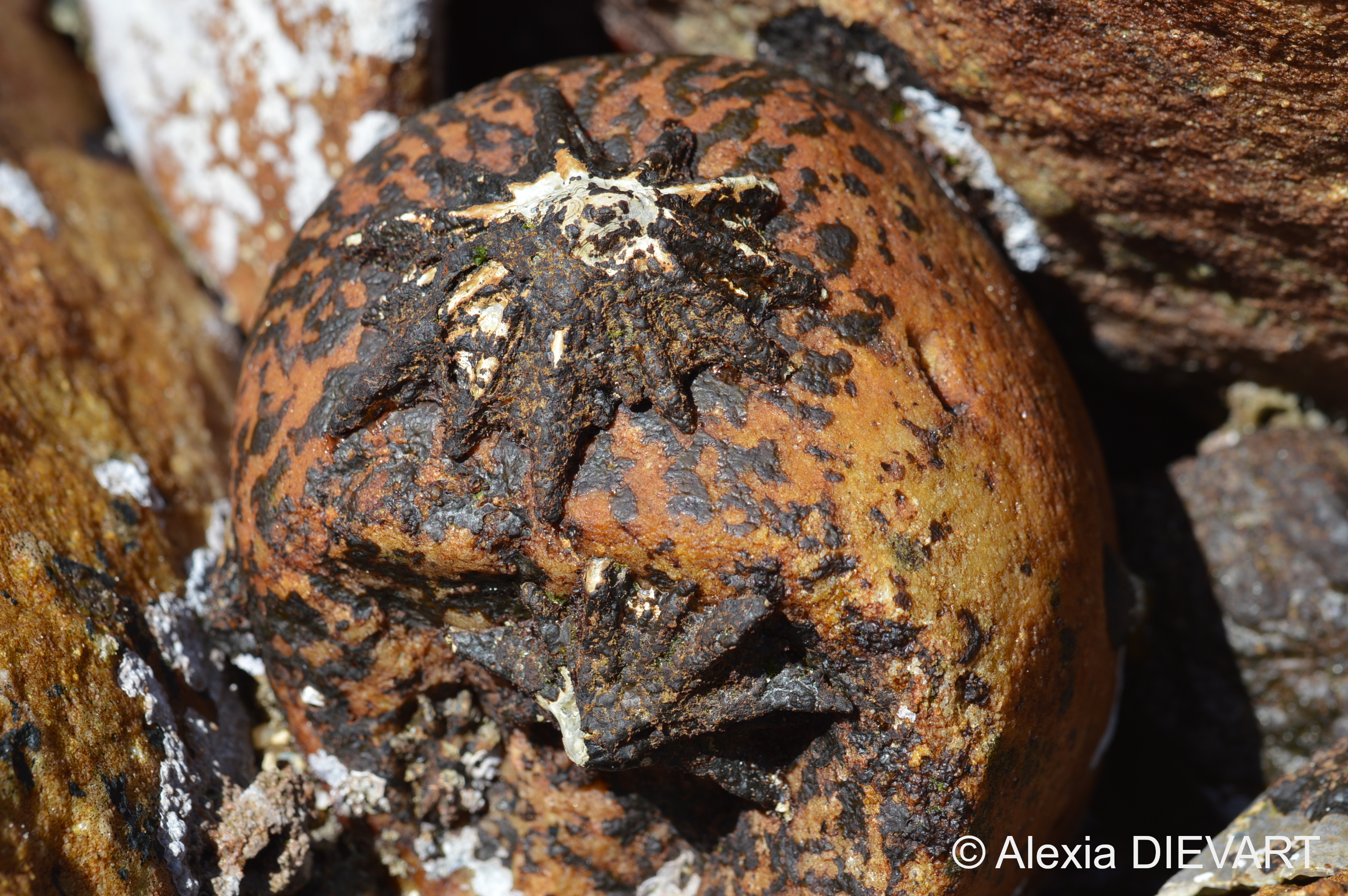
Also called ‘long-spined limpet’.
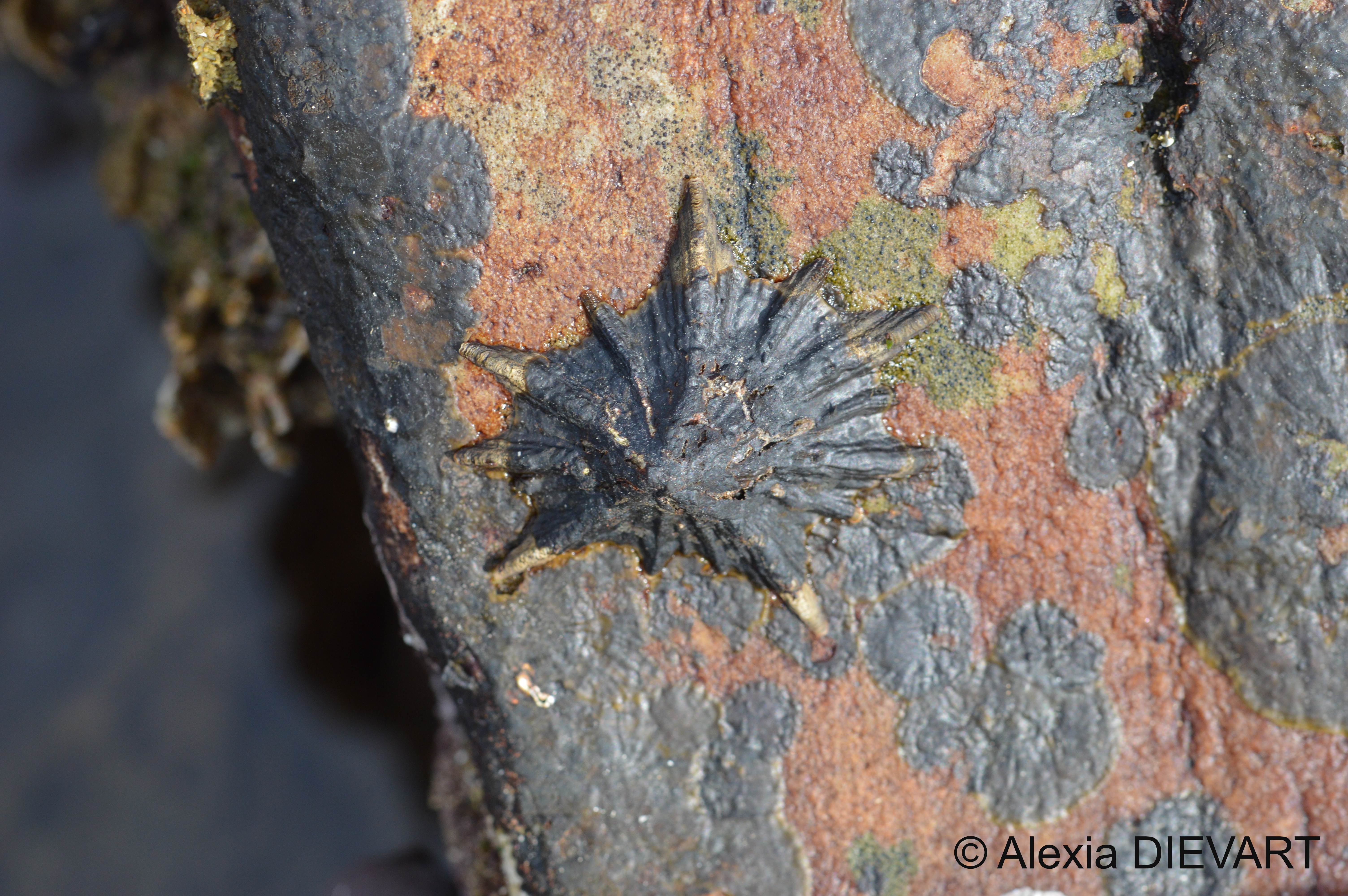
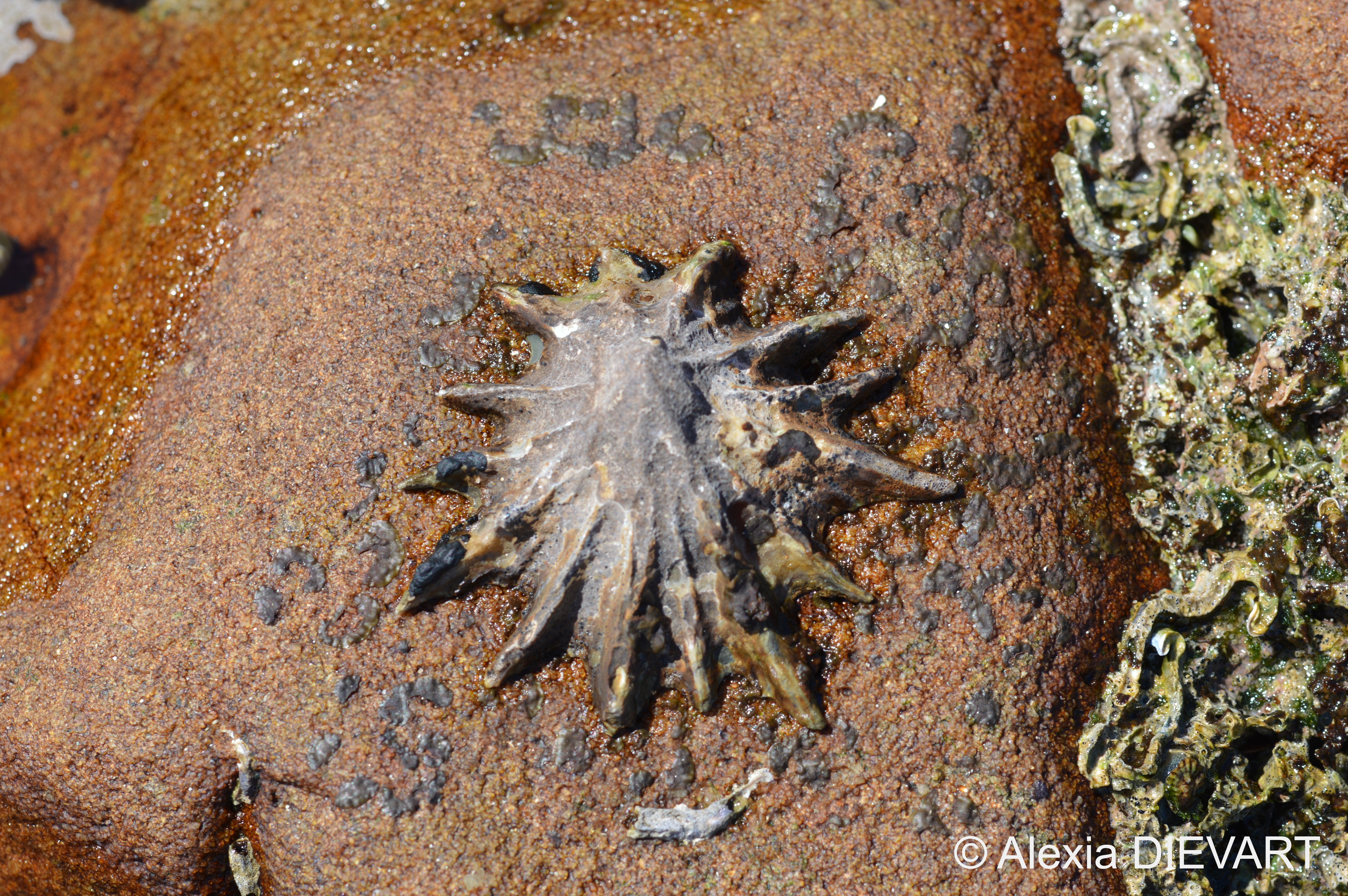
Shell star-shaped, with about 11 very long projecting ribs. Interior white or blue-white with a black edging.
About 70 mm.
Juveniles live on other shells, feeding on the encrusting alga Ralfsia. Sub-adults then move to the rock face and eat encrusting algae until they establish gardens of Ralfsia, which they defend against other grazers. The limpet cuts regular paths through the Ralfsia, increasing its growth rate and reducing the amounts of anti-herbivore chemicals produced by the alga.
Two Oceans: A Guide to the Marine Life of Southern Africa (1994, 2016).
Discover in Video
Discover in Image
Behaviour(s)
Scutellastra longicosta is a territorial limpet that occupies a permanent position on the rocky shores and cultivates the brown alga Ralfsia verrucosa in a ‘garden’ which it defends from other herbivores (Heidt et al., 2013).
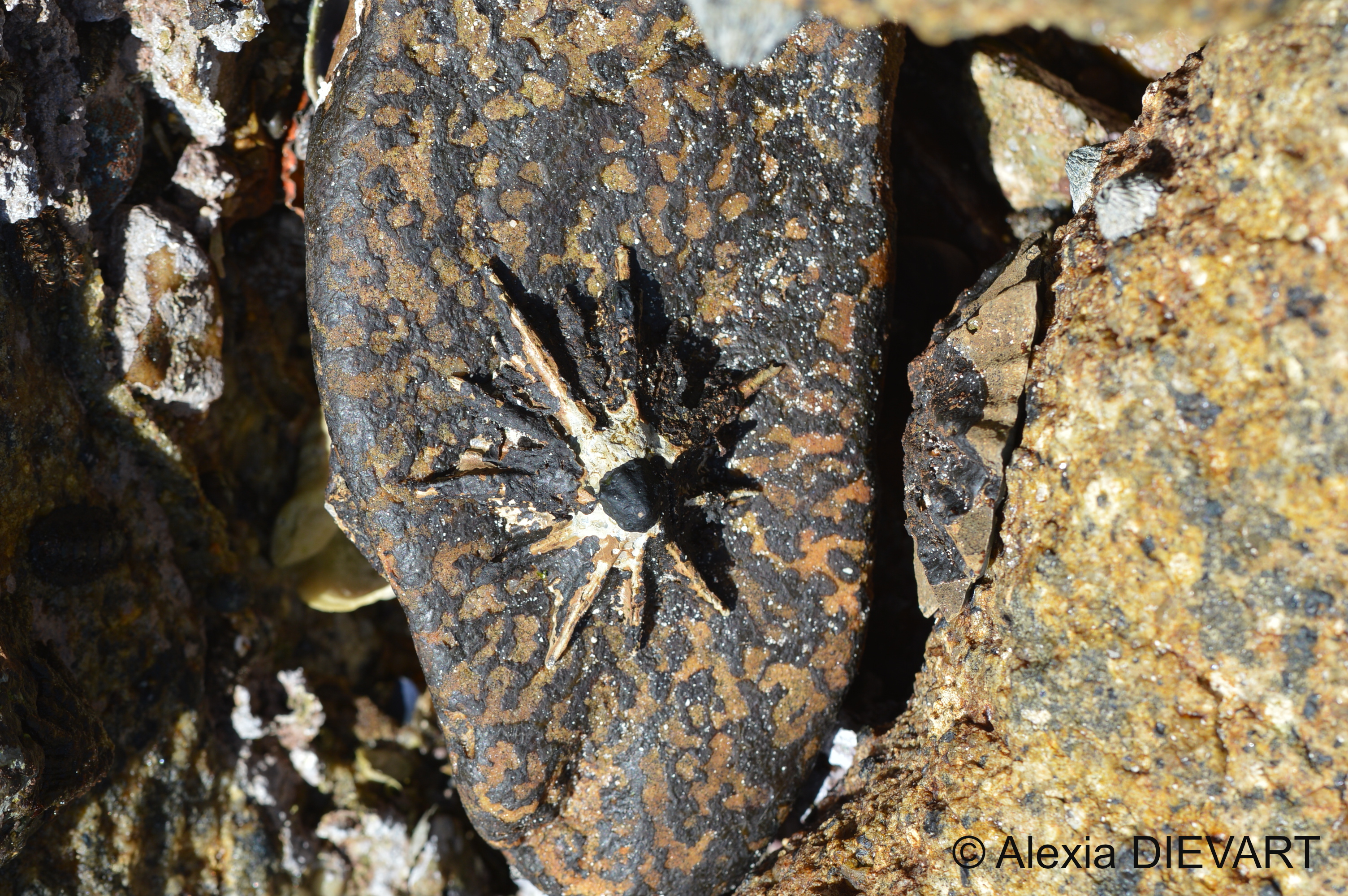
The long projecting ribs of S. longicosta offers two advantages : (1) they extend the limpet’s surface area without a drastic increase in body size as the visceral mass extends into each spine, allowing for greater suction, and (2) the spines allow the limpet to pry off intruders from its territory (Branch, 1975).

By grazing away existing algae, Scutellastra longicosta provides the bare substratum required for the settlement of Ralfsia verrucosa. Once established, the limpets cultivated and fertilize their space through feces and mucus, promoting algal growth (Connor & Quinn, 1984). In addition, limpets will directly engage any intruder, driving away any would-be competitors or algal predators. Ultimately, both juvenile and adult S. longicosta prefer to feed upon R. verrucosa !
Life History Traits
The African Black Oystercatch, Haematopus moquini, is a specialized feeder of the duck’s foot limpets.

REFERENCES

Connor, V.M., Quinn, J.F., 1984. Stimulation of Food Species Growth by Limpet Mucus. Science 225, 843–844. https://doi.org/10.1126/science.225.4664.843
Heidt, A., Khalsa, A., Myers, S., Trinh, T., Wade, V., 2013. Territoriality in the South African Intertidal Limpet Scutellastra longicosta.
McQuaid, C.D., Froneman, P.W., 1993. Mutualism between the territorial intertidal limpet Patella longicosta and the crustose alga Ralfsia verrucosa. Oecologia 96, 128–133. https://doi.org/10.1007/BF00318040

 F*CK FISH
2 thoughts on “Duck’s foot limpet (Scutellastra longicosta)”