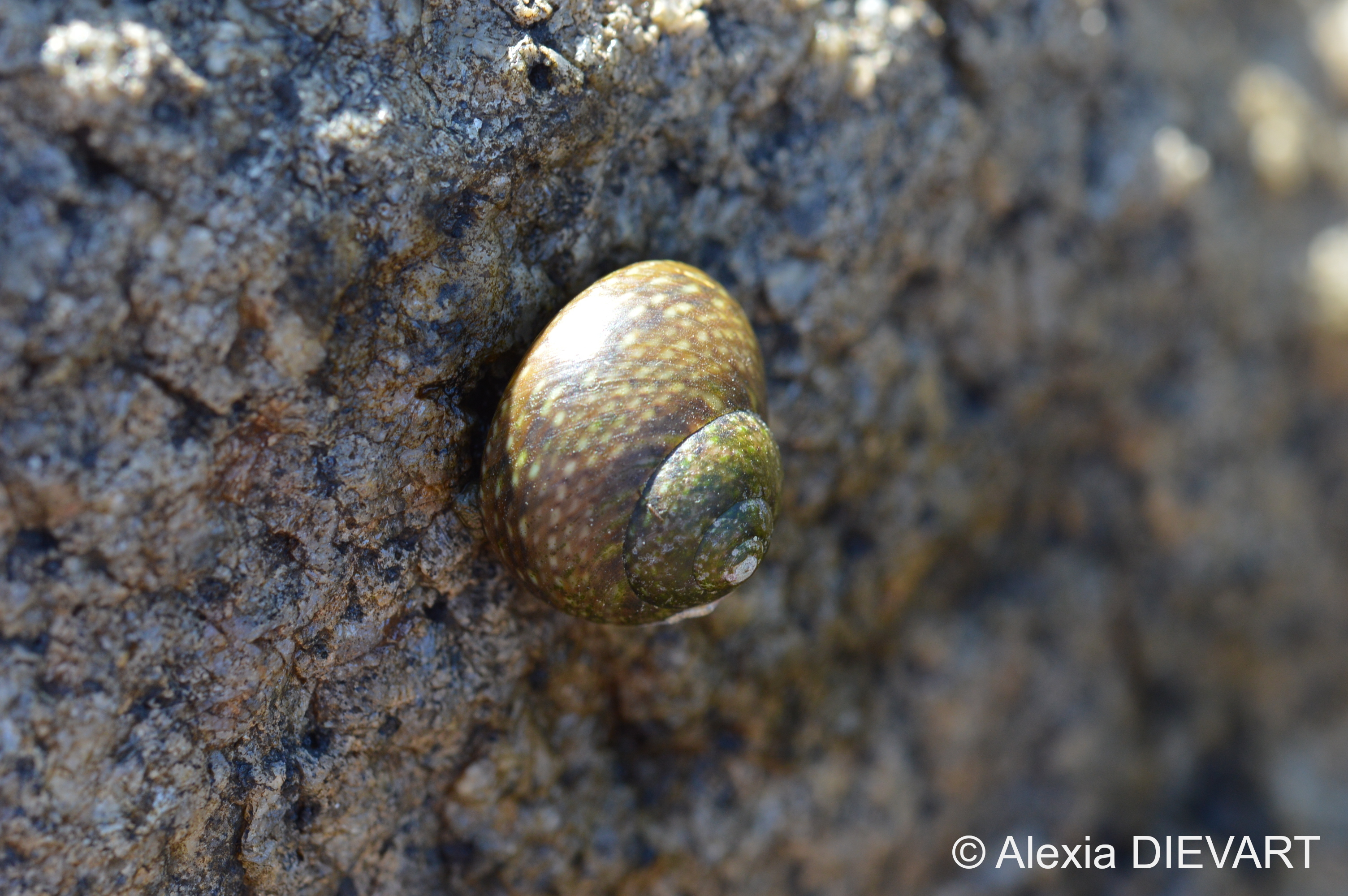
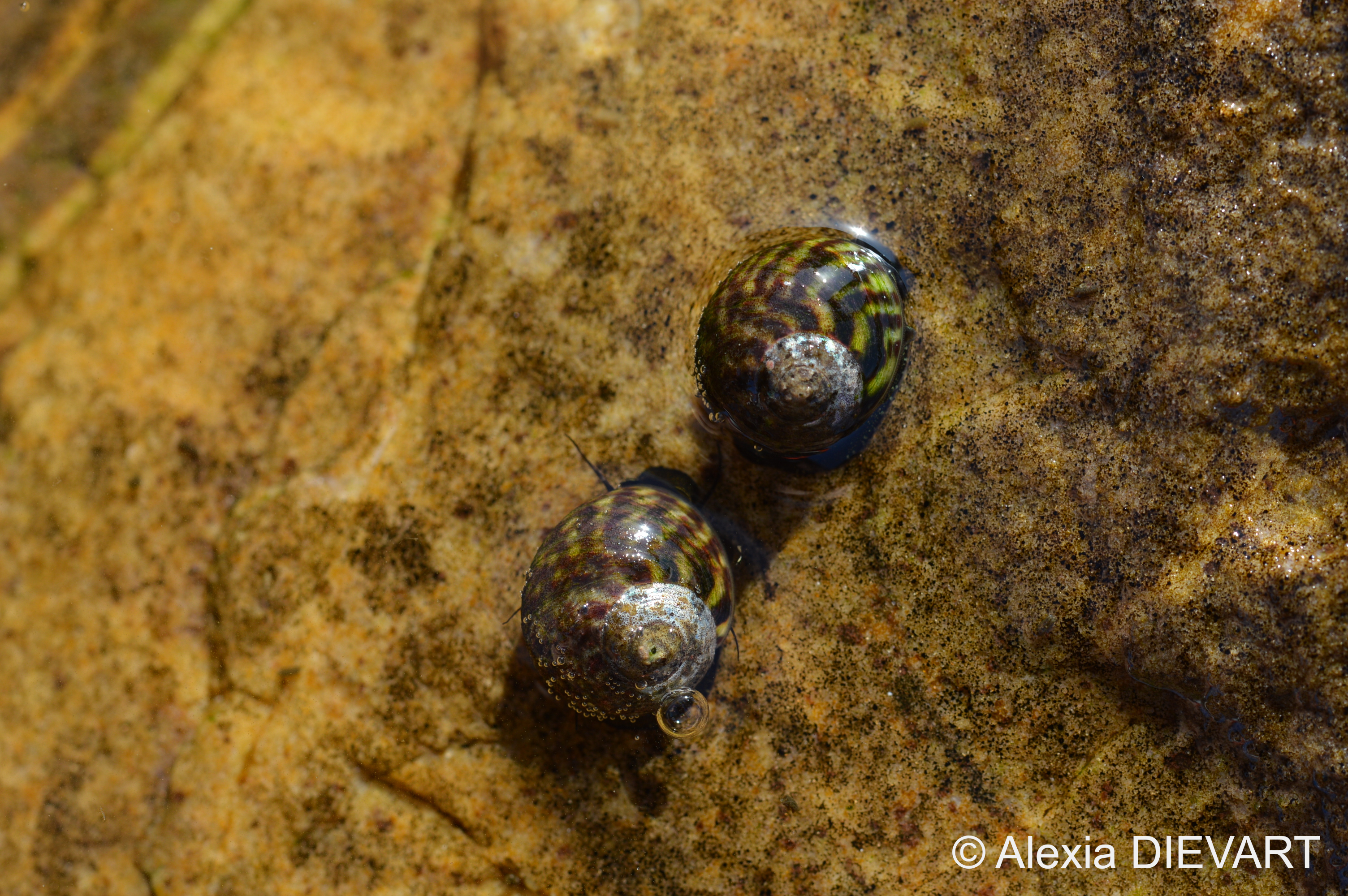
Previously know as Oxystele variegata.
Shell rounded, about as tall as wide, smooth or with very gentile spiral ridges. Colour extremely variable, but typically tabby-patterned with irregular dark bands that run obliquely across a pale-yellow or greenish background. The inside of the aperture is pearly, with a narrow margin that repeats the variegated tabby pattern. As is the case with all Oxystele species, the operculum is horny and flexible, yellow-brown, with spiral growth rings.
About 25 mm.
An abundant, intertidal rocky shore mollusc. It uses its rasping file-like radula to graze on microalgae and encrusting algae. Juveniles live low on the shore, shifting upshore as they become more tolerant of the greater physical stresses experiences there. Upshore movement apparently shifts adults away from intense predation by starfish and whelks. If adults are experimentally transplanted downshore, they navigate accurately and return to their original zone within the space of a day.
Two Oceans: A Guide to the Marine Life of Southern Africa (2007)
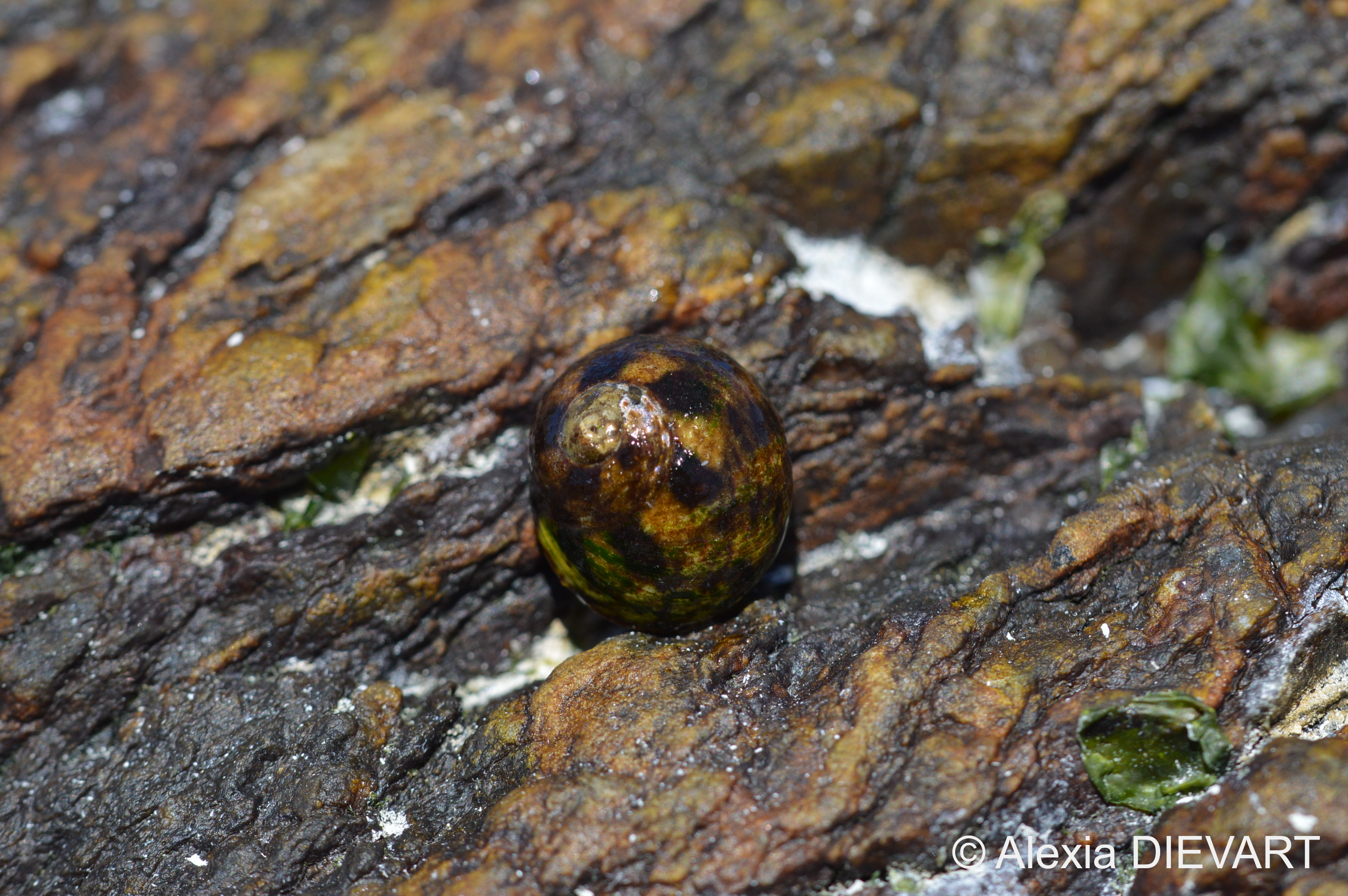
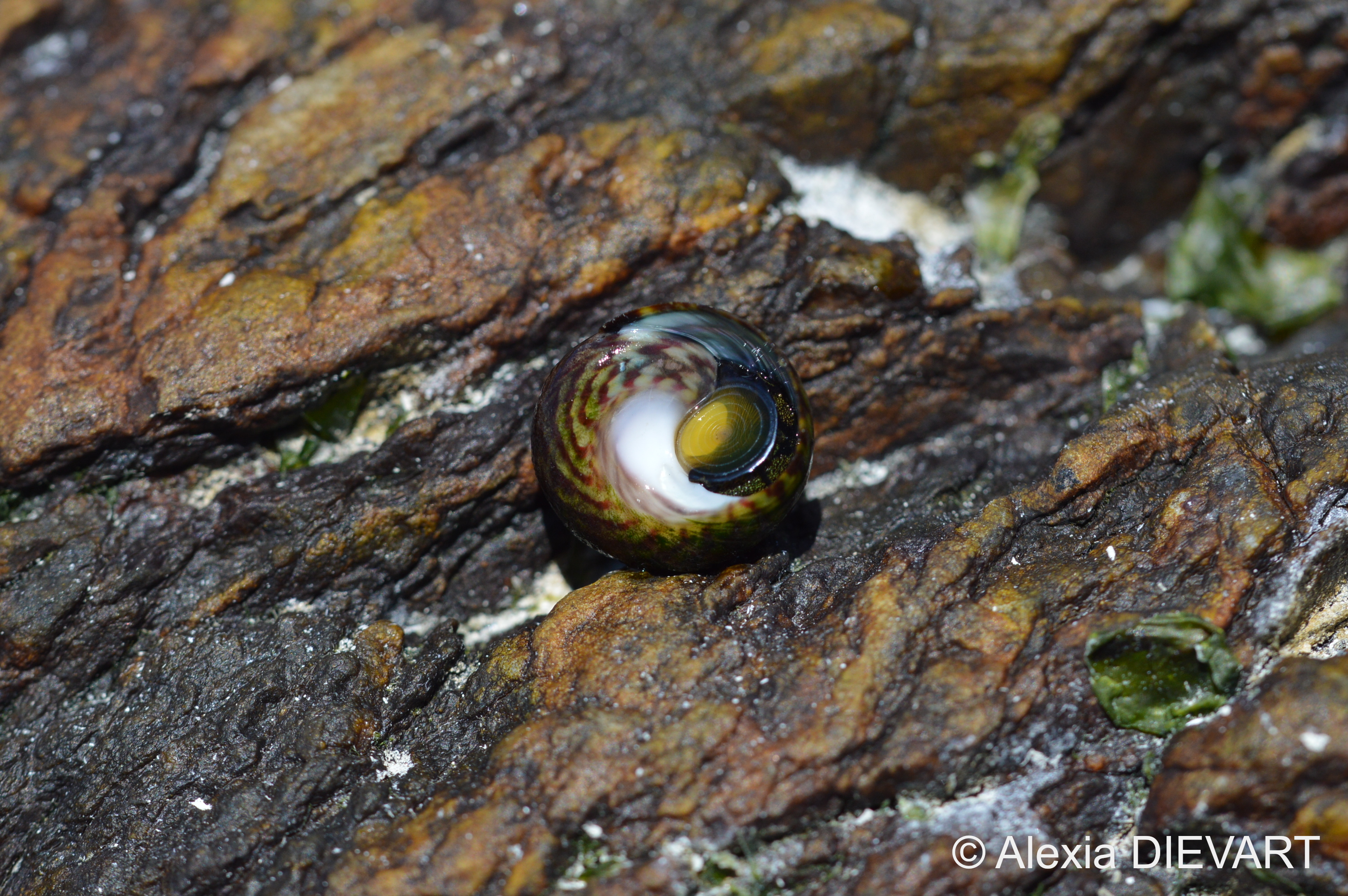
Oxystele impervia (the bead topshell) is almost identical to Oxystele antoni in form, shape and distribution, but is patterned with bead-like dots that run spirally around the whorls. Only recently, based on genetic studies, has O. impervia been recognised as being distinct from O. antoni. Their habits are also similar, although O. impervia tends to occur in more sheltered areas and slightly higher on the shore.