
Previously known as Gunnarea capensis.
Gregarious, forming massive intertidal reefs of sandy tubes. There is a double row of 40-50 stiff golden bristles on the head, forming a ‘door’ (operculum) that blocks the tube when the worm withdraws.
Worms are about 50 mm long. Reefs can grow up to 3 meters in diameter and 50 cm to 1 meter high.
Worms extend their iridescent black-blue tentacles from their tubes at high tide to feed on particles. They catch sand grains and cements them together to build the tubes. The tubes are flanged and designed so that passing waves suck out faeces but concentrate food in the flanges. Gunnarea gaimardi is an aggressive competitor for space and keeps its tubes clean by scraping off settling organisms with its operculum. Sometimes accused of ‘invading’ or ‘taking over’ the shore, it fluctuates in numbers as part if a natural cycle, storms periodically decimating old colonies.
Two Oceans: A Guide to the Marine Life of Southern Africa (1994, 2016)
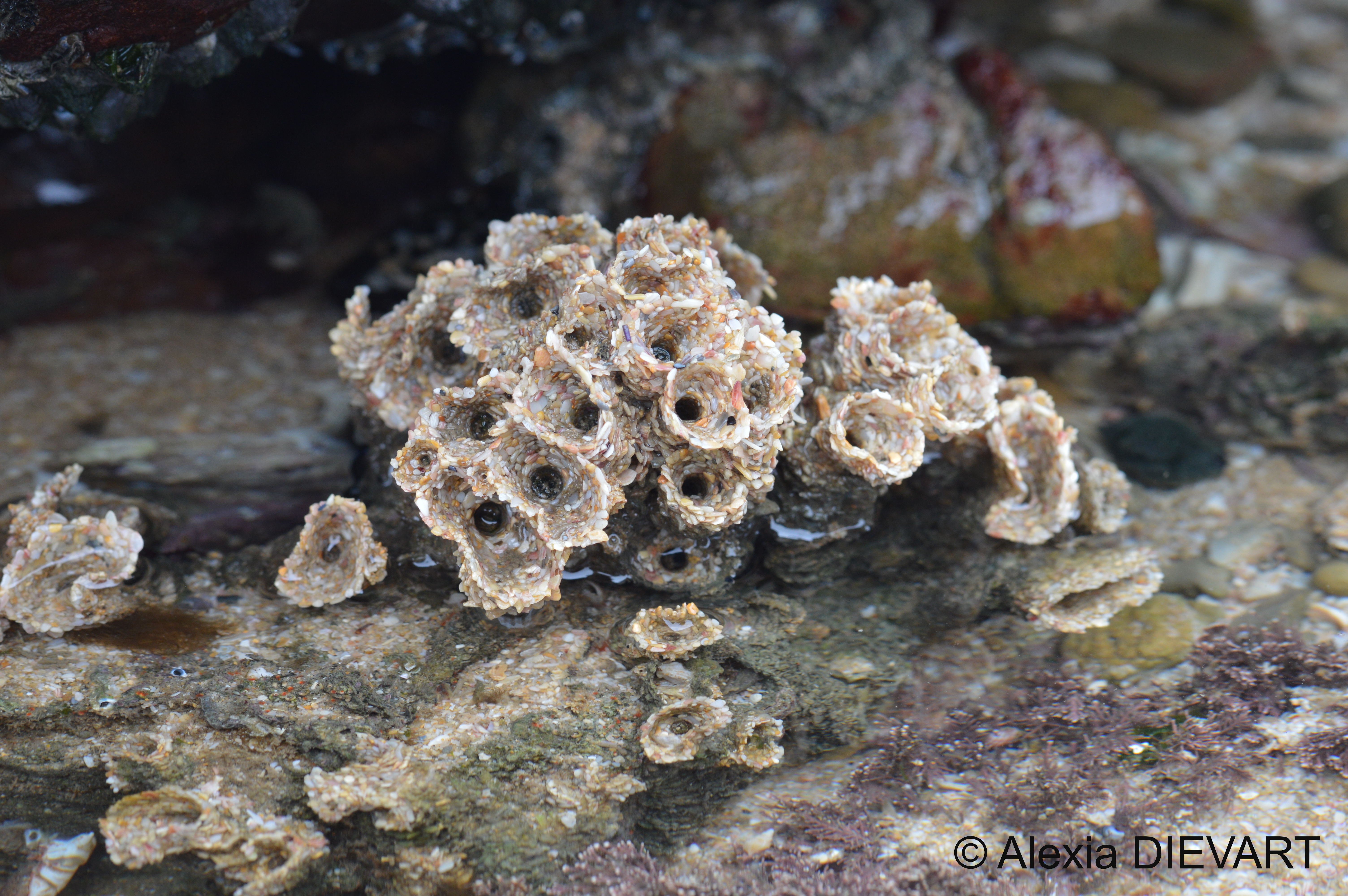
Port Alfred, Eastern Cape (2024).


 F*CK FISH