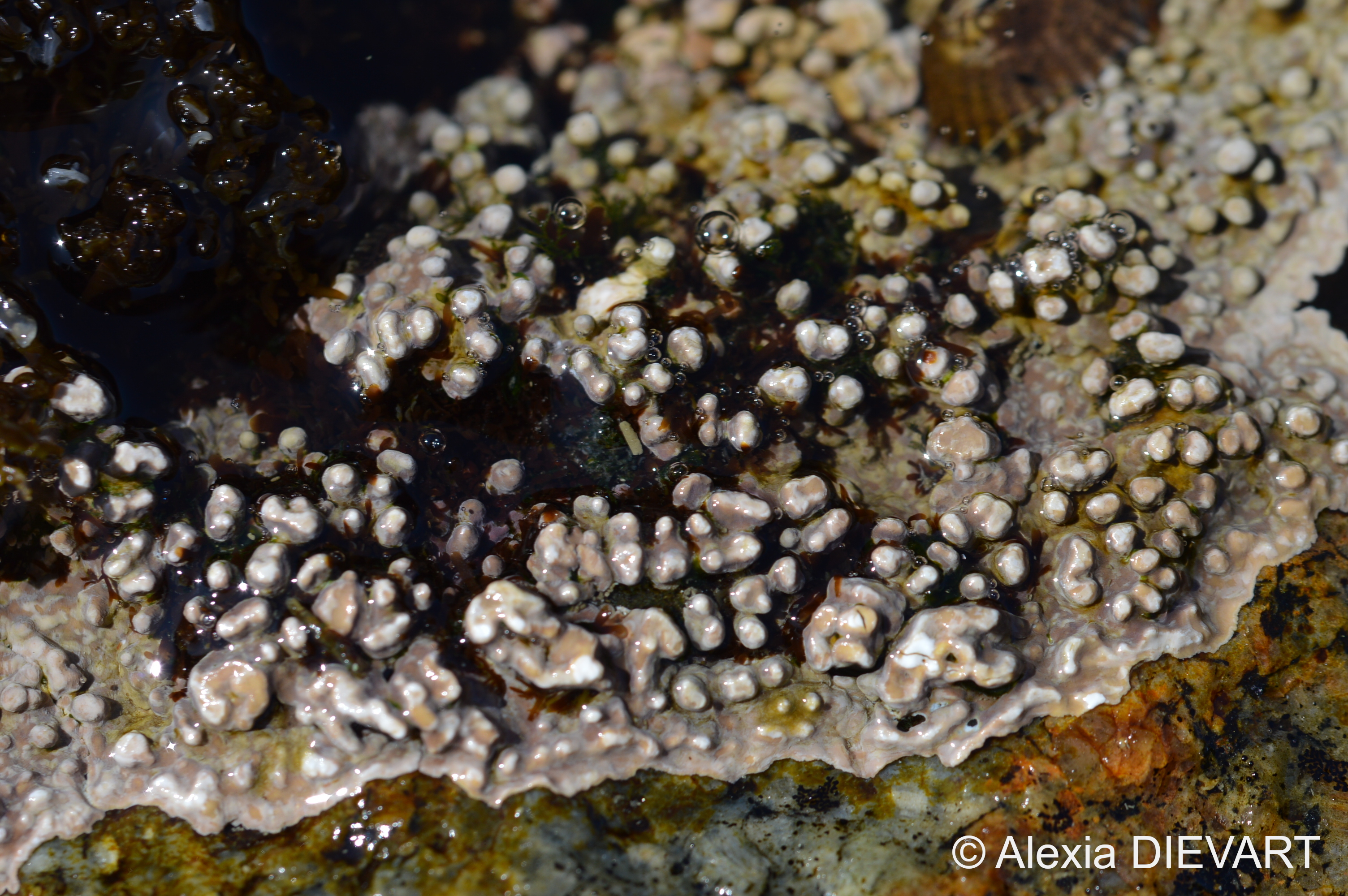
Cochlear coralline crust (Spongites yendoi)
Hard, encrusting species of crustose coralline algae (Rhodophyta). Thallus relatively thin, mainly composed of filaments of small, often fused, squarish cells, with the lowermost layer up to eight filaments thick of mostly elongated cells. Chalky-white in color, mauve if shaded. Usually lumpy in texture, or with small, upright knobs. Conceptacles are elliptical, pimple-like. and uniporate (i.e., with a single pore).
About 0.5 mm thick.
Like other species, it contains chlorophyll and realizes photosynthesis. The cell walls of the algae contain deposits of calcium carbonate, which give it its firm consistency. Abundant on the South-West coast, it usually grows on or near the pear limpet Scutellastra cochlear. Its range extends further North than that of the pear limpet, and when ungrazed, the coralline algae is thicker and more knobbly.
Two Oceans: A Guide to the Marine Life of Southern Africa (1994, 2016)
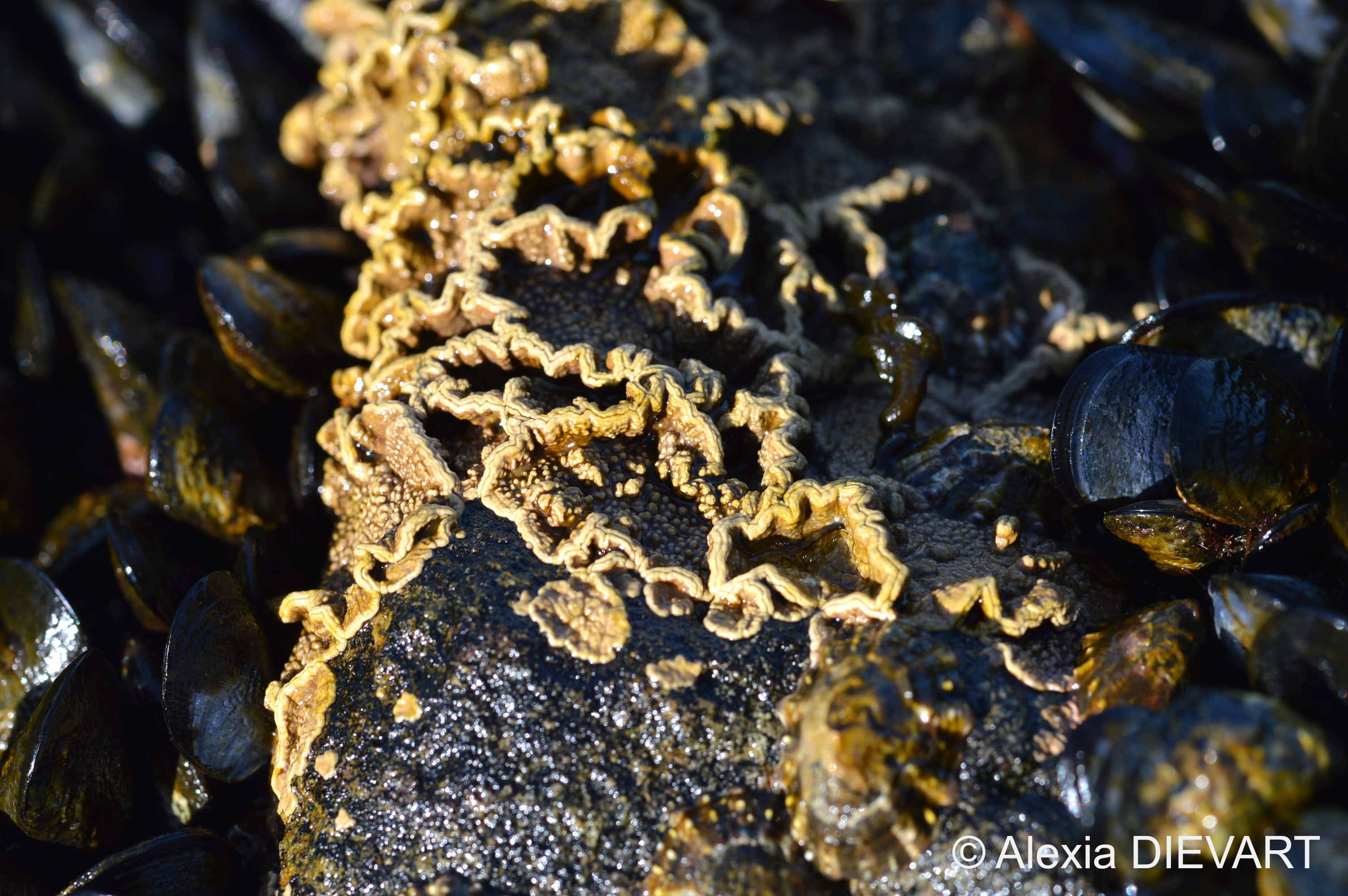
Scrolled cochlear crust (Spongites impar)
Moderately thick. Chalky or beige, margin conspicuously paler. Produces twisted ridges wherever two colonies meet. Surface like an elephant’s skin. Conceptables uniporate.
About 1 mm thick. Ridges can be up to 10 mm high.
Found mid-shore, common where wave action is strong. Weakly attached and intolerant of grazing. Overgrows Spongites yendoi unless grazed by the pear limpet Scutellastra cochlear.
Two Oceans: A Guide to the Marine Life of Southern Africa (1994, 2016)


One thought on “Coralline crust (Spongites spp)”